






Key Takeaways
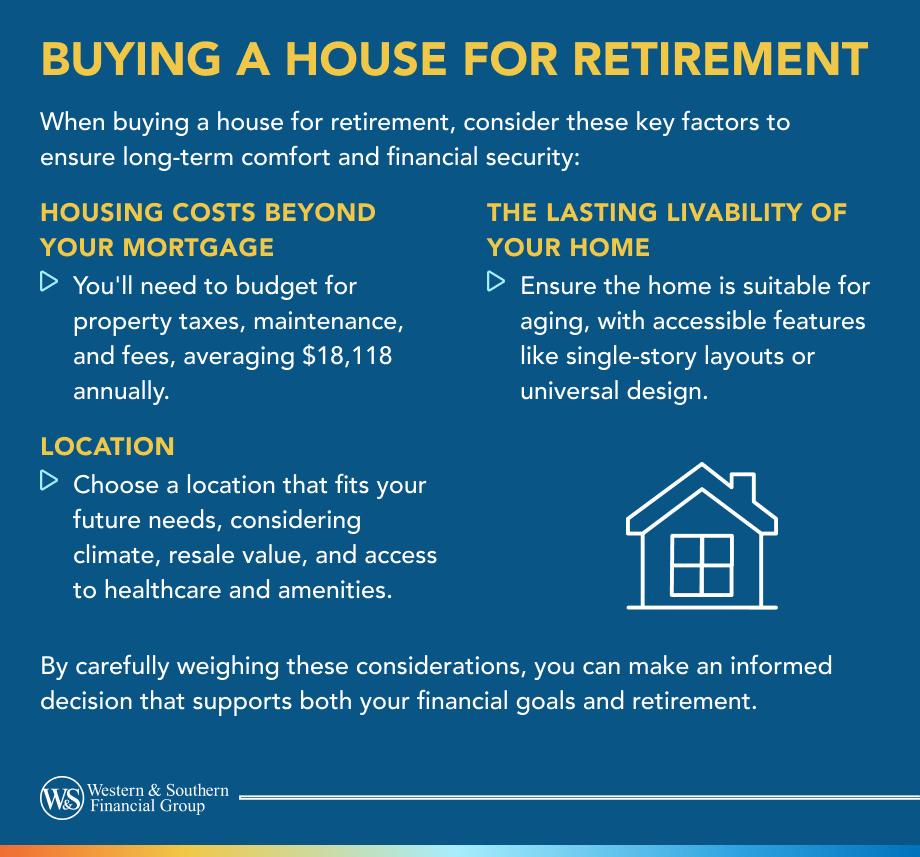
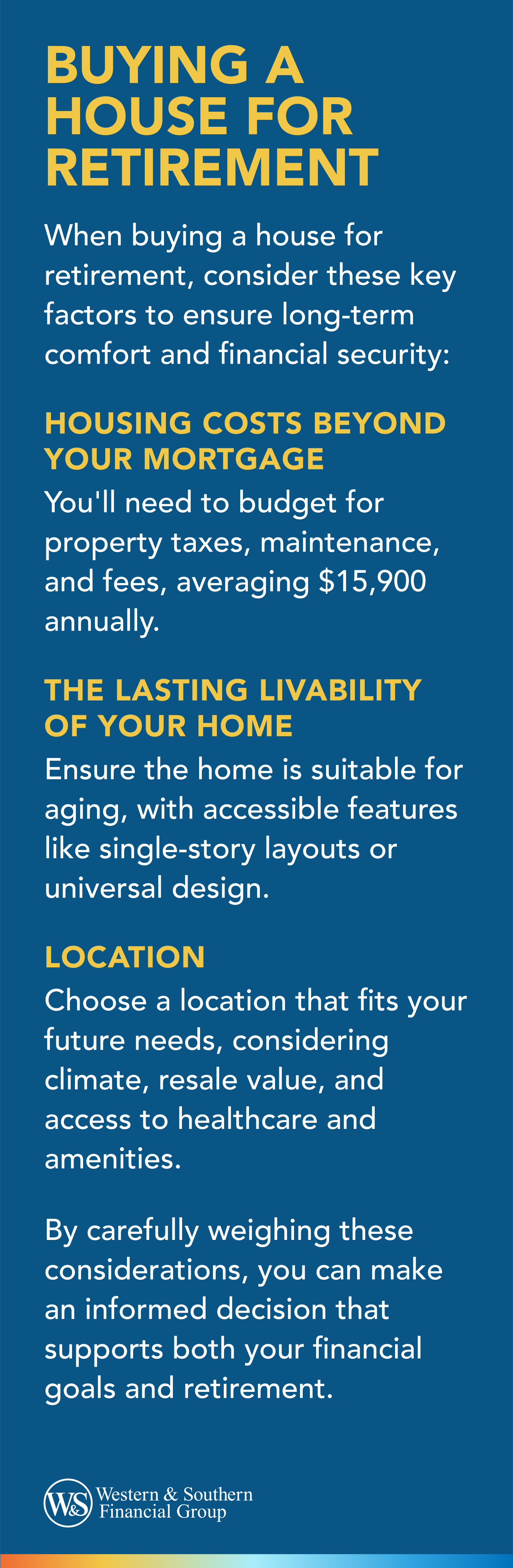
- Retirement housing costs go beyond the mortgage, with property taxes, maintenance, and fees averaging about $15,900 annually even without loan payments.
- Creating a realistic retirement budget that includes housing, health care, and lifestyle expenses can help you avoid any financial issues.
- Choosing a home with accessible features or universal design can help support long-term comfort as your physical needs change over time.
- Location matters year-round, so consider climate, access to care, and nearby services to help match your lifestyle and future needs.
- Your retirement home is still an asset, so resale value and buyer appeal should remain part of your decision even if you stay long-term.
If you are buying a new house for retirement, it is important to consider several factors. This purchase may require more thought than your first home because your retirement house should be able to meet your changing needs as you age.
If you are wondering what to look for when buying a retirement home, consider these factors during your decision-making process.
Housing Costs Beyond Your Mortgage
Buying a home for retirement involves more than qualifying for a mortgage. Even if you pay cash, ongoing housing costs remain.
Common ongoing costs include:
- Property taxes
- Maintenance and repairs
- Homeowners association (HOA) dues or other fees
These expenses can increase if you are no longer able or willing to handle upkeep yourself.
| Cost Type | What to Expect |
|---|---|
| Property taxes | Ongoing annual expense |
| Maintenance and repairs | May increase with age of the home |
| HOA Fees | Monthly or annual, if applicable |
The average annual cost of homeownership in 2026 is about $15,900, including property taxes and maintenance, but not mortgage payments.1
Before choosing a home, review the total cost. If the mortgage stretches your budget, ongoing expenses may be harder to manage. Estimating your yearly costs and creating a retirement budget based on your income and expected expenses, such as health care and travel, can help guide your decision.
The Lasting Livability of Your Home
Aging in place is a goal for many retirees. A recent Clever Real Estate survey found that 61% of baby boomer homeowners say they do not plan to sell their homes. More than half said staying in place was their main reason.2
However, not all homes will support your needs as you age. For example, a home with second-floor bedrooms, multiple steps at the entrance, narrow doorways, or deep tubs may become harder to use over time.
While it may feel uncomfortable to think about future physical changes, buying a retirement home gives you a chance to plan ahead. You may want to look for homes with universal design features. These features help make a home easier to use for people with different abilities and may allow you to stay in your home longer.
Location
Location plays a major role when choosing a retirement home. A house may look perfect, but it may not be the right fit if the location does not meet your needs. Consider the following factors when choosing where to live.
Climate
Many people think about retiring in a favorite vacation spot. However, enjoying a place during one season does not mean you will enjoy it year-round. Think about weather conditions throughout the year, including extreme heat, cold, storms, or humidity, before making a decision.
Resale Value
You may not be focused on school districts or public transportation, but future buyers might be. Your home is still an asset that you or your family may sell later. Buying a home that is hard to sell could create challenges down the road.
Local Amenities & Services
Your needs may change over time, so it may help to choose a location with access to services you may need. For example, consider whether you can easily access doctors, specialists, and hospitals nearby. Talking to local retirees may give you a better sense of what living in the area is like and whether it fits your needs.
Finding Your Home Sweet Home
Knowing what to look for when buying a retirement home can feel overwhelming. Taking time to think through your current and future needs, along with the full cost of homeownership, may help you choose a home that fits your lifestyle in retirement.
Sources
- The True Costs of Owning a Home Can Reach $16K Annually. https://www.zillow.com/learn/hidden-costs-of-buying-a-home/.
- Boomers aren’t selling: 61% plan to stay put indefinitely. https://www.housingwire.com/articles/baby-boomer-homeownership-trends-2025-survey/.