






The Federal Reserve (Fed) raised the policy rate by 25 basis points in September, its first hike since 2023. Historically, an initial rate hike has often been followed by a series of additional tightening. However, the backdrop for this round of tightening is different from most hiking cycles. That leaves us asking two related questions: Will this time be different, and what are we watching?
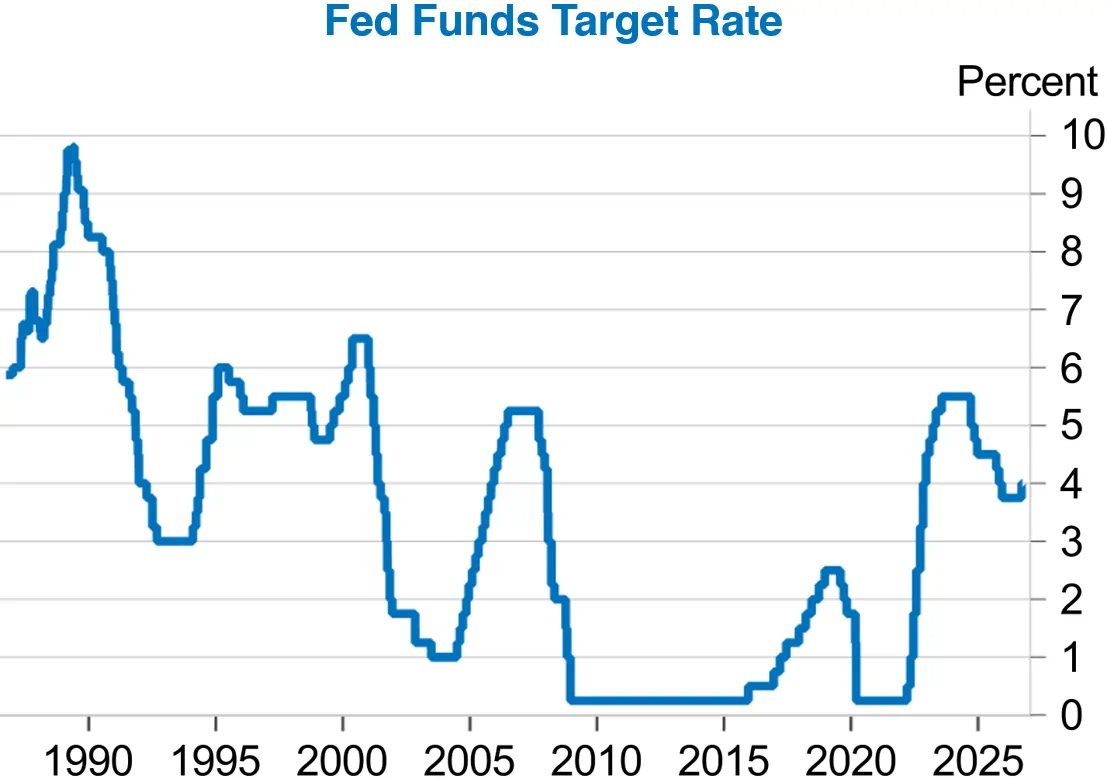
The Fed’s decision to raise rates reflects inflation that has remained above its 2% target for too long, while economic growth and the labor market remain solid. Elevated energy prices and other supply-side pressures create additional uncertainty around the inflation outlook, while resilient consumer spending and robust capital investment, including the AI buildout, continue to support demand.
This backdrop suggests monetary policy may need to remain restrictive and become somewhat more so to bring inflation back toward 2% in a timely manner. What makes this cycle unusual, however, is the Fed’s starting point. Unlike many hiking cycles of the past 40 years, policy was not clearly accommodative when tightening began. The Fed is therefore not moving rapidly from easy to restrictive policy, but rather recalibrating from a level already near neutral or modestly restrictive.
Inflation has remained elevated partly due to a series of supply shocks over recent years, most recently the ongoing conflict in the Middle East. Higher energy prices have a clear impact on headline inflation, but the magnitude and persistence of their effect on core inflation are more difficult to judge. The Fed’s traditional playbook is to look through supply shocks because one-time price increases do not necessarily generate sustained inflation. Recently, however, this line of reasoning has been called into question by several Fed participants. Given the recent strength of the economy and recurring supply shocks, the Fed is becoming more concerned that there will be a sustained impact on inflation. Upcoming inflation data will therefore be critical in determining how far the Fed will raise rates.
At the same time, the economy has proven relatively insulated from higher rates. The job market continues to grow despite recent headwinds. Consumer and business spending remain solid, providing a foundation for continued growth. Many households and corporations locked in low borrowing costs before rates rose, while healthy balance sheets have further reduced near-term sensitivity to monetary policy. Whether this recent economic momentum continues will also factor into the ultimate path of Fed policy. Strong growth will give the Fed confidence that the economy can withstand higher interest rates as it seeks to bring inflation back to target.
In our judgment, this cycle may ultimately look more like a mid-cycle recalibration and somewhat different from the past few hiking cycles. While inflation remains above target, underlying inflation has not shown clear signs of renewed acceleration, and we expect economic growth to settle near its longer-term trend of roughly 2%. Against this backdrop, we think the Fed will hike more slowly than the market currently expects, giving policymakers more time to assess incoming data as they navigate this challenging environment.
Chart sources: Bloomberg and Macrobond.Download The Fed Is Hiking Again—Is This Cycle Different?
Download The Fed Is Hiking Again—Is This Cycle Different?