Over the last decade, the "financial independence, retire early" (FIRE) movement has become one of the hottest mantras for those under 60.1 But the reality is that leaving the workforce in the prime of your life requires even higher investment contributions and more severe cost-cutting than you might think.
Wondering how much money do I need to retire at 40? Here's what to know.
How Much You Need to Budget to Retire at 40
If you're seeking a quick answer, the savings needed for a very early retirement is substantial. Retiring this early gives you fewer years to build wealth and many more years to rely on it. Many FIRE followers use the 4% rule, aiming to save 25 times their annual expenses, assuming at least half of their portfolio is invested in stocks.1
Some experts recommend even larger reserves in low-interest environments. While certain costs drop once you stop working, your current spending often provides a realistic baseline for estimating your future retirement budget.
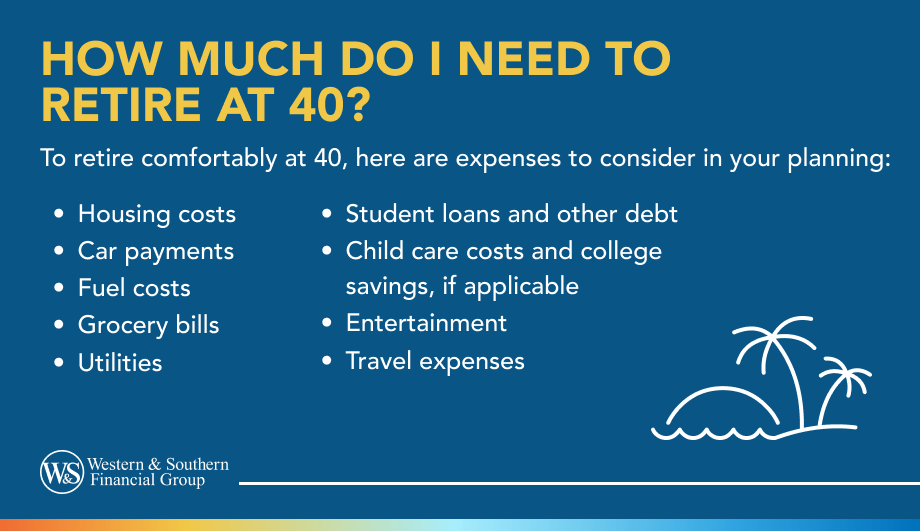
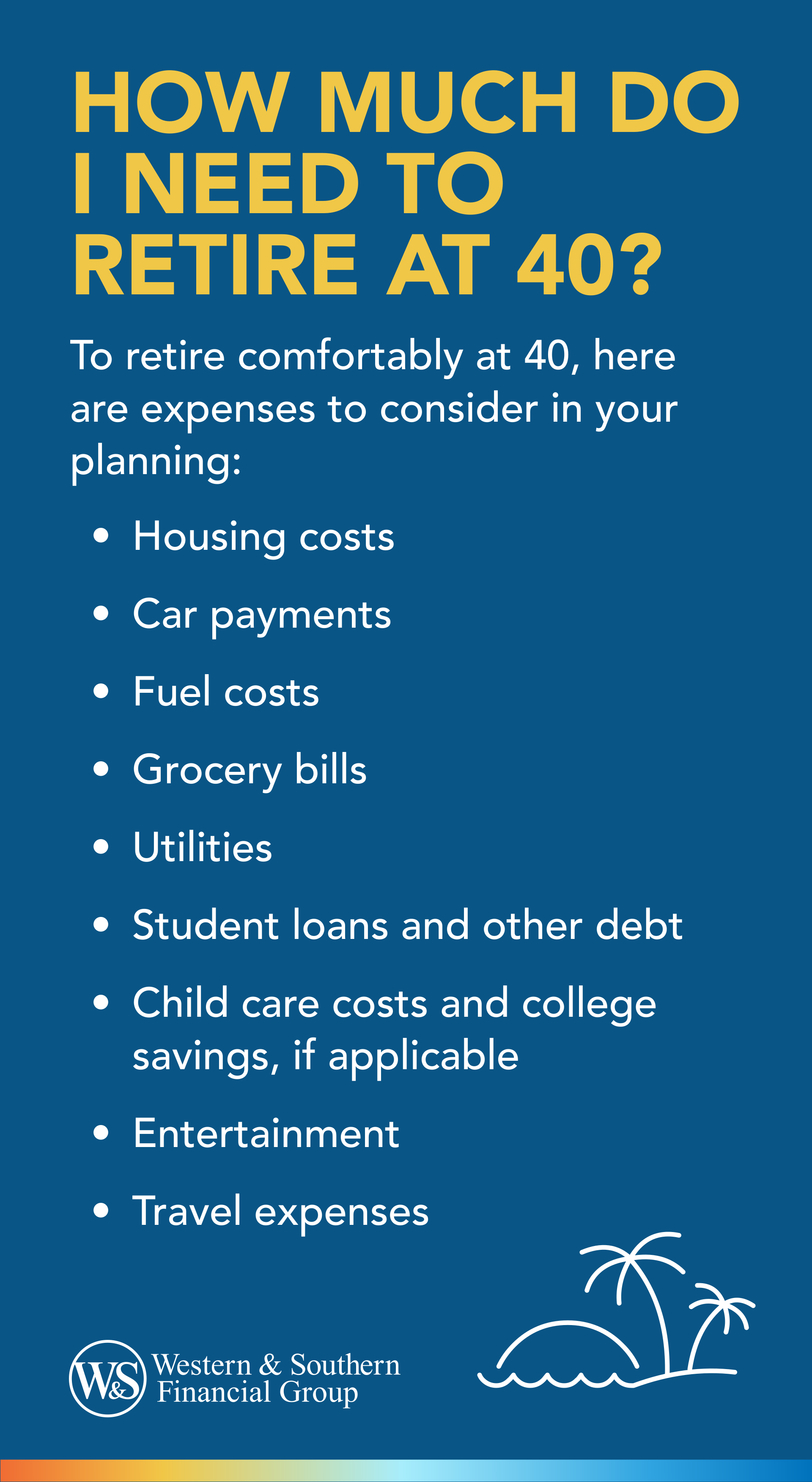
Here are the future expenses you'll want to consider:
- Housing costs
- Car payments and fuel costs
- Grocery bills
- Utilities
- Student loans and other debt
- Child care costs and college savings, if applicable
- Entertainment and travel expenses
Use your current spending to forecast your needs in retirement. Start Your Free Plan
How Will You Cover Health Care Needs?
Health care is one of the largest expenses in retirement, and stepping away from work when many people are still “mid-career” adds another layer of difficulty. You’re too young to qualify for Medicare's relatively low premiums, and you no longer have access to employer-subsidized coverage.
Joining a spouse’s plan can help lower costs, but if that’s not an option, purchasing your own coverage can become expensive. According to the Kaiser Family Foundation, a 40-year-old enrolled in a private plan in 2026 could expect to pay:
| Plan Type | Estimated Monthly Cost |
|---|---|
| Least-expensive option | $456 |
| Most-expensive option | $615 |
Those costs may increase if you add a spouse or children to the plan, and they often rise as you age.
How Much Retirement Income Will You Need at 40?
If you estimate that you’ll need about $50,000 a year in retirement, our Retirement Cost of Living Calculator can help confirm the math. Using the 4% withdrawal rule, you’d need $1.25 million saved by the time you retire. Assuming a 7% average return during your working years, reaching that amount would require contributing about $3,000 a month from age 22 to 40. This example doesn’t factor in market fluctuations, fees, or taxes.
If you prefer a more conservative approach - such as a 3.5% withdrawal rate - your savings target will be higher. Reaching this level of savings calls for aggressive contributions. Because early withdrawals from a 401(k) before age 59½ typically trigger penalties, diverting part of your savings to a taxable brokerage account may be necessary.
This approach usually means earning a high enough income to support large monthly investments, or cutting expenses deeply so more of your paycheck goes toward savings. Small lifestyle shifts alone - like skipping a daily coffee - won’t bridge the gap. Many savers need bigger adjustments, such as living below their means and using public transportation instead of owning a car.
Are You Prepared to Retire at 40?
It's important to bear in mind that planning for an extended retirement invites a number of financial risks. The market could experience fluctuations that erode your account balances. Or you could face an unexpected medical condition that requires care in an expensive nursing facility.
Those hoping to leave their 9-to-5 to retire at 40 would do well to expect the unexpected and proceed cautiously. As with any complex financial decision, talking with a trusted financial professional is time well spent. You'll likely come away with a more precise answer to the question, "How much money do I need to retire at 40?" and could gain a detailed plan for accomplishing that goal.
Establish a solid retirement plan to retire comfortably at 40. Start Your Free Plan
Sources
- FIRE Movement: What to Know About Retiring Early. https://www.mutualofomaha.com/advice/retirement-planning/retiring-early/fire-movement-what-to-know-about-retiring-early.
- Average Monthly Marketplace Premiums by Metal Tier. https://www.kff.org/affordable-care-act/state-indicator/average-marketplace-premiums-by-metal-tier/.