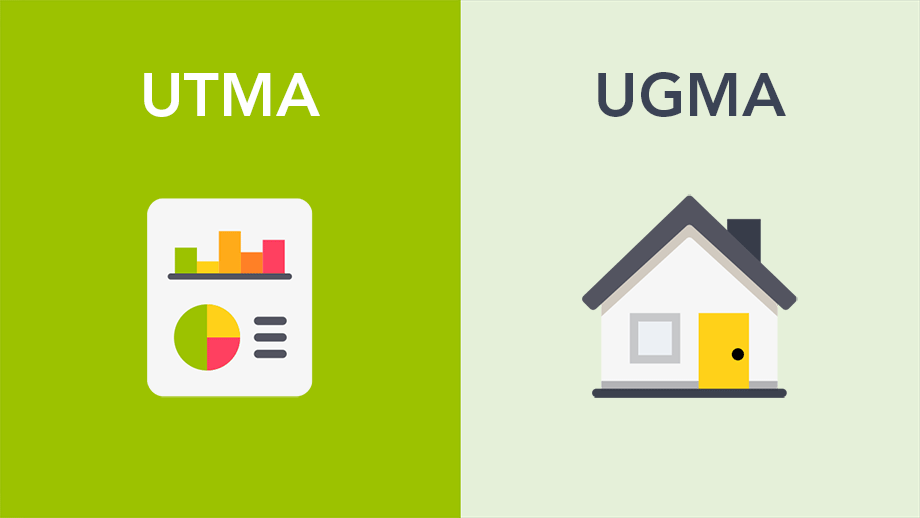
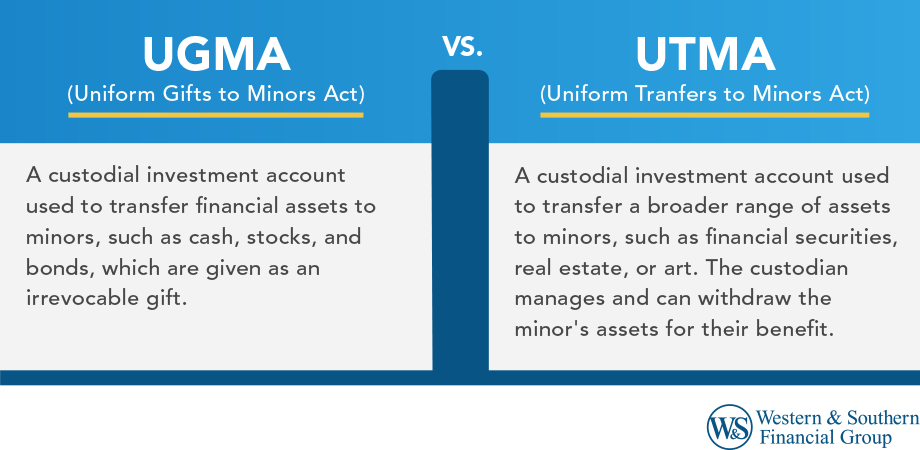
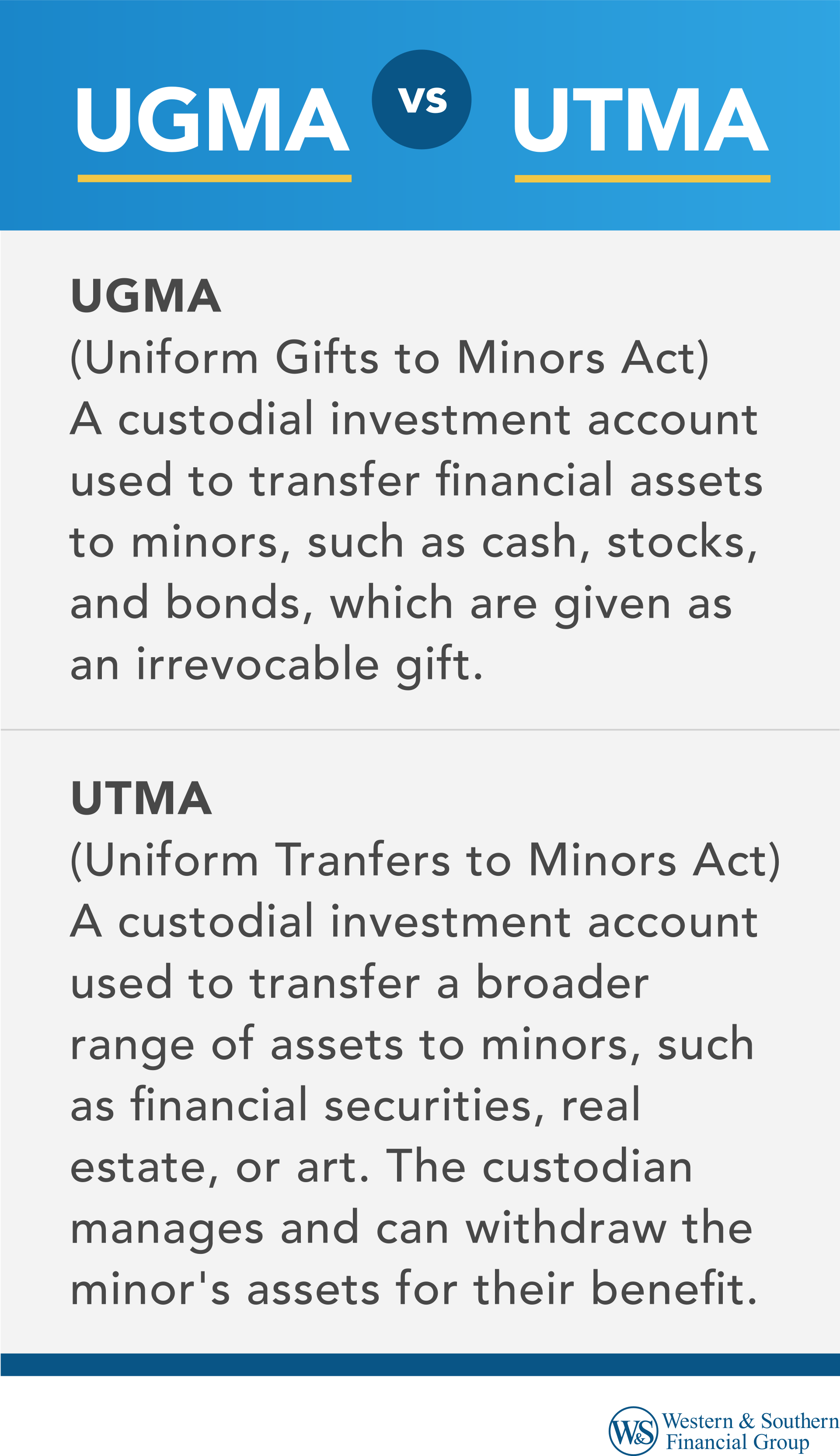
Trying to figure out which custodial account is right for a young family member - UTMA or UGMA? The biggest difference comes down to the types of assets each account can hold. UTMA accounts allow a wider range of assets, including things like real estate and fine art. UGMA accounts focus on financial assets only, such as stocks, bonds, and mutual funds.
Both options let you invest on behalf of a minor and can offer certain tax advantages. They also come with their own rules, limitations, and responsibilities for the custodian. Here’s how they compare so you can choose the option that fits your goals.
What Are UTMA & UGMA Accounts?
Both operate under the same general system: you transfer cash, investments or other property into the account on behalf of someone who is a minor. A minor generally legally cannot have their own investment account.
You then manage the custodial investment account until the family member reaches the state's age of majority (generally from 18 to 25, depending on the state where the account exists).1 Once the family member becomes an adult, they take over the investment account.
UGMA accounts allow you to contribute only cash and financial investments such as stocks, bonds and mutual funds. UTMA accounts also allow you to put in physical property, such as jewelry, real estate and vehicles.2
Tax Implications of UTMA & UGMA Accounts
UTMA and UGMA accounts can help lower taxes on your investment earnings. Here’s how the 2025 tax rules work:
| Portion of Earnings | How It’s Taxed |
|---|---|
| First $1,350 | Tax-free |
| Next $1,350 | Taxed at the minor’s tax rate (usually lower because most kids have little to no income) |
| Above $2,700 | Taxed at the parents’ rate |
This structure can make these accounts a helpful way to invest for a child’s future while reducing some tax impact.
You don't receive a tax deduction for adding money to UTMA and UGMA accounts. Instead, you just reduce the taxes on investment gains.
Potential Benefits & Drawbacks: UTMA vs. UGMA
UGMA Accounts
Pros
- Flexible investment choices (financial assets only): You can contribute stocks, bonds, mutual funds, ETFs, and other standard financial assets. It’s not limited to cash deposits.
- No income or contribution limits: Anyone can open and fund an account, and there's no annual cap. Gifts above the annual exclusion ($19,000 for 2025) may require filing a gift tax return.4
- Simple and low-cost setup: Many providers offer UGMA accounts with no opening fee. You generally pay only investment commissions or account-level fees.
- Tax advantages on investment income: A portion of the account’s yearly investment income - up to $2,700 in 2025 - is taxed at the child's lower tax rate.
Cons
- Transfers are permanent: Once you contribute funds or assets, they legally belong to the child and cannot be reassigned.
- The child gains control at adulthood: When they reach the age of majority in their state, they gain full access and can spend the funds however they'd like.
- Annual taxes still apply: These accounts aren’t tax-deferred, so taxes are due each year on investment gains.
- May reduce financial aid eligibility: Because the assets belong to the child, they’re assessed more heavily on financial aid forms.
UTMA Accounts
Pros
- Broader asset flexibility: UTMA accounts accept everything a UGMA does, plus physical assets like real estate, vehicles, artwork, or other property.
- No income or contribution limits: Like UGMA accounts, you can contribute at any income level with no yearly cap, though large gifts may require a gift tax return.
- Straightforward setup with low costs: Many institutions offer UTMA accounts with no setup fee, similar to a basic brokerage account.
- Tax advantages on investment income: The same favorable tax treatment applies - up to $2,700 (2025) taxed at the child’s lower rate.
Cons
- Irrevocable transfers: Assets become the child's property once contributed, with no option to reverse the transfer.
- Full control at the age of majority (sometimes later): UTMA accounts often extend custody beyond UGMA rules, but once the child reaches the age specified by state law, they gain full control.
- Ongoing tax responsibility: Like UGMA accounts, UTMA accounts owe taxes each year on investment earnings.
- Potential impact on financial aid: These assets are still counted as the child’s, which can reduce eligibility for need-based aid.
Quick Comparison
| Feature | UGMA Pros | UGMA Cons | UTMA Pros | UTMA Cons |
|---|---|---|---|---|
| Asset Types | Financial assets like stocks, bonds, cash | No physical assets allowed | Includes financial assets plus real estate, vehicles, and other property | Broader asset types may complicate management |
| Contribution Rules | No income or annual contribution limits | Gifts above exclusion require tax filing | Same contribution flexibility as UGMA | Same tax-filing considerations |
| Tax Treatment | First portion of income taxed at child’s rate | Not tax-deferred | Same tax benefit | Same tax limitations |
| Control & Access | Child gains control at majority | Cannot prevent spending choices | Some states allow custody until older age | Control still transfers irrevocably |
| Financial Aid Impact | Counts as child's asset | May reduce aid | Counts as child's asset | May reduce aid |
Other College Savings Plans
Besides UTMA and UGMA accounts, you could also put money aside for college using a Coverdell ESA, 529 plan or a trust fund. Here's a brief overview of each:
Coverdell Education Savings Accounts (ESAs)
A Coverdell ESA is a tax-advantaged account that helps you save for qualified education costs, including K–12 expenses and college tuition. Earnings grow tax-deferred, and withdrawals are tax-free when used for eligible expenses. Compared to 529 plans, a Coverdell ESA offers:
- More flexibility for early education needs
- A wider range of investment choices
However, Coverdell ESAs come with annual contribution limits and income restrictions for contributors. You’ll want to review those rules to see if this option fits your situation.
529 Plans
A 529 plans helps families save for higher-education expenses. Earnings grow tax-deferred, and withdrawals for qualified college costs aren’t taxed. You also keep full control of the account, including the ability to:
- Transfer funds to another eligible family member
- Use the money yourself if needed
A 529 plan offers a preset lineup of investment portfolios. You can only contribute cash, and non-qualified withdrawals are subject to income tax on earnings plus a 10% penalty. It’s also important to note that 529 investments carry market risk. The account’s value can rise or fall over time.
Trust Funds
A trust fund can hold a wide range of assets and offers flexibility similar to a custodial account. The main difference is the added control it gives you. You can set specific rules about when and how the beneficiary receives the funds, such as allowing access only after they reach a certain age or milestone.
A trust also allows you to redirect assets to someone else if needed. This can be useful for long-term planning. The downside is cost. Trusts typically require an attorney to set up and can cost several thousand dollars, while UTMA and UGMA accounts generally have little to no setup fees.
Quick Comparison
| Feature | UGMA | UTMA | 529 Plan | Coverdell ESA |
|---|---|---|---|---|
| What It Is | Custodial account for minors holding cash and financial assets. | Same as UGMA but can hold physical property. | Tax-advantaged college savings plan controlled by the account owner. | Tax-advantaged education savings account for K–12 and college costs. |
| Who Controls the Account | Custodian until the child reaches the age of majority. | Custodian until age of majority (varies by state). | Account owner always keeps control. | Custodian until beneficiary turns 18 (or 30 for distributions). |
| Annual Contribution Limits | No limits. | Same as UGMA | No federal annual limit; states typically allow high lifetime limits. | $2,000 per beneficiary per year. |
| Tax Benefits | First $1,350 is tax-free; next $1,350 taxed at the child’s rate; anything above that taxed at the parents’ rate.3 | Same as UGMA | Tax-deferred growth and tax-free withdrawals for qualified education costs. | Same as 529 |
| Investment Options | Broad, self-directed investments in financial assets. | Broadest options, including physical property. | Limited to plan-selected investment portfolios. | Broad choices, similar to a brokerage account. |
| Ability to Change Beneficiaries | No; assets belong to the child. | Same as UGMA | Yes; can transfer to another eligible family member. | Same as 529 |
How to Open & Manage a Custodial Account
Once you understand the difference between UTMA and UGMA accounts, the next step is opening one. Many banks and brokerage firms offer custodial accounts, and the setup process is usually straightforward.
What You’ll Need to Apply
Have a few basic details ready for both you and your loved one:
- Names
- Addresses
- Social Security numbers
You’ll also select a custodian to manage the account until the child becomes an adult. This can be you.
After the Account Is Open
Once the account is active, you can:
- Deposit money to invest in stocks, bonds, mutual funds, and other assets
- Transfer assets you already own into the account
The custodian oversees the investments but cannot use the funds for personal benefit.
When Your Loved One Reaches Adulthood
At the age of adulthood defined by your state, full control of the account transfers to your loved one and they can manage the assets on their own.
Next Steps
Before transferring any money or property to a UTMA or UGMA, understand the tax rules, drawbacks, and custodial account benefits. A financial services professional can help you compare these accounts against other college savings plans. Start building your child's financial foundation today with a tax-advantaged UGMA account.
Fabric by Gerber Life, a member of the Western & Southern Financial Group family of companies, offers custodial UGMA accounts you can use to implement this strategy.2
Select the account type that best supports your college savings ambitions. Invest In My Child
Sources
- UGMA/UTMA age of majority by state. https://www.capitalgroup.com/advisor/account-resource-center/ugma-utma/age-of-majority.html.
- UGMA from Fabric by Gerber Life, a member of the Western & Southern Financial Group Family of Companies. https://www.westernsouthern.com/about/family-of-companies.
- Kiddie Tax Explained: Rules, 2024 + 2025 Thresholds, and How It Impacts Your Family’s Finances. https://www.savingforcollege.com/article/what-is-the-kiddie-tax.
- Frequently asked questions on gift taxes. https://www.irs.gov/businesses/small-businesses-self-employed/frequently-asked-questions-on-gift-taxes.