
What Is 20-Pay Life Insurance?
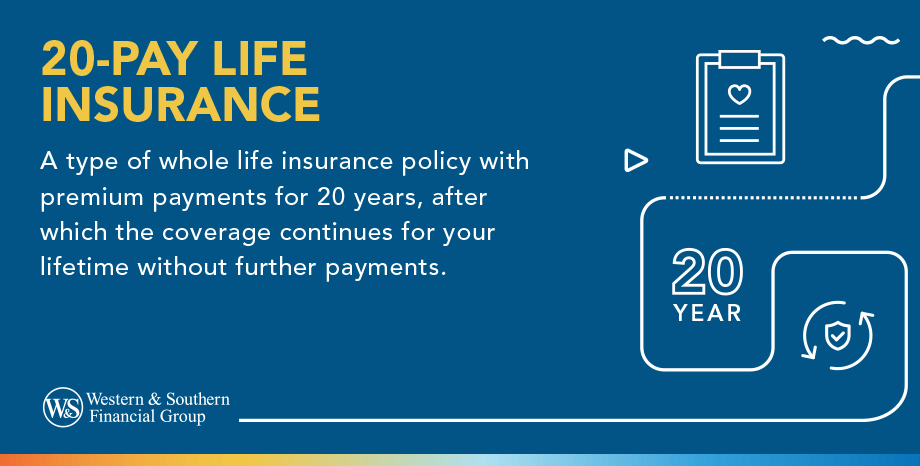
20-pay life insurance is a type of whole life insurance policy where you pay premiums for only 20 years. After this period, your policy is considered “paid-up.” This means you no longer owe premiums, but the coverage and benefits last your entire lifetime.
This permanent coverage may appeal to people who want lifetime protection without paying premiums for life.
For example, say you purchase a 20-pay life insurance policy at age 30. By age 50, your premium payments are complete. The policy’s benefits, including cash value growth, continue for the rest of your life.
Pros: Benefits of 20-Pay Life Insurance
Choosing 20-pay life insurance has several advantages for people who want lifetime coverage with a shorter payment period. Here are the key benefits:
- Lifetime Coverage: Unlike term life insurance, which ends after a set period, 20-pay life insurance provides coverage for your entire life.
- Limited Payment Period: You only pay premiums for 20 years, then keep the coverage without further payments.
- Cash Value Growth: The policy builds cash value over time. You can borrow against it or use it later in life.
- Estate Planning Advantages: The death benefit can help cover estate taxes or pass funds to loved ones.
- Tax Benefits: Cash value grows on a tax-deferred basis. The death benefit is usually not subject to income tax for beneficiaries.
Cons: Drawbacks of 20-Pay Life Insurance
- Higher Premiums: The shorter payment period leads to higher premiums compared to other policy types.
- Opportunity Cost: Money used for premiums could be invested elsewhere for potential growth.
- Complexity: Features like cash value, dividends, and policy loans can be hard to understand.
- Limited Flexibility: Once the payment schedule is set, it is difficult to adjust if your situation changes.
- Suitability Concerns: It may not fit people who need short-term coverage or lower premium payments.
20-Pay Life Insurance vs. 10-Pay Life Insurance
Both 20-pay and 10-pay policies are designed to provide lifetime coverage with a limited payment period designed to offer lifetime coverage. The main difference is how long you pay and how much you pay each year. Here’s how they compare:
| Feature | 20-Pay Life Insurance | 10-Pay Life Insurance |
|---|---|---|
| Payment Period | 20 years | 10 years |
| Premium Cost | Moderate | Higher |
| Cash Value Growth | Builds steadily | Builds faster |
| Cost Level | Lower | High due to shorter timeline |
| Ideal Candidate | Someone wanting a balance between cost and timeline | Someone who can handle higher premiums for a shorter period |
Example: A 35-year-old who chooses a 20-pay policy would finish payments by age 55. With a 10-pay life insurance policy, payments would end by age 45, but annual premiums would be higher.
Who Should Consider 20-Pay Life Insurance?
This limited-pay permanent life insurance policy is ideal for individuals who:
- Want lifetime coverage without paying premiums for life
- Prefer a policy that builds cash value over time
- Are in their 20s to 40s and can manage higher premiums early on
- Want to support long-term goals such as retirement income or passing assets to others
How Does 20-Pay Life Insurance Compare to Other Policies?
| Feature | 20-Pay Life Insurance | Whole Life Insurance | Term Life Insurance |
|---|---|---|---|
| Payment Period | 20 years | Lifetime | Set term (e.g., 20 years) |
| Coverage | Lifetime | Lifetime | Limited term |
| Cash Value | Yes | Yes | No |
| Premium Cost | Higher for shorter-term | Spread over lifetime | Lower |
| Flexibility | Paid-up after 20 years | Requires ongoing payments | No cash value |
Real-Life Example of 20-Pay Life Insurance
Imagine a couple, Mark and Sarah, in their early 30s. They have a young child and want to support their family long term. After reviewing their options, they choose a 20-pay life insurance policy with a $500,000 death benefit.
Their premiums are higher than a term policy, but they like knowing payments will end in 20 years. By the time they reach their 50s, they will no longer owe premiums. The policy’s cash value may also help support income later in life.
Factors to Consider When Choosing a 20-Pay Life Insurance Policy
Cost
Premiums are higher than traditional whole life policies because of the shorter payment period. Make sure the payments fit your budget.
Coverage Needs
Think about goals like income replacement, debt coverage, or leaving funds to others.
Cash Value Growth
Review how the policy’s cash value may grow over time.
Dividends
Some policies pay dividends that can increase coverage, reduce premiums, or add to cash value.
How to Maximize the Benefits of 20-Pay Life Insurance
- Start Early: The younger you are when purchasing the policy, the lower your premiums will be.
- Review Policy Riders: Consider adding riders like a waiver of premium, which covers your premiums if you become disabled.
- Monitor Cash Value Growth: Regularly review your policy’s performance to ensure it meets your financial expectations.
- Work with a Professional: A licensed professional can explain how the policy fits into your overall strategy.
Is 20-Pay Life Insurance Right for You?
20-pay life insurance can be a strong option for those who want lifetime coverage with a shorter payment timeline. While premiums are higher at the start, the long-term benefits and cash value growth may make it worth considering.