Saving for retirement is a long journey. You spend decades contributing and preparing for life after work. Along the way, mistakes can happen. It's actually pretty common.
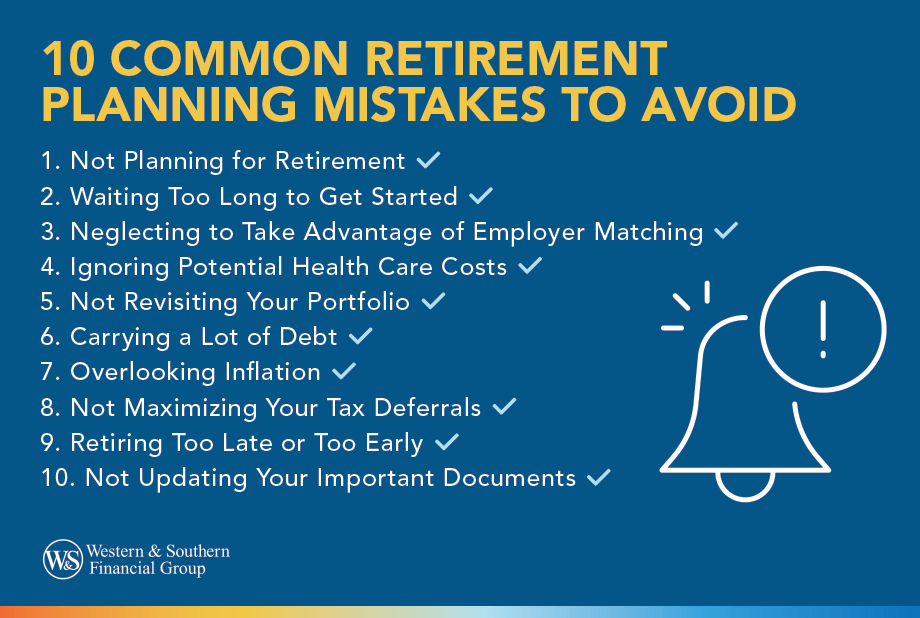
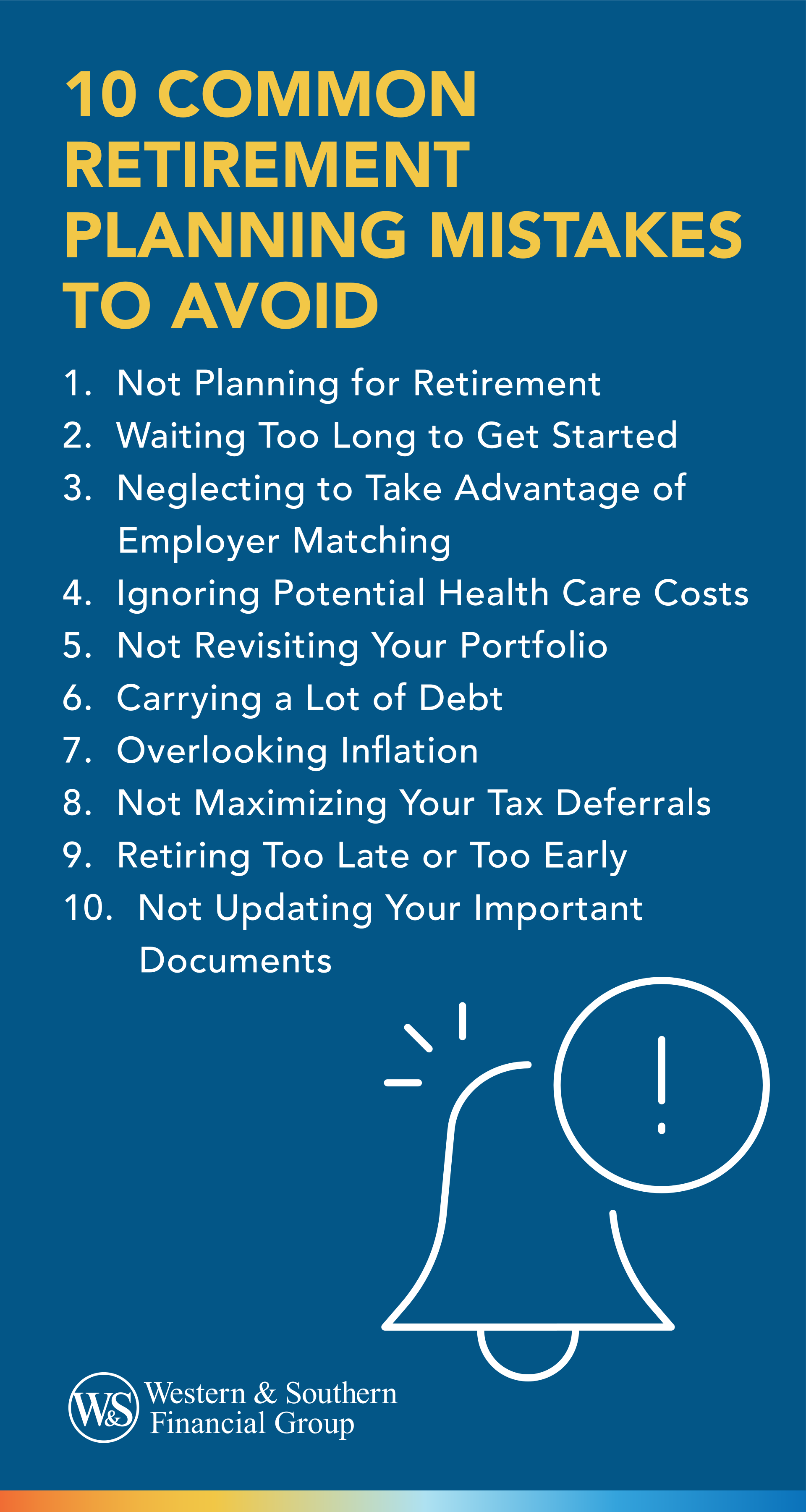
If you have faced setbacks, remember that retirement planning is a long-term process. It is more like a marathon than a sprint, and you may still have time to adjust and get back on track. With that in mind, here are 10 common mistakes to watch for.
1. Not Planning for Retirement
Americans are spending more years in retirement than ever before. According to the Social Security Administration, the average woman turning 67 this year may spend about 20 years in retirement.1 That means your savings may need to last for two decades or longer.
Social Security May Not Be Enough
Many people expect Social Security to cover most of their expenses. However, the average monthly benefit for retired workers is about $2,074.2 For many households, that may not cover:
- Housing Costs
- Utilities
- Groceries
- Transportation
- Health Care Expenses
Without additional savings, it may be difficult to maintain your current lifestyle.
Start With Your Retirement Goals
A good first step is to outline your retirement goals. You do not need exact numbers right away. Instead, think about:
- When you hope to retire
- Where you want to live
- How you want to spend your time traveling, volunteering, and spending time with family
These general ideas can help you estimate your future needs and begin building a plan.
2. Waiting Too Long to Get Started
It may feel like retirement is decades away. But the earlier you start saving, the more time your money has to grow. Starting sooner also gives you more room to recover from market ups and downs. Compound interest can help play a major role. When you begin saving at a younger age, your contributions have more time to build on themselves.
For example, assume two people earn $50,000 per year, contribute 4% to their 401(k), and receive the same employer match.
Using a 401(k) calculator , the difference in timing can lead to very different outcomes, as demonstrated below.
| Starting Age | Years Saving | Potential Balance at Retirement* |
|---|---|---|
| Mid-20s | 40 years | Nearly $1.5 million |
| Mid-40s | 20 years | Around $225,000 |
*This is a hypothetical example for illustration purposes only. Investments in securities involve market risk, including possible loss of principal.
It is never too late to begin saving. Try to enroll in your workplace 401(k) if it is available, or consider opening an Individual Retirement Account (IRA). Review your budget and look for ways to set aside money each month. Even small, consistent contributions can make a meaningful difference over time.
3. Neglecting to Take Advantage of Employer Matching
Many employees save for retirement through workplace plans such as a 401(k) or 403(b). About 70% of private company employees have access to these plans.3 If your employer offers one and you are not contributing, it may be worth enrolling and asking whether matching contributions are available.
How Employer Matching Works
Some employers match a portion of your 401(k) contributions up to a certain percentage. Here is how it could work if your employer offers matching up to 3%.
| If You Contribute | Employer Match (Up to 3%) | Total Added to Your Account |
|---|---|---|
| 3% of pay | 3% of pay | 6% of pay |
| 2% of pay | 2% of pay | 4% of pay |
| 0% | 0% | 0% |
If you currently have a 401(k), revisit your contributions, especially if your employer offers matching. If you can, consider increasing your contributions to at least the employer match to take advantage of it.
4. Ignoring Potential Health Care Costs
At age 65, you become eligible for Medicare, a federal program that helps cover many medical expenses. Original Medicare and Medicare Advantage plans pay for a wide range of services. However, they do not cover everything, and you are responsible for certain out-of-pocket costs.4
What Medicare Does Not Fully Cover
Even with Medicare, you may need to pay:
- About 20% of approved medical costs
- Additional expenses if you become seriously ill
- Most long-term care costs
As you get older, the likelihood of needing medical care increases. Even if you are healthy today, health care expenses should be part of your retirement plan. It has been reported that nearly 70% of people will need some form of long-term care. Due to rising medical costs, Medicare does not cover most of these expenses.5,6
Planning for the Unknown
While you can't predict your health care needs, you can aim to lead a healthy lifestyle. Eating well, keeping your mind sharp and getting regular exercise can help you live healthier in retirement. You're never too old to start getting active.
5. Not Revisiting Your Portfolio
When you begin retirement planning, your needs and risk tolerance are often very different from what they will be as you approach retirement. Your investments should adjust over time to reflect those changes. If they do not, your savings could face added risk when you have less time to recover from market losses.
Your retirement portfolio should not be set and forgotten. Doing so can lead to costly mistakes, such as holding investments that no longer match your goals or risk level. While markets are unpredictable and past performance does not guarantee future results, it is important to focus on preserving your savings and supporting long-term income as retirement nears.
Working with a financial professional can help. They can review and diversify your portfolio regularly and recommend updates based on your goals and timeline. Keep in mind that diversification does not guarantee gains or help protect against losses in a declining market.
6. Carrying a Lot of Debt
Having a lot of debt is another common retirement planning mistake. While reducing debt is always a smart move, it becomes even more important as retirement gets closer. Ongoing payments can reduce the savings you will rely on later.
Once you retire, you may be on a fixed income. Large or unexpected expenses, including debt payments, can quickly strain your budget. That does not mean you should stop saving for retirement to focus only on debt. Instead, review your budget, look for areas to cut back, and work with a financial professional to help develop a plan that allows you to do both. Addressing debt now can make retirement more manageable later.
Before retirement, try to pay down outstanding balances and reduce credit card spending. Work on building an emergency savings account to help cover unexpected costs so you do not have to borrow money or rely on credit cards.
7. Overlooking Inflation
Inflation has remained around 3% in recent years. However, it can rise quickly. In 2022, inflation reached some of its highest levels since the early 1980s.7 That kind of increase can affect your long-term retirement strategy.
Why Inflation Matters
Inflation reduces purchasing power. As prices rise, your money buys less than it did before. Over time, even steady inflation can gradually reduce the value of your savings.
How to Address Inflation
To help offset inflation, consider investments that aim to keep pace with rising prices or potentially outpace them. These may include:
- Stocks
- Mutual funds
- Other securities
A financial professional can help you build a long-term strategy that factors in inflation.
8. Not Maximizing Your Tax Deferrals
Many retirement accounts offer tax advantages, but some provide greater benefits than others. The Internal Revenue Service offers tax breaks to encourage retirement savings. It makes sense to use them when possible.
How Different Accounts Are Taxed
| Account Type | When You Pay Taxes | How It Works |
|---|---|---|
| Traditional 401(k) | Later | Contributions are tax-deferred, which may lower your taxable income today. You pay taxes when you withdraw the money in retirement, and earnings grow tax-deferred in the meantime. |
| Roth IRA | Now | Contributions are made with after-tax dollars. Qualified withdrawals after age 59½ are tax-free, including earnings. |
In addition, some retirement accounts allow people age 50 and older to make catch-up contributions. These extra contributions may be tax-deductible and can help increase retirement savings.8
Using tax-advantaged accounts strategically can reduce your tax burden over time. A tax or financial professional can help you understand the ins and outs of maximizing tax advantages with your retirement savings.
9. Retiring Too Late or Too Early
When retirement is years away, it is easy to picture leaving work at the perfect time. In reality, plans can change. You may retire earlier than expected or work longer because your savings fall short.
If You Retire Too Early
Retiring early can affect your income in several ways:
- You may miss years of potential retirement contributions
- Claiming Social Security before full retirement age can lower your monthly benefit
- Drawing from accounts sooner may reduce long-term growth
If You Retire Later
Working longer can offer benefits, but it may also bring trade-offs:
- Higher earnings could increase your tax liability
- Delaying Social Security may increase your monthly benefit
- You have more time to contribute to retirement accounts
Planning Your Retirement Timing
Choosing when to retire depends on your savings, income sources, and personal goals. A financial professional can help you evaluate your options and build strategies to address unexpected changes. This can help you move into retirement with a clear plan, whether you stop working earlier or later than expected.
10. Not Updating Your Important Documents
As you get older, you may have more paperwork to manage. This can include:
- Retirement accounts
- Investment accounts
- Life insurance policies
- Estate planning documents
Keep these documents accessible and up-to-date. If something happens to you, your wishes should be clearly outlined, including who can make decisions on your behalf.
Review Your Beneficiaries
Many retirement accounts and life insurance policies let you name a beneficiary. This is the person or organization who receives the money when you pass away. It could be:
- A spouse
- Children
- Another family member
- A charity
If you do not name a beneficiary, or forget to update one, the money may go through probate. This can delay how long it takes for funds to be distributed.
You may also want to set up financial and medical durable powers of attorney to name the people who can make those decisions for you if you're not capable. These documents name someone to make financial or medical decisions if you are unable to do so.
Keep Documents Up-to-Date
Review them regularly and make sure they reflect your updated lifestyle, especially after major life events such as marriage, divorce, or the birth of a child. An estate planning attorney or other professional can help you set up these documents correctly.
Bottom Line
Retirement planning can be simpler than it seems, and starting sooner can make a difference. If you’re ready to take the next step, meet with a financial professional who can review your income, debts, and expenses and discuss your retirement goals. They can help you build a strategy that fits your budget and supports your long-term plans.
Sources
- Retirement and survivors benefits: Life expectancy calculator. https://www.ssa.gov/oact/population/longevity.html.
- Monthly Statistical Snapshot. https://www.ssa.gov/policy/docs/quickfacts/stat_snapshot/.
- Percent of private industry workers with access to retirement benefits: defined contribution plans. https://data.bls.gov/timeseries/NBU22000000000000028312.
- Costs. https://www.medicare.gov/basics/costs/medicare-costs.
- Most aging Americans will need long-term care in their lifetime. Loved ones often take on the labor and costs. https://www.cbsnews.com/news/aging-americans-long-term-care-families-labor-costs/.
- Consumer price index summary. https://www.bls.gov/news.release/cpi.nr0.htm.
- Center for Microeconomic Data. https://www.newyorkfed.org/microeconomics/sce#/.
- Retirement topics - Catch-up contributions. https://www.irs.gov/retirement-plans/plan-participant-employee/retirement-topics-catch-up-contributions.