It is important to celebrate the transition to retirement. This shift gives you the chance to live on your own terms, without a full-time work schedule and the stress that can come with it.
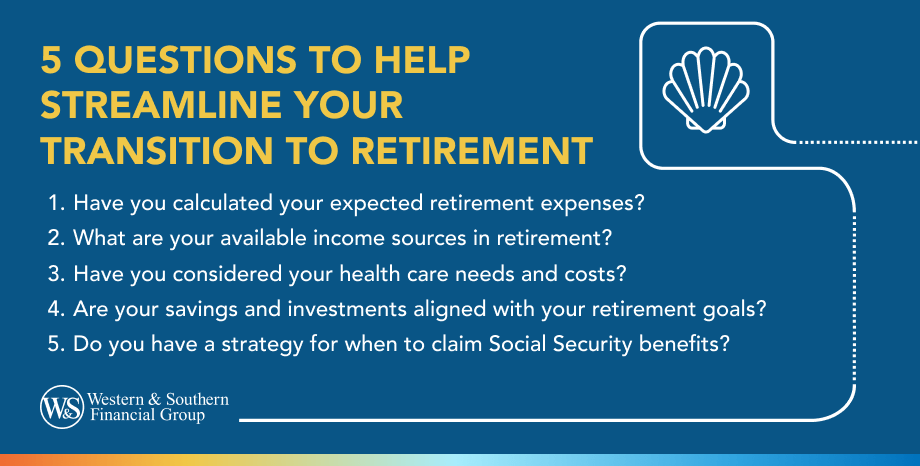
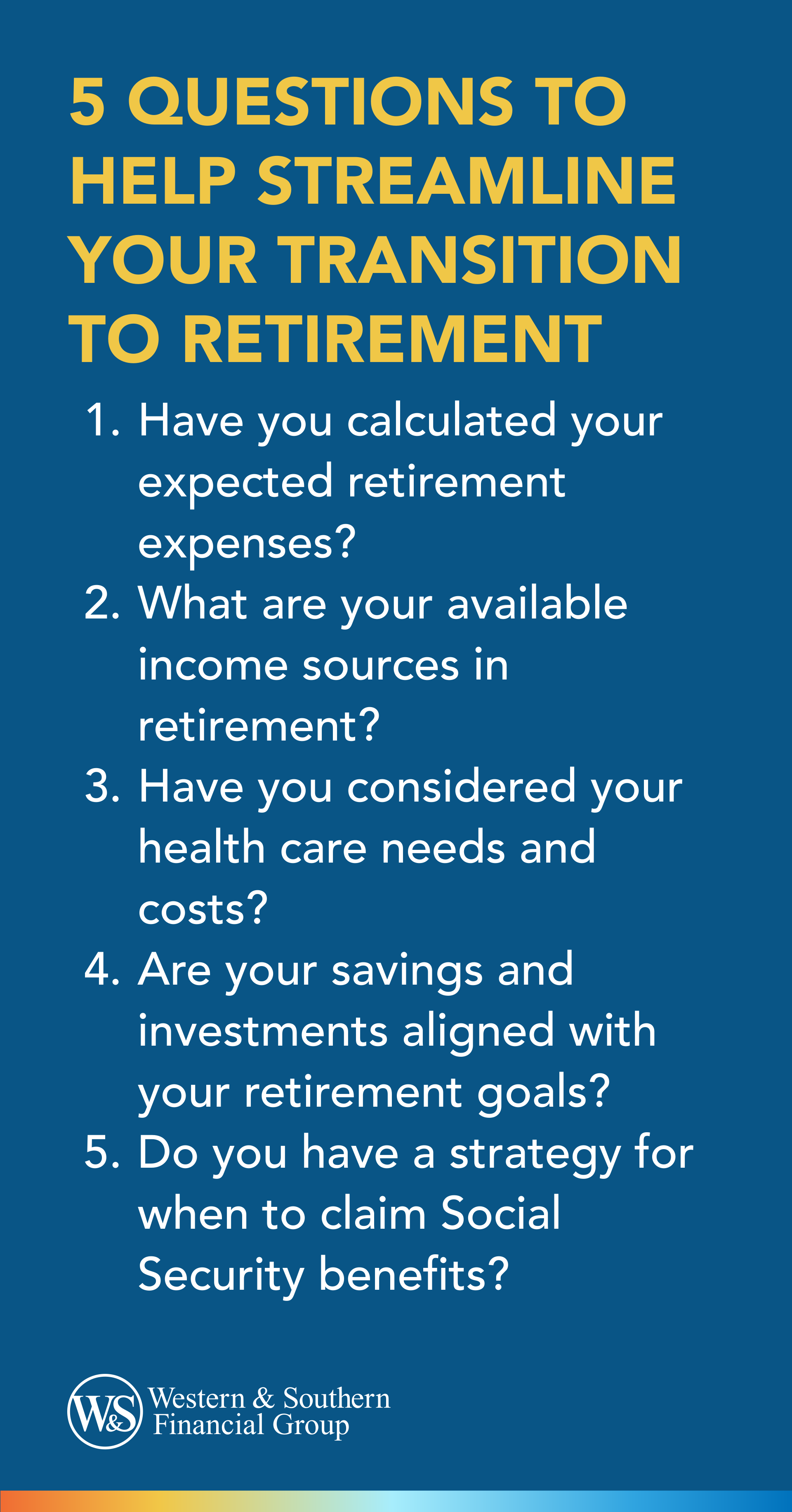
Retirement marks the start of a new chapter. It may also mean letting go of habits, beliefs, and roles that have shaped your life so far. If you are getting ready to retire, these five questions can help you prepare for the next phase of your life, including the financial, professional, and personal changes that may be ahead.
1. Will You Make a New Budget?
Your retirement strategy likely prepared you to cover living expenses once your paycheck stops. Still, your monthly spending may look different in retirement.
Your monthly transportation expenses may decrease once you eliminate a daily commute, for example, but the cost of health care benefits through Medicare may be higher than the premiums you paid for a workplace-sponsored plan. Also, having more time to travel or pursue hobbies may increase entertainment-related expenses.
Creating a new monthly budget can help you understand:
- How much income you need each month
- When to withdraw from retirement accounts
- How to adjust spending if costs change
A clear budget for retirement can help you stay organized and confident about your income.
2. Do You Have New Financial Goals?
For many people, retirement is the main long-term goal during their working years. Once you reach it, it is time to think about what comes next.
A common post-retirement goal may include how to make the most of your retirement income, and appropriately balance the risk and potential returns of your investment portfolio. However, it could be equally important to set financial goals that motivate and excite you.
You may also have personal goals, such as paying off remaining debt, supporting a charity or helping with a grandchild’s college costs. Your goals do not stop once you retire. They may simply shift. Setting new targets can give you direction and purpose during this stage of life.
A clear retirement plan helps you manage income and handle new expenses. Start Your Free Plan
3. When Will You Claim Social Security?
A lack of patience has a price. How? When it comes to the right time to claim Social Security, it could pay to wait. Here is how age affects benefits:
| Claiming Age | Benefit Amount |
|---|---|
| 62 | About 75% of full benefit |
| Full retirement age | 100% of full benefit |
| 70 | Highest possible monthly benefit |
Claiming at age 62 lowers your monthly payment. Waiting until full retirement age or later increases it. Benefits grow each year you delay, up to age 70.1
To decide when to claim, consider:
- Your monthly budget
- Other income sources
- Your savings
- Your long-term goals
Looking at the full picture can help you choose a start date that fits your situation.
4. How Will You Spend Your Time?
Retirement can open the door to many possibilities. You may want to:
- Travel
- Start a small business
- Volunteer
- Spend more time with family
- Focus on hobbies
For the first time in decades, you may control your daily schedule. While that freedom is exciting, it can also feel like a big adjustment.
Make a list of activities you want to try. Think about how you want your weeks to look. Creating a simple routine can help you stay active and engaged.
5. Who Will You Be in Retirement?
Work often shapes identity. Your career may have given you structure, purpose, and pride. When that chapter ends, you may need to rethink how you see yourself.
Retirement gives you space to grow in new ways. You might move from business leader to traveler. Or from full-time employee to mentor or entrepreneur.
Ask yourself:
- What parts of my identity do I want to keep?
- What new roles do I want to take on?
- What values do I want to focus on now?
This stage of life allows you to shape your identity in ways that reflect who you are today.
The Bottom Line
Retirement is more than leaving a job. It is a shift in lifestyle, priorities, and identity.
Asking thoughtful questions about your budget, goals, Social Security timing, daily routine, and sense of purpose can help you prepare for what comes next. With clear direction, you can step into retirement feeling ready for the years ahead.
Retirement planning helps you secure income for your future lifestyle. Start Your Free Plan
Sources
- If you were born between 1943 and 1954 your full retirement age is 66. https://www.ssa.gov/benefits/retirement/planner/1943.html.