Should I Retire at 60?
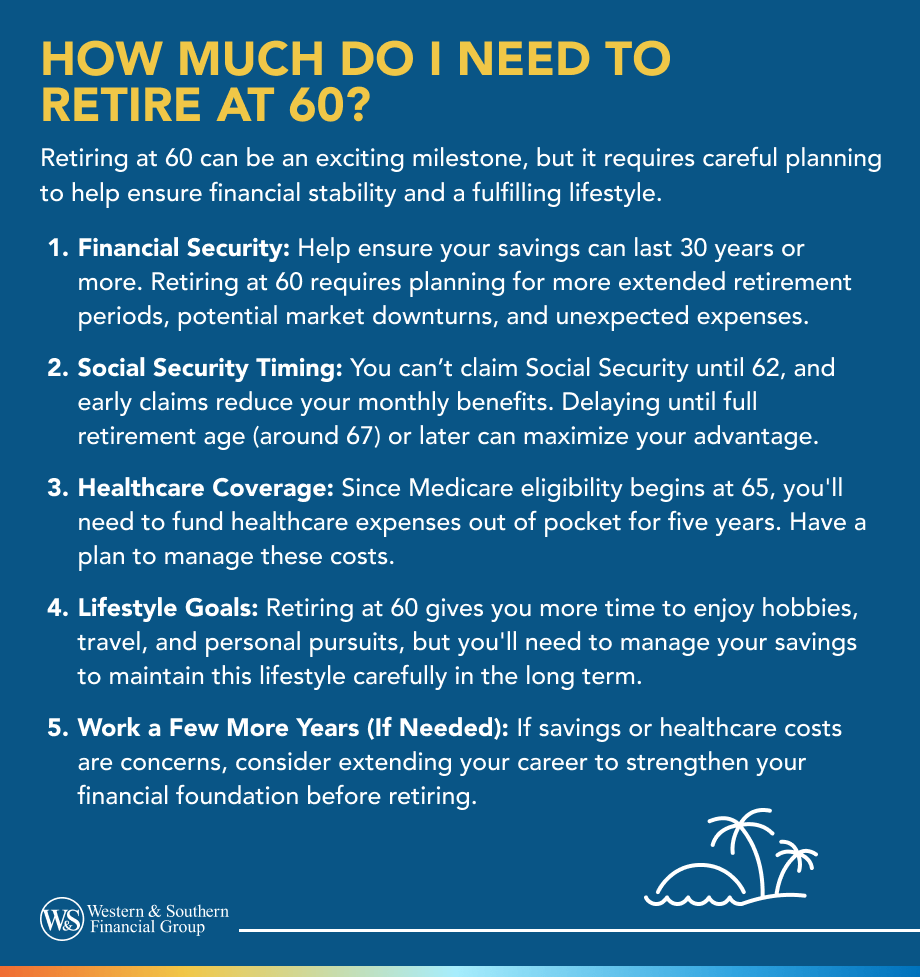
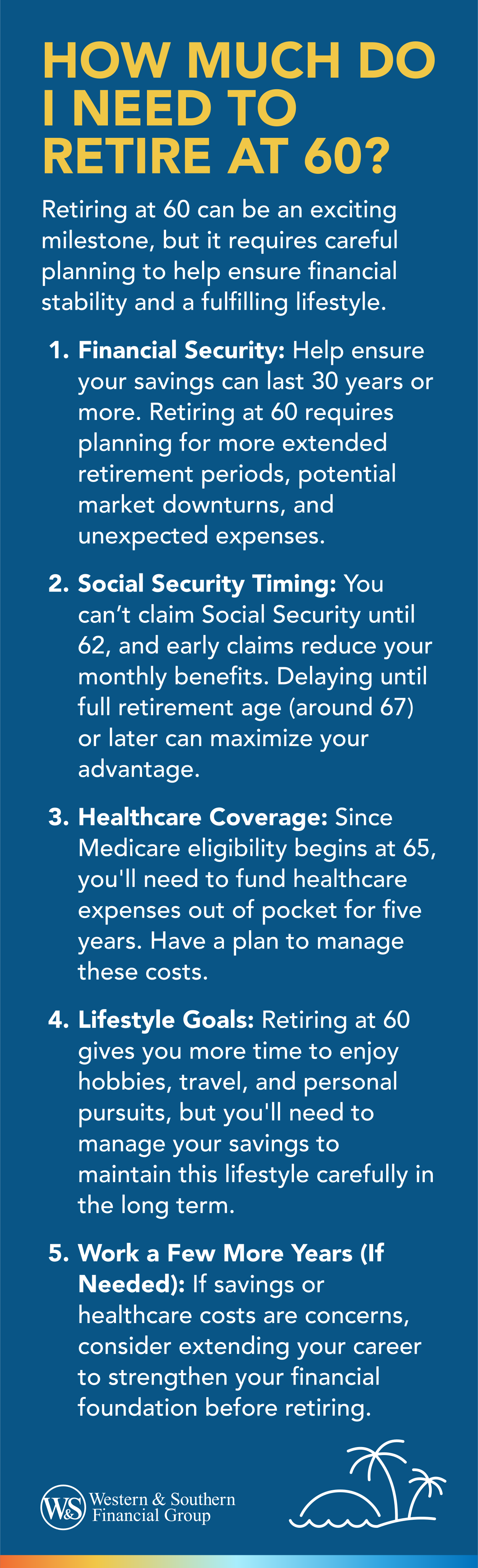
Deciding whether to retire at 60 is a personal choice that depends on your finances, health, and lifestyle goals. Here are a few things to think about:
- Financial Security: Do you have enough savings to last 30 years? Retiring at 60 means your savings must stretch further, so it helps to plan for market downturns and unexpected expenses in retirement.
- Social Security: If you retire at 60, you cannot claim Social Security benefits until at least age 62. Taking benefits early will reduce your monthly payments. Waiting until full retirement age (around 67) or later can increase your benefit.
- Healthcare: You will need to cover healthcare costs out of pocket until you are eligible for Medicare at 65. Think about how you will handle this expense.
- Lifestyle Considerations: Retiring at 60 gives you more time to enjoy retirement, travel and pursue hobbies. However, it also means you may need to watch your spending so your savings last.
If you feel prepared and have strong savings, retiring at 60 could work for you. If you are concerned about your savings or healthcare costs, working a few more years may help strengthen your finances.
What Are the Average Retirement Savings at 60?
On average, Americans approaching retirement at 60 have about $200,000 to $250,000 in retirement savings. Still, many experts suggest having at least eight times your annual salary saved by this age to help maintain your current lifestyle.1
If you earn $100,000 a year, you may want to aim for $800,000 to $1 million in retirement savings by age 60. This number is not set in stone. It is a general guideline. Your actual needs may be higher or lower based on where you live, healthcare costs, and the lifestyle you want in retirement.
Retiring at 60 is a goal for many people, but it takes careful planning and consistent saving. You can adjust your approach based on your situation. Review your savings, estimate your future expenses, and think about the factors that may affect your retirement income so you can build a stable and comfortable future.
Factors That Affect How Much You'll Need To Retire
Planning for retirement can be exciting, but it also raises important questions, including, "How much do I need to retire at 60?" The answer depends on your life, retirement goals, and current finances. Here are key factors that can influence how much you may need.
- Expected Lifespan: Think about how long you may live based on your family history and overall health. If you retire at 60, you could live another 20 to 30 years. Planning for a longer life can help you avoid running out of savings.
- Lifestyle Choices: Your lifestyle in retirement plays a big role in how much you will need. Higher spending often means you will need a larger amount saved.
- Debt and Expenses: Carrying debt into retirement can put pressure on your finances. Consider expenses like a mortgage or car payments. You will also need enough savings to cover daily costs such as food, utilities, and transportation.
- Healthcare Costs: Healthcare expenses often increase with age. It helps to plan for both expected and unexpected costs. Medicare begins at age 65, so you may need to cover insurance and medical expenses from age 60 to 65 on your own.
- Housing Costs: Think about whether your home will be paid off by retirement. If not, costs like a mortgage, property taxes, and maintenance may take up a large part of your budget.
- Inflation: Inflation can reduce your purchasing power over time. Building a strategy that accounts for rising costs can help your savings last longer.
- Investment Returns: The performance of your investments can affect how much you need to save. Reviewing and adjusting your strategy over time can help you stay on track.
Many people aim to retire at 60, but reaching that goal takes careful preparation. Reviewing your expected lifespan, lifestyle, and expenses can give you a clearer picture of what to plan for. You may also want to speak with a retirement professional for guidance based on your situation.
Calculate Your Future Expenses
Understanding your future expenses is important when planning for retirement at 60. This step helps you estimate how much money you may need to maintain your lifestyle over time. Here's how to calculate your expenses:
- Current Living Expenses: Review your monthly expenses, including housing, utilities, groceries, transportation, insurance, and other regular bills. If you already track your spending, use those numbers as a starting point.
- Estimate Post-Retirement Changes: Retirement can shift your expenses. For example, commuting costs may decrease, while healthcare costs may increase. Think about how your lifestyle may change and adjust your budget.
- Healthcare Costs: Healthcare can become a major expense as you age, even with Medicare. Plan for out-of-pocket costs and look into average expenses for retirees in your area. Be sure to factor in inflation.
- Inflation: The cost of living tends to rise over time. To help your savings keep up, apply an estimated annual inflation rate, usually around 2% to 3%, to your current expenses. This can give you a clearer estimate of future costs.
- Longevity: Plan for a retirement that may last 30 years or longer. Many people now live into their 80s and 90s, so it is important to prepare for a longer time horizon.
- Desired Lifestyle: Think about how you want to spend your retirement and the costs involved. This may include travel, hobbies, or helping family members. Try to match your plans with realistic spending expectations.
- Emergency Fund: An emergency fund still matters in retirement. Set aside money for unexpected costs, such as home repairs or medical bills.
By carefully calculating your future expenses, you'll understand how much you need to save for a comfortable retirement at 60.
Add Up All Your Potential Income Sources
One key step when planning for retirement at 60 is adding up all your potential income sources. Understanding where your money will come from and how much you can expect helps you build a plan that can last. Here are the main sources to consider:
Social Security Benefits
Social Security plays an important role in retirement income, but at 60, you are not yet eligible for full benefits. Estimate your monthly benefit based on your earnings history and when you plan to start collecting.
Retirement Accounts
Your 401(k), IRA, and other retirement accounts will help fund your retirement. A common approach is the 4% rule, which suggests withdrawing 4% of your savings each year to help your funds last.
Pension Income
A pension can provide a steady monthly income. Check whether it includes cost-of-living adjustments to help maintain your purchasing power over time.
Savings and Cash Reserves
Savings and cash reserves can help cover unexpected expenses or large purchases. Keep some money in easily accessible accounts, such as a high-yield savings account, for quick access when needed.
Annuities
Annuities can provide a steady income stream. Single premium deferred annuities (SPDAs) delay payments, while immediate annuities begin payments right away. These can help supplement your income and reduce the risk of running out of money.
Part-Time Work
Many retirees choose part-time work to stay active and earn extra income. This can help cover extra expenses or delay withdrawals from retirement accounts. It may also help you stay engaged with your community.
Adding up your expected annual income sources gives you a clearer picture of your future. When you understand what each source can provide, you can build a plan that supports your lifestyle at 60 and beyond.
Planning Retirement Withdrawals
Retiring at 60 is a common goal, but it takes careful planning to make your savings last. The key is deciding how much you can withdraw each year without running out of money. Here is what to consider when planning your withdrawals:
- Understanding the 4% Rule: The 4% rule suggests withdrawing 4% of your savings each year, adjusted for inflation.2 This approach is designed to last about 30 years, but results can vary based on market performance and unexpected costs.
- Factor in Social Security and Other Income Sources: Coordinate withdrawals with other income sources. Social Security benefits are lower if taken at 62 instead of full retirement age or 70. Pensions, annuities, rental income, or part-time work can reduce the need to draw from savings.
- Consider Required Minimum Distributions (RMDs): If you have a traditional IRA or 401(k), you must begin required minimum distributions at age 73. Missing them can lead to penalties, so plan ahead to manage taxes.
- Adjust for Market Conditions: Market changes can affect your savings. A flexible withdrawal approach can help. You might withdraw less during downturns and more during stronger market periods.
- Do Not Forget About Taxes: Withdrawals from tax-deferred accounts, such as traditional IRAs and 401(k)s, are taxed as income. Working with a tax professional can help you manage taxes and keep more of your money.
- Review and Adjust Your Plan: Retirement is not a one-time decision. Review your withdrawal strategy often and adjust it based on changes in your life, the market, and your spending.
Tips for Retiring Comfortably at 60
Retiring at 60 can give you more time to enjoy life. However, it takes careful preparation and smart decisions. Here are tips to help you prepare.
Start Planning Early
Start as early as possible to give your savings more time to grow. Consistent contributions to a 401(k) or similar plan can make a big difference over time.
Calculate Your Retirement Expenses
Estimate your monthly and yearly expenses. Include housing, healthcare, and inflation. Also plan for large one-time costs.
Maximize Your Retirement Accounts
Contribute as much as you can to your retirement accounts. If you are age 50 or older, catch-up contributions can help increase your savings.
Consider Healthcare Costs
Healthcare can be a major expense, especially before Medicare begins at 65. Review your coverage options and set aside funds for medical costs.
Diversify Your Income Sources
Relying on one income source can be risky. Consider using a mix of Social Security, pensions, retirement accounts, annuities, and part-time work.
Reduce Debt Before Retiring
Debt can limit your spending in retirement. Work to pay off high-interest debt and reduce major obligations before you retire.
Reevaluate Your Investment Strategy
As retirement gets closer, review your investment mix. Balance growth with stability by using a mix of stocks, bonds, and other assets.
Plan for Longevity
People are living longer, which means your savings may need to last 20 to 40 years. Plan for a longer timeline by saving more or adjusting your withdrawals.
Create a Withdrawal Strategy
When and how you withdraw money matters. Consider Social Security timing, required distributions, and the order of withdrawals to manage taxes and extend your savings.
Stay Flexible
Life can change. Stay open to adjusting your spending and plans as needed to stay on track.
Conclusion
Retiring at 60 is possible with careful preparation and regular review of your strategy. Start early, monitor your progress, and make adjustments over time to support your goals in retirement.
Sources
- How much you should have saved for retirement at every age — and how to reach that goal. https://www.cnbc.com/select/savings-by-age.
- What is the 4% rule in retirement? https://www.citizensbank.com/learning/four-percent-rule-of-retirement.aspx.