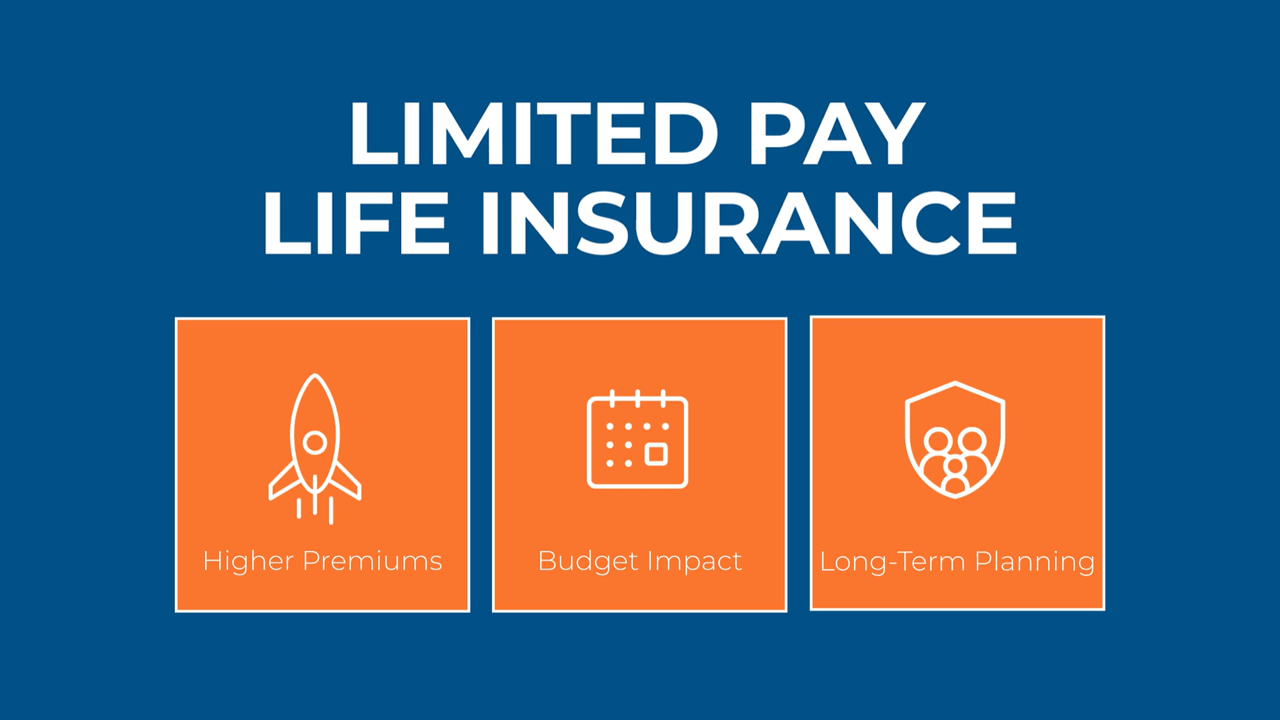
Definition of a Limited Pay Life Policy
A limited pay life policy is a type of whole life insurance. It allows you to make premium payments for a set number of years in exchange for lifetime coverage.
The key feature of this type of life insurance is the limited payment period. Premium payments end after a set number of years, usually 7, 10, 15, or 20. Your coverage continues after your last payment and lasts for the rest of your life.
This is different from term life insurance. With term life insurance, coverage ends when you stop making payments at the end of the selected term, such as 10, 15, 20, or 30 years.
Example of a Limited Pay Life Policy
The main feature of a limited pay life policy is the shorter payment period. For example:
- A 10-pay life policy requires premium payments for 10 years. If you buy the policy at age 40, you would finish payments by age 50 while keeping coverage for the rest of your life.
- A 20-pay life policy spreads payments over 20 years. This can lower the yearly payment amount while still offering a set payment period.
After the payment period ends, the policy stays active and no more premiums are required. The cash value in the policy can continue to grow and may be used for loans or withdrawals if needed.
Key Features of Limited Pay Life Insurance
- Fixed Premium Period: Payments are only required for a set duration, commonly 7, 10, 15, or 20 years.
- Lifelong Coverage: Coverage continues for the insured’s lifetime, even after the premium payment period ends.
- Cash Value Growth: These policies accumulate cash value over time, which grows on a tax-deferred basis.
- Flexible Payment Options: Policyholders can often choose monthly, quarterly, semi-annual, or annual payment schedules.
- Tax Benefits: The cash value grows tax-deferred, and death benefits are generally tax-free for beneficiaries.
How Does a Limited Pay Life Policy Work?
The biggest decision you need to make with a limited pay life policy, aside from how much coverage you need, is the set period you choose to pay your premiums. Most policies offer payment periods of 7, 10, 15, or 20 years.
For example, if you choose a 15-pay insurance policy at age 30, you will pay premiums for the first 15 years of the policy. Even if you live to age 85, your payments will be complete by age 45, leaving 40 years without premium payments. With a traditional whole life policy, you could pay premiums for more than 55 years.
Each premium payment for a limited pay policy is higher than a standard whole life policy because the total cost is spread over a shorter period.
Like traditional whole life insurance, you can choose to pay premiums monthly, quarterly, semiannually, or annually.
It is also important to know that you cannot convert an existing traditional policy into a limited pay life policy after it is active. You must choose this type of policy when you first purchase coverage.
Types of Limited Pay Life Insurance Policies
| Policy Type | Payment Period | Key Features |
|---|---|---|
| 7-Pay Life Policy | 7 Years | Higher premiums, faster cash value growth, may suit high-income earners nearing retirement |
| 10-Pay Life Policy | 10 Years | Moderate premiums, may fit individuals balancing cost and a shorter payment period |
| 15-Pay Life Policy | 15 Years | Lower premiums, may work well for younger individuals with longer earning timelines |
| 20-Pay Life Policy | 20 Years | Lowest premiums, may suit younger individuals who want to start early |
What Does a Limited Pay Life Policy Cost?
Different life insurance companies offer their own quotes for coverage for a limited pay life policy. The cost depends on several factors:
- The number of years you choose to pay premiums: The shorter the payment period, the higher your premiums will be. For example, premiums for a 7-pay life policy are higher than premiums for a 20-pay life policy at the same coverage amount because you have fewer years to pay the total cost.
- The amount of coverage you need: Higher coverage amounts lead to higher premiums. For example, a $200,000 limited pay policy costs more than a $100,000 policy.
- Your age, gender, and overall health when you buy the policy: The younger and healthier you are when you purchase the policy, the lower your premiums may be. Insurers also price policies differently for men and women based on life expectancy.
In 2026, life expectancy at birth is 81.4 years for women in the United States and 76.5 years for men, a difference of 4.9 years.1 Because women are expected to live longer, their coverage often costs less since insurers can spread the risk over a longer period.
What Are the Benefits of a Limited Pay Life Policy?
The benefits of a limited pay life policy include:
- Guaranteed Level Premiums For A Fixed Period: The premiums you pay stay the same for the limited period you choose for your policy.
- Guaranteed Lifetime Insurance Coverage: Like other whole life insurance policies, your coverage is designed to last your entire life, as long as you pay your premiums on time and keep the policy active.
- Cash Value That Grows Tax-Deferred: Because premiums are higher, more money builds within the policy, which may allow the cash value to grow faster. Like other whole life policies, this growth is tax-deferred.
- Policy Dividends: Dividends are not guaranteed, but your policy may pay them. If paid, they can provide an additional source of income.
- Living Benefits: A policy with living benefits may allow you to use part of the death benefit while you are still alive. This may apply if you have a qualifying medical condition or a terminal or chronic illness, as defined in your policy.
- No Premium Payments During Retirement: A key feature of this policy is the ability to complete premium payments within a set time. This can help you avoid paying premiums during retirement.
- Income During Retirement: You may access the cash value through loans or withdrawals to supplement income if needed. However, this can reduce your policy’s cash value and death benefit, and unpaid loans may accrue interest. Withdrawals or policy lapses could also have tax implications, so this approach is typically used only in limited or emergency situations.
What Are the Potential Drawbacks of a Limited Pay Life Policy?
Limited pay life policies may not be the right fit for everyone. Here are some potential drawbacks to consider:
- Higher Premiums: Because you pay premiums over a shorter period, they are usually higher than what you would pay for a whole life policy over your lifetime. These higher costs can put pressure on your budget.
- Risk of Becoming a Modified Endowment Contract (MEC): Limited pay life policies can become a modified endowment contract (MEC) because they involve overfunding life insurance. This happens when too much money is added to the policy within a set time frame. If the policy becomes a MEC, it may lead to tax consequences set by the IRS.2 It is a good idea to speak with a tax professional and a financial representative about how this could affect you.
- Opportunity Cost: Opportunity cost refers to what you might miss out on by using your money for one purpose instead of another. Paying higher premiums may limit your ability to invest in other options, such as stocks, bonds, or mutual funds. Depending on your goals, it may be worth comparing these choices.
Is a Limited Pay Life Policy Right for Me?
A limited pay life policy can be a strong option for those who want lifelong coverage without making premium payments for their entire life. It also offers flexibility and the potential to build cash value over time. Before making a decision, review your goals, budget, and long-term plans. If you want to learn more, consider speaking with a financial advisor or insurance professional to review your options and find a policy that fits your needs.
Sources
- Life Expectancy. https://www.cdc.gov/nchs/fastats/life-expectancy.htm.
- Administrative, Procedural, and Miscellaneous. https://www.irs.gov/pub/irs-drop/rp-01-42.pdf.