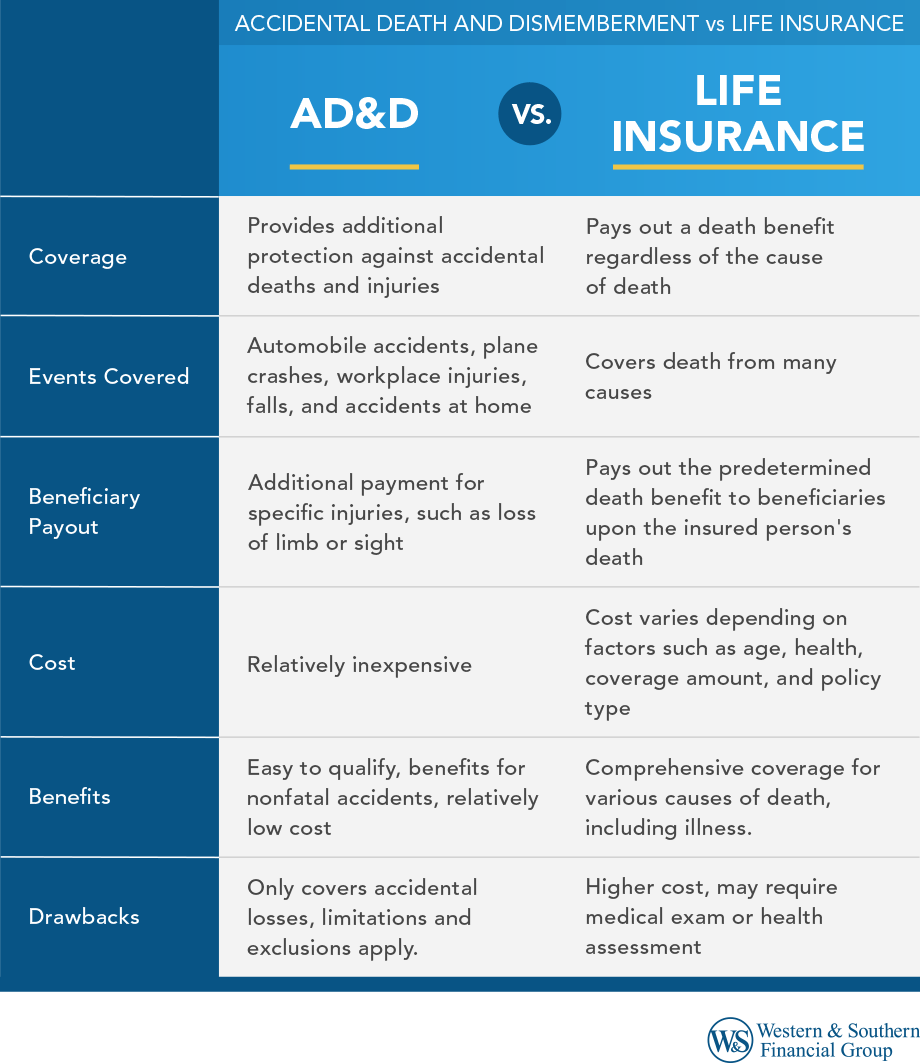
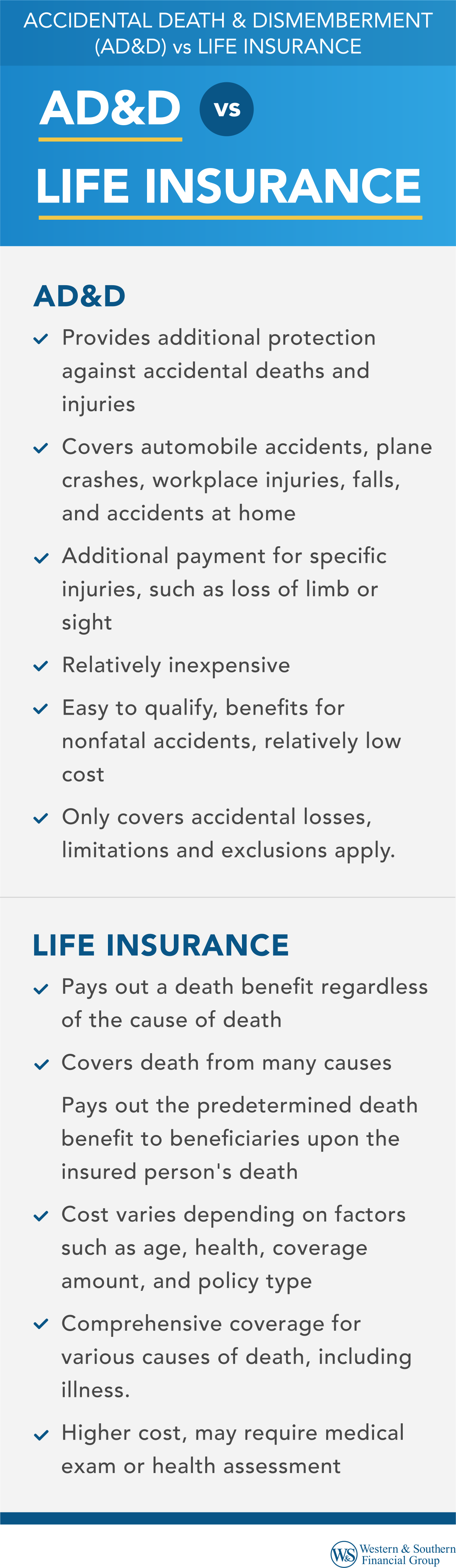
Accidental death & dismemberment and life insurance is not just a technical comparison. It is about what happens to your family when life takes an unexpected turn. Knowing how these insurance options work and where they fall short can help you make decisions that align with your goals, your risks, and the people who rely on you.
Life Insurance: What It Covers
Life insurance pays a death benefit to your chosen beneficiary when you pass away. The benefit is paid whether death results from illness, natural causes, or an accident, as long as the policy is active and premiums are paid.
Most life insurance policies require underwriting. This process may include health questions, a medical exam, or evidence of insurability. Once approved, coverage typically remains in force as long as policy terms are met.
Life insurance can be purchased in several ways:
- Individually through an insurance company
- As group life insurance through an employer
- As optional life insurance added to a workplace benefits package
Types of Life Insurance Policies
The two main types are:
- Term life insurance: Coverage lasts 10, 20, or 30 years. If the insured dies within this term beneficiaries get the death benefit. If the term ends first, coverage ceases without payout.
- Permanent life insurance: Includes whole life and universal life insurance. These policies last for life and may build cash value over time. Premiums are typically higher. Loans taken against cash value can reduce the death benefit and may create tax consequences.
What Life Insurance Typically Covers
- Illnesses such as cancer or heart disease
- Natural causes related to aging
- Accidental death from car crashes, falls, or fire-related deaths
- Workplace incidents, including law enforcement line-of-duty risks
Most policies include a suicide exclusion during the first two years. After that period, coverage usually applies.
What Is Accidental Death & Dismemberment?
Accidental death and dismemberment (AD&D) insurance goes beyond basic accidental death coverage. In addition to paying a benefit if death occurs due to an accident, it may also pay benefits for certain qualifying injuries.
What AD&D Insurance Covers
Dismemberment coverage may provide benefits for:
- Accidental death
- Loss of limbs, hands, feet, or fingers
- Loss of sight, hearing, or speech
- Paralysis caused by an accident
Dismemberment benefits are usually paid as a percentage of the total coverage amount. For example, losing one limb may pay about 50 percent of the benefit, while losing two limbs or eyesight may pay the full amount. Some policies also include partial benefits for less severe injuries.
Common Exclusions
AD&D policies commonly exclude coverage for:
- Drug overdose
- Illegal activities
- Acts of war
- Certain hazardous hobbies
- Accidents involving intoxication
Coverage definitions vary by insurance company. Reviewing the policy details helps clarify what is and is not covered.
Accidental Death Insurance: Definition & Purpose
Accidental death insurance pays a benefit only if death results from a covered accident. Death caused by illness, medical conditions, or natural causes is not covered.
This coverage is limited by design and applies to specific events, such as traffic accidents, falls, or accidental poisoning.
Coverage is commonly offered as:
- A standalone accidental death insurance policy
- A supplemental benefit through an employer
- An add-on to a life insurance policy with a low optional premium
Age limits may apply. Benefits may be reduced or end after a certain age
Accidental Death vs AD&D: Similarities & Differences
Accidental death and AD&D insurance both focus on accidents, not illnesses, offering limited coverage compared to insurance. They're often confused and usually available as employer supplemental plans.
| Feature | Accidental Death | AD&D |
|---|---|---|
| Covered Events | Death from a covered accident | Death or serious injury from a covered accident |
| Injury Benefits | Not covered | Covered for qualifying permanent injuries |
| Partial Payouts | No | Yes |
| How Benefits Are Paid | One payment after death | Percentage of coverage based on injury or full payment for death |
| Injury Examples | Slip and fall, car crash, accidental poisoning | Loss of limb, eyesight, hearing, or speech |
Both types of coverage are narrowly defined. If a claim falls outside the policy language, such as a drug overdose, an illness-related accident, or an excluded activity, the insurance company may deny the benefit.
This narrow scope can make these policies useful in specific situations, but unreliable as standalone coverage.
How AD&D & Accidental Death Coverage Work With Life Insurance
Life insurance is the foundation of most protection strategies because it covers the widest range of outcomes. AD&D insurance and accidental death insurance work alongside it, not as a replacement.
Life insurance serves as the base layer. It pays a death benefit whether death is caused by illness, aging, or an accident. Coverage applies regardless of where the event occurs, such as at home, at work, or on the road.
AD&D insurance adds a conditional layer on top of life insurance. If an accident meets the policy definition, an additional benefit may be paid. If it does not, life insurance can still apply.
How Coverage Can Apply in Real Situations
| Scenario | Life Insurance | AD&D Insurance |
|---|---|---|
| Fatal car crash caused by blunt force trauma | Pays | May also pay |
| Car crash triggered by a heart attack | Pays | Likely does not pay |
| Workplace accident resulting in loss of a limb | Does not pay | May pay a partial benefit |
This is why AD&D insurance is often bundled with group life insurance at work. Employers typically position it as a supplemental insurance option rather than a replacement. It adds targeted protection but does not remove the need for broader insurance coverage.
When You May Want Both
In some situations, combining life insurance and AD&D insurance can make sense. This is often the case when accident risk is higher or when AD&D coverage is easy to access through an employer.
You may want both if:
- You work in a higher-risk occupation, such as law enforcement, construction, utilities, or manufacturing
- You travel frequently or spend a lot of time driving, which increases exposure to traffic accidents
- Your employer offers AD&D insurance at little or no cost
- You want added protection for injuries that could interrupt income without causing death
AD&D insurance can be helpful when an accident leads to long-term impairment. Medical bills, home modifications, and extended time away from work can add up quickly. A partial dismemberment payout may help cover these expenses without relying on other resources.
However, AD&D insurance on its own leaves gaps. Most deaths are not accidental. Illness, chronic conditions, and age-related causes account for the majority of claims.1 For that reason, life insurance typically serves as the foundation, with AD&D acting as supplemental coverage.
Examples & Scenarios
Understanding how different insurance policies can apply in various real-life situations can help make informed decisions about your coverage needs.
The Young Professional
Sarah is 29 and works in marketing. She chooses term life insurance to help cover her mortgage and future family needs. Her employer offers AD&D insurance at no cost, so she keeps it as an extra layer of coverage.
The Construction Worker
James works on job sites with daily physical risk. He carries term life insurance and adds accidental death and dismemberment insurance. If an accident causes injury, the AD&D benefit helps with medical costs and lost income.
The Office Worker With a Family
Tom works a desk job and has children. He relies mainly on life insurance coverage. AD&D is secondary and not something he depends on to support his family.
The Older Worker
Maria is 62 and still employed. Her employer-provided AD&D benefit decreases with age. Her permanent life insurance policy remains the more dependable coverage.
Common Misconceptions
Misunderstandings often occur when comparing AD&D and life insurance. Let's clear up common misconceptions about these policies and their benefits.
Myth: AD&D Insurance Covers Any Accidental Situation
Truth: Not all accidents qualify. Policies often exclude incidents involving alcohol, illegal activity, or specific recreational activities. Even fire-related deaths or car crashes can be denied if another factor is involved.
Myth: Accidental Death Is Common Enough to Rely on AD&D
Truth: While car crashes and workplace accidents do occur, most deaths are caused by disease or natural causes. AD&D insurance does not respond to those scenarios.
Myth: Employer-Provided AD&D Is Sufficient
Truth: Group life insurance and AD&D benefits are often limited in amount and may end when employment ends. Relying solely on workplace coverage can leave gaps during job changes or retirement.
Myth: Life Insurance Will Not Pay for Certain Accidents
Truth: Standard life insurance policies generally pay for accidental death unless specifically excluded. Accidents do not reduce the death benefit under most life insurance policies.
Misconception: AD&D Is Just a Cheaper Version of Life Insurance
Truth: Lower premiums reflect narrower coverage, not better value. AD&D insurance costs less because it pays in far fewer situations.
Conclusion: Choosing the Right Coverage
When comparing accidental death & dismemberment and life insurance, the key difference is scope. Life insurance offers broad death coverage and is for long-term protection, whereas AD&D covers specific accidents and serious injuries, serving best as a supplement. Take control of your future by the right coverage for your unique needs today!
Expand your insurance strategically with standalone AD&D or as a life insurance rider. Request a Free Life Insurance Quote
Sources
- Deaths and Mortality - CDC. https://www.cdc.gov/nchs/fastats/deaths.htm.