What Is 15-Pay Life Insurance?
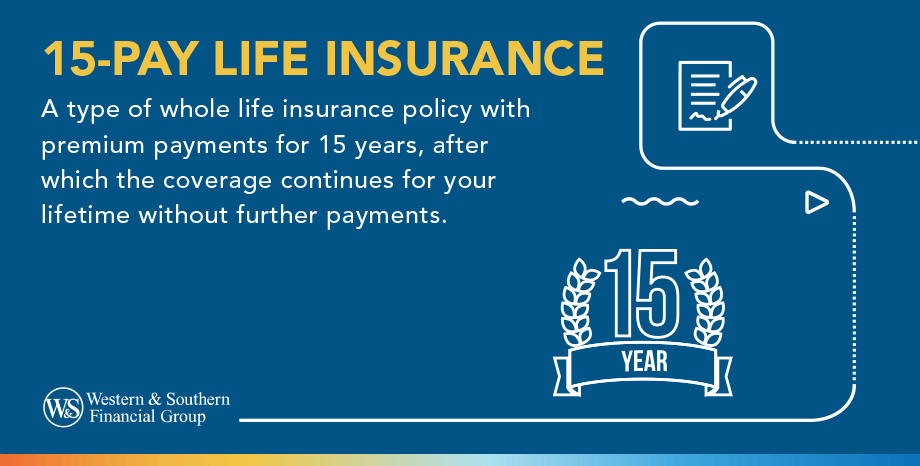
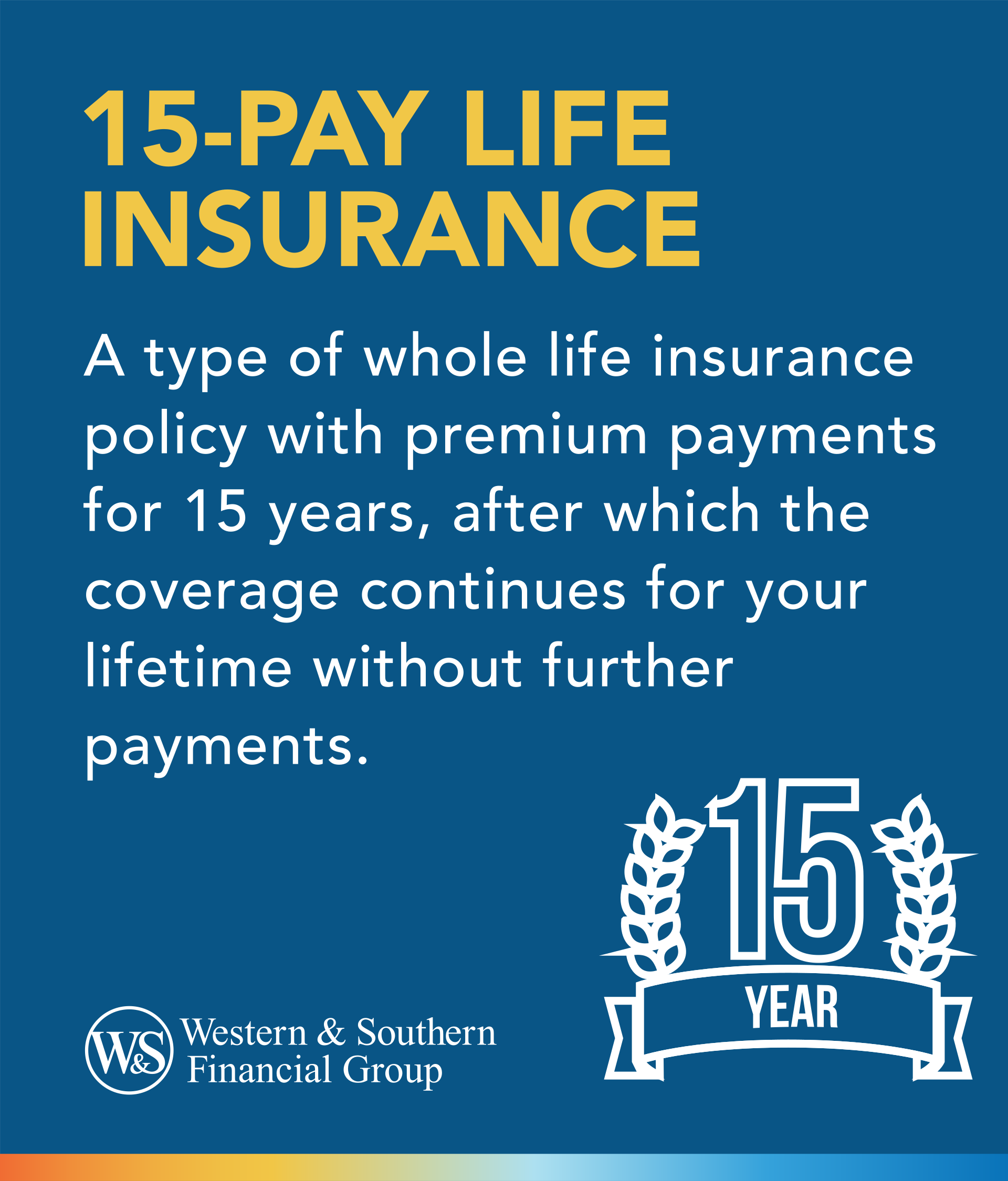
15-pay life insurance is a type of whole life insurance policy with a limited premium payment period. Unlike traditional whole life insurance, where you might pay lifelong premiums, a 15-pay policy requires premium payments for only 15 years.
This structure creates a clearly defined finish line for your premium obligations while providing the lasting benefits of permanent cash value life insurance, and death benefit protection that never expires.
How Does 15-Pay Life Insurance Work?
15-pay life insurance lets you pay for lifetime coverage in 15 years instead of paying premiums for life. Payments are higher during that period, but once they are complete, the policy stays active with no additional premiums.
Key Features
- Fixed premiums: Your payments stay the same throughout the 15-year period.
- Shorter payment timeline: Premiums are paid over 15 years instead of a lifetime.
- Lifetime coverage: Coverage continues after payments end.
- Potential cash value growth: Part of each payment builds cash value through guaranteed interest and possible dividends.
What Happens After 15 Years?
After completing your 15 years of payments, your insurance remains in force for your entire lifetime without requiring additional premiums. After 15 years, your policy is fully paid up, but the coverage and benefits continue for your lifetime.
Key Trade-Off
The main trade-off is higher premiums during the payment period compared to traditional permanent policies. However, many policyholders value the set end date and the added financial flexibility it can provide later.
Here’s how a 15-pay policy compares to traditional whole life insurance:
| Feature | 15-Pay Policy | Traditional Whole Life |
|---|---|---|
| Payment Period | 15 years | Lifetime |
| Premium Amount | Higher | Lower |
| Coverage Length | Lifetime | Lifetime |
| Potential Cash Value Growth | Yes | Yes |
Who It May Fit
This structure makes 15-pay life insurance particularly attractive for those who want to secure permanent coverage during their working years and eliminate insurance payments before retirement.
Pros: Benefits of 15-Pay Life Insurance
- Guaranteed Paid-Up Status: The limited pay policy is fully paid after 15 years of premium payments, and coverage continues for life. This provides budget predictability and financial flexibility in later years, eliminating future premium burdens.
- Lifetime Coverage: Unlike term life insurance, 15-pay provides permanent protection, ensuring a lifetime of benefits for beneficiaries regardless of when the policyholder passes. This limited-payment life insurance is valuable for estate planning, providing an inheritance, covering final expenses, and creating a legacy.
- Accelerated Cash Value Growth: The front-loaded premium structure leads to faster cash value accumulation compared to traditional policies.
- Tax Advantages: The death benefit is generally income tax-free, and cash value growth is tax-deferred. Policy loans can provide tax-advantaged access to funds, and there are no required minimum distributions.
Cons: Potential Drawbacks of 15-Pay Life Insurance
- Higher Initial Premium Costs: During the 15-year payment period, you will pay more each month than you would for traditional types of life insurance (whole life, universal life, or term life policies). This type of coverage requires careful budgeting to help ensure you can keep up with payments throughout the payment term.
- Opportunity Cost Considerations: Every dollar funneled into those higher premiums represents money that could potentially grow in other investments such as stocks, real estate, or retirement accounts. You should calculate potential returns on alternative investments over the same 15-year period to determine if the benefits justify the opportunity cost.
- Limited Flexibility During Payment Period: To achieve paid-up status and realize the policy's full benefits, you must maintain consistent premium payments throughout the 15-year period. This payment structure can become problematic if you face unexpected financial challenges, such as job loss, major medical expenses, or other emergencies, during the commitment period.
Who Should Consider 15-Pay Life Insurance?
15-pay life insurance is a financial tool that isn't for everyone. Here's a breakdown of the individuals and situations where it can be particularly beneficial:
- High-Income Earners: Those with substantial current income who anticipate a decrease in earnings later in life (e.g., upon retirement). They can afford the higher premiums during their peak earning years and enjoy lifelong coverage without future payments.
- Individuals Planning for Early Retirement: People who want their life insurance premiums paid off before they retire. This allows them to have one less financial obligation during their retirement years.
- Those Working Toward Financial Confidence: Individuals who value predictable, fixed payments and guaranteed lifelong coverage. The 15-pay structure helps reduce uncertainty by removing the risk of future premium increases.
- Estate Planning Needs: People with long-term estate planning needs, such as providing for beneficiaries or leaving a legacy. The permanent nature of 15-pay life insurance ensures that the death benefit will be available regardless of when they pass away.
- Those Who Have Maxed Out Other Tax-Advantaged Accounts: People who have already contributed the maximum to other retirement accounts (like 401(k)s or IRAs) and are looking for additional tax-advantaged savings options.
Comparing 15-Pay With Other Limited Pay Options
10-Pay vs. 15-Pay vs. 20-Pay
Limited-pay life policies come in several variations, with different payment periods affecting both premium amounts and long-term value:
| Feature | 10-Pay Life | 15-Pay Life | 20-Pay Life |
|---|---|---|---|
| Premium Duration | 10 years | 15 years | 20 years |
| Monthly Premium Level | Highest | Medium | Lowest |
| Speed of Cash Value Growth | Fastest | Medium | Slowest |
| Total Amount Paid (typically) | Lowest | Medium | Highest |
| Good For | Short pay period with strong death benefit | Balanced approach, moderate premiums | Lower monthly budget impact, longer payment horizon |
The choice between these options often depends on your current age, income level, and how quickly you want your policy paid up. A 45-year-old might prefer a 15-pay policy term to ensure completion before retirement, while a 35-year-old might opt for a 20-pay policy term to keep premiums more manageable.
Single Premium Life Insurance Options
Single-premium life insurance is another type of life insurance alternative for those with substantial liquid assets. With this option, you make one large upfront payment to fund the policy.
Advantages of Single Premium Life
- Immediately paid up with just one transaction
- Maximum immediate cash value
- Often provides enhanced long-term care benefits
Disadvantages
- Requires a large lump sum payout upfront
- Less flexible than other options if financial needs change
- Modified Endowment Contract (MEC) tax status changes some tax benefits
Single-premium life insurance makes the most sense for those who recently received a large windfall (inheritance, business sale, etc.) and want to immediately convert some of their assets to permanent life insurance.
Policy Riders & Customization Options
Common Riders
Most insurance companies offer various riders that can customize your 15-pay life insurance to address specific concerns:
- Waiver of Premium Rider This rider ensures your policy remains in force if you become disabled and unable to pay premiums. The insurance company essentially waives your premium payments during the period of disability.
- Accelerated Death Benefit Rider Also known as a living benefits rider, this feature allows you to access a portion of your death benefit early if you're diagnosed with a terminal illness, typically defined as having less than 12-24 months to live.
- Long-Term Care Rider This rider allows you to use a portion of your death benefit to pay for qualified long-term care expenses, providing additional protection for your later years.
- Paid-Up Additions Rider This option allows you to make additional payments above your regular premium to purchase small amounts of additional paid-up insurance, increasing your death benefit and cash value.
- Child or Spouse Rider These riders extend limited coverage to your children or spouse without requiring separate policies.
Customizing Coverage Amount
Determining the appropriate coverage amount for your 15-pay policy requires balancing several factors:
- Income replacement needs: How much your family would need to maintain their lifestyle
- Debt obligations: Outstanding mortgage, car loans, student loans, etc.
- Education funding: College expenses for children or grandchildren
- Final expenses: Funeral costs and potential medical bills
- Legacy goals: Inheritance or charitable giving intentions
- Budget constraints: What premium level you can reasonably afford
Final Thoughts
15-pay life insurance balances a shorter premium payment period with lifetime coverage. It may appeal to those who want to finish payments before retirement while building cash value more quickly. Its tax advantages can also offer added flexibility beyond the death benefit.
To decide if this option aligns with your goals, speak with a qualified financial professional. They can review your needs, compare policies, and help you choose appropriate coverage.