As you build wealth, it helps to know where your money is and how you can access it. Most people have both short-term and long-term goals. Because of that, you may use different tools to support those goals.
Understanding the difference between liquid and non-liquid assets can help you decide how certain savings and investment options fit into your overall approach.
What Are Liquid Assets?
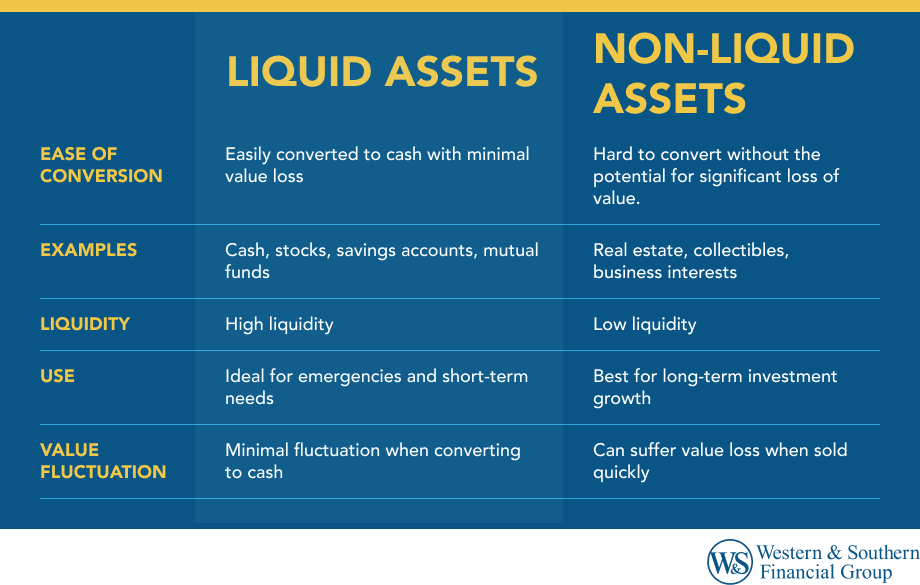
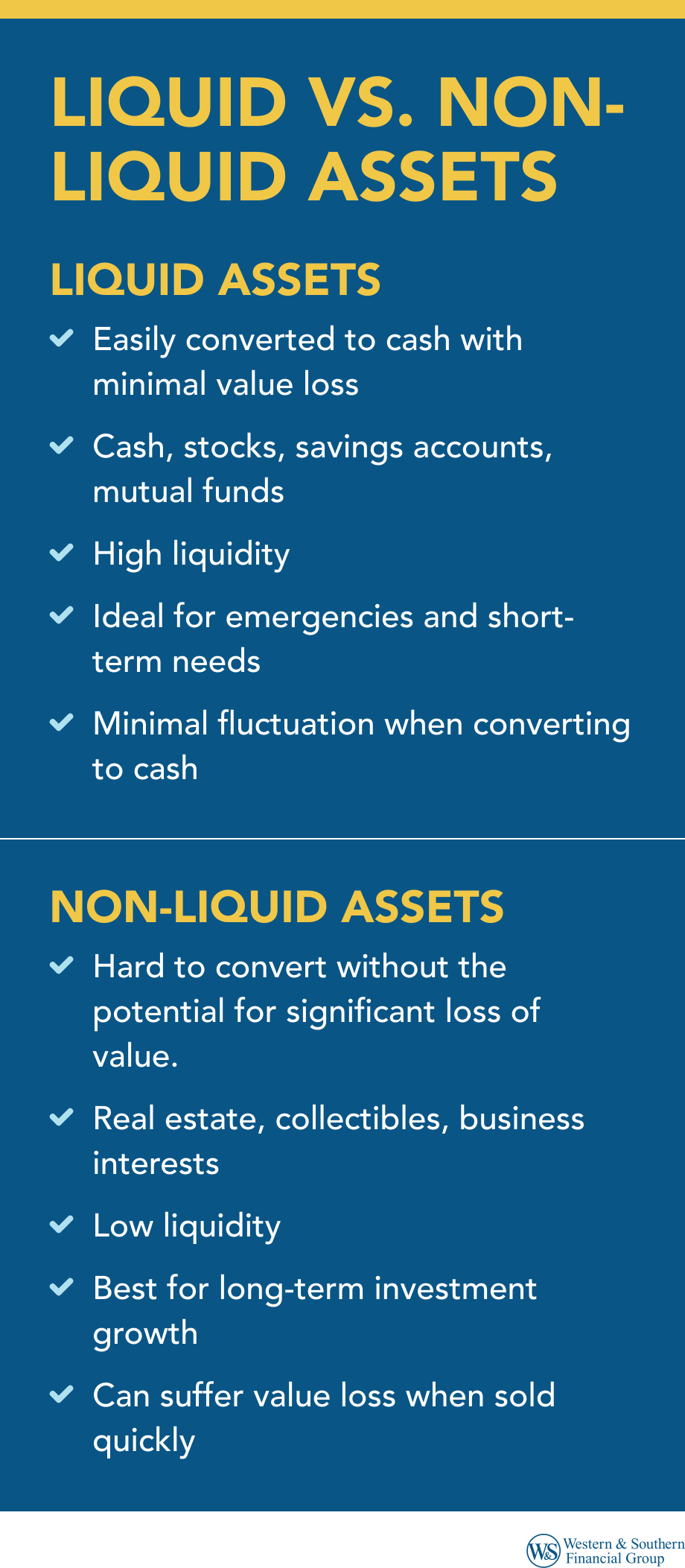
Liquid assets are assets you can convert to cash quickly without greatly affecting their value. These assets are helpful when you need money right away.
For example, cash in your checking account is liquid. If you have an unexpected medical bill or car repair, you can use that money immediately.
Examples of Liquid Assets
- Cash in checking, savings, and money market accounts
- Mutual funds and exchange-traded funds (ETFs)
- Certificates of deposit (CDs) may be liquid, depending on its terms and any early withdrawal charges
- Life insurance cash value may be available, but surrender charges in the early years can limit access
- Some annuities have surrender charges that apply for a set number of years.
Keep in mind that qualified retirement accounts, such as certain IRAs or 401(k)s, may not be fully liquid if you are under age 59½. Early withdrawals can trigger taxes and penalties.
What Are Non-Liquid Assets?
Non-liquid assets are harder to convert into cash. Selling them may take time, and you could receive less than their market value.
Real estate is a common example. You may have equity in your home, but accessing that equity during a sudden health emergency can be difficult. Selling a home can take months and may involve agent fees, closing costs, and moving expenses.
Another option may be a second mortgage or home equity loan. However, this requires lender approval and adds debt secured by your home.
In some cases, you can try to sell a non-liquid asset quickly by lowering the price. This may speed up the sale, but it could result in a loss. If the asset increased in value over time, you may still sell it for more than you originally paid.
Examples of Non-Liquid Assets
- Investment real estate may take time and effort to sell
- Business interests may require finding a qualified buyer with the resources to take over
- Tangible property such as personal real estate, jewelry, and vehicles
These assets are often harder to access quickly and may lose value during a rushed sale.
Benefits & Stipulations of Liquidity
Many people hold both liquid and non-liquid assets. Each type plays a different role.
Advantages of Liquid Assets
- Provide quick access to cash
- Help cover short-term expenses
- May reduce the need to borrow money
Funds in bank accounts insured by the Federal Deposit Insurance Corporation (FDIC) are protected up to $250,000 per depositor, per insured bank, for each account ownership category.1
Considerations for Non-Liquid Assets
- May take time to sell
- May involve transaction costs
- Could decrease in value
However, some non-liquid assets may increase in value over time. If that happens, you could sell them for more than your original investment.
Keeping too much of your wealth in non-liquid assets may create challenges if you need cash quickly. On the other hand, holding only liquid assets may limit long-term growth potential. A mix of both may help support different goals.
The Bottom Line
The right balance between liquid and non-liquid assets depends on your goals and how you plan to pay for them. Reviewing your assets on a regular basis can help you decide whether you have enough accessible funds for short-term needs while still working toward long-term growth.
You may also consider speaking with a qualified financial advisor to review your current asset mix and determine whether it aligns with your objectives.
Find the right balance between both assets to maintain financial flexibility. Invest In My Future
Sources
- Deposit Insurance. https://www.fdic.gov/resources/deposit-insurance.