It can feel daunting to learn about investing. However, it does not have to be as overwhelming as you think. Even experienced investors spend time studying and learning so they can improve their skills, and you can do the same.
There are many ways to start building and improving your investment knowledge so you can feel more confident. Here are some ideas to help you get started.
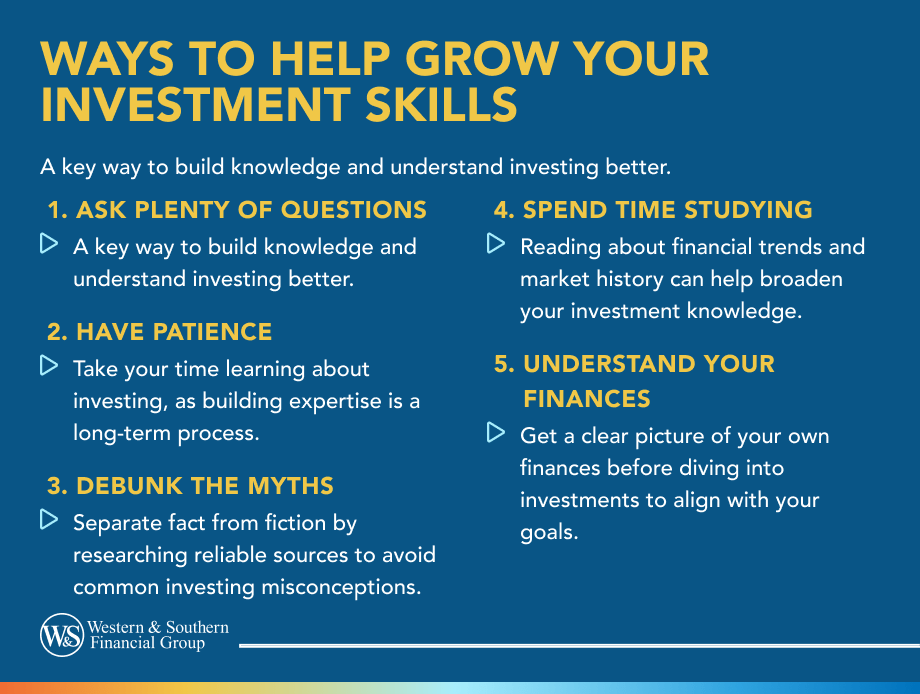
1. Ask Plenty of Questions
Many people feel awkward about asking questions when they try something new. New investors are no exception. But when you are learning, asking questions is one of the fastest ways to build knowledge.
You could start by speaking with your financial advisor or registered representative to see if they have resources that may help. You might also have a friend, family member, or colleague who understands money matters and can help answer your questions.
2. Have Patience
Building investment skills does not happen overnight. There is a lot to learn, from mutual funds to individual retirement accounts (IRAs). Give yourself time to understand how things work.
As with anything that takes time, energy, and money, focus on long-term results. It can be tempting to track daily changes, but investing is usually about long-term growth. Some ideas may take time to click, and that is normal. Keep learning and reviewing what you study. Over time, the pieces often start to fit together.
3. Debunk Common Myths
You may have heard that you need a lot of money to start investing or that there is only one right way to save for retirement. There are a lot of misconceptions out there about investing that are not fully accurate.
As you research, look for reliable sources. Compare information from different outlets. This can help you separate facts from opinions and make informed choices.
4. Spend Time Studying
Reading about investing can strengthen your knowledge. You might read about:
- Current market trends
- The history of the stock market
- How different types of accounts work
- Backgrounds of business leaders
Reading alone will not answer every question, but it can broaden your understanding. Over time, this knowledge can help you shape your own investment approach.
5. Understand Your Finances
Investing can sound exciting, and you may want to jump in right away. Before you do, take a close look at your current finances.
Start with a checklist, then do the following:
- Review your monthly budget
- List your debts and interest rates
- Build an emergency fund
- Set short-term and long-term goals
This step can help you see where you stand. When you understand your income, expenses, and goals, it becomes easier to create an investment strategy that aligns with them.
It's About the Journey
As you build your investment skills, take the process seriously, but try to stay patient with yourself. You will learn a lot and may make a few mistakes along the way. That is part of learning.
The time and effort you put in now can support your future goals. Improving your investment knowledge step by step can lead to steady progress over time.
Build your investment expertise by reviewing and applying key strategies on a regular basis. Invest In My Future