College can be an exciting place for self-discovery and growth, but it is also where some young adults develop poor money habits. If not addressed, these habits can follow students long after graduation.
Learn about some of the most common financial problems for college students and how to manage your money more wisely.
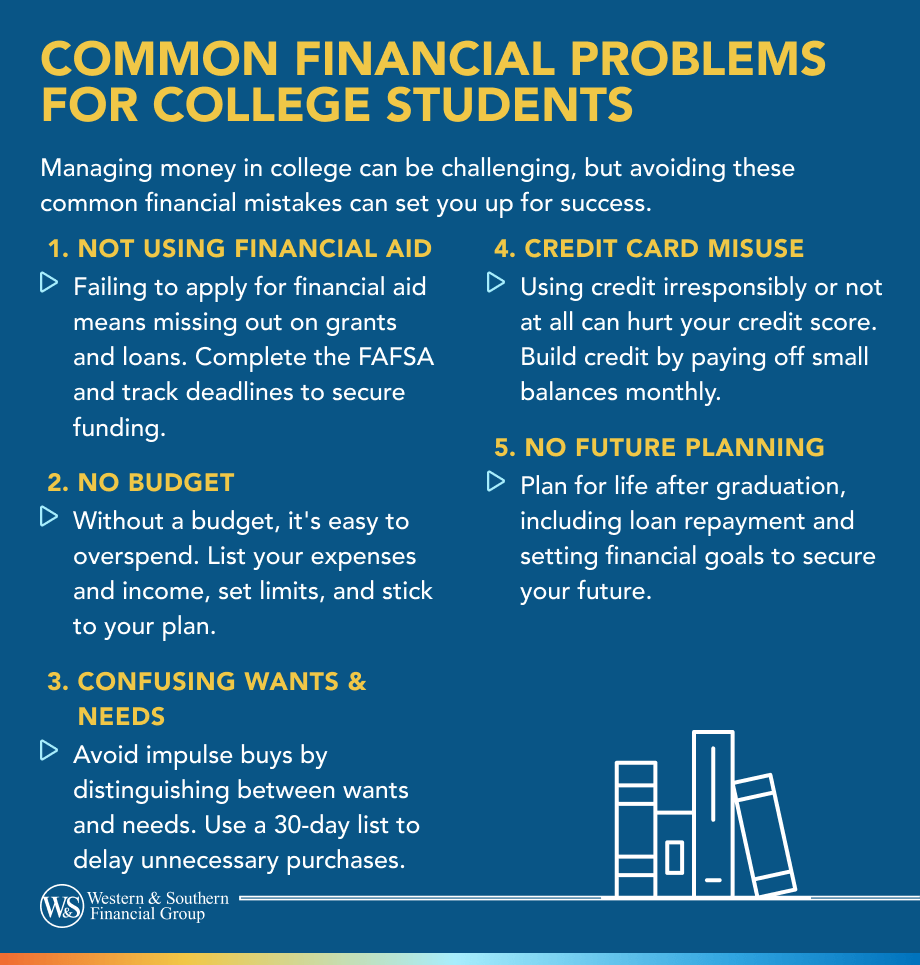
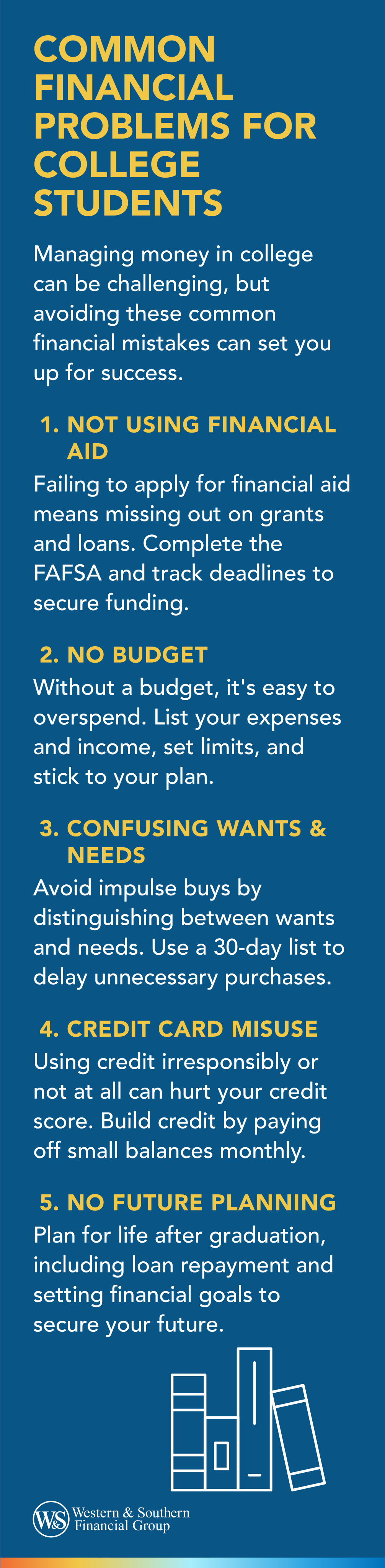
1. Not Taking Advantage of Financial Aid
If you do not apply for financial aid, you may miss out on grants, federal loans, and work-study programs. Take time to complete the Free Application for Federal Student Aid (FAFSA), which can help you get additional funding for college expenses.1
Keep track of application deadlines and start searching for scholarships early. Creating a checklist of required documents, such as tax returns and bank statements, can help you stay organized. While the process may feel overwhelming, staying prepared can help you avoid delays.
2. Not Creating a Basic Budget
One of the most common financial problems for college students is not having a budget. Without one, it can be difficult to manage your money.
Start with a simple budget by listing your expenses, such as tuition, books, housing, food, school supplies, and entertainment. Then compare them to your income. Be sure to include one-time expenses like travel or dorm supplies.
Set spending limits for categories like dining out or entertainment to build better habits. If you are new to budgeting, consider asking a parent or sibling for guidance.
If you receive a financial aid refund, create a plan for how you will use it. If the money comes from loans, remember that you will need to repay it.
3. Not Knowing the Difference Between Wants & Needs
It is easy to feel tempted by online shopping and quick purchase options. Many students spend money on items they do not truly need.
Before making a purchase, ask yourself:
- Will this make my life easier?
- How does this add value to my life?
- How often will I use it?
You will still buy things you want from time to time, but creating a 30-day list can help reduce impulse spending. Write down non-essential items and wait 30 days. If you still want the item, consider buying it. You can also look for ways to save, such as using coupons or shopping during sales.
4. Credit Card Misuse or Disuse
College is a good time to start building credit. A strong credit history can help you qualify for better rates on future loans, such as a car loan or mortgage.
One way to begin is by becoming an authorized user on a parent’s credit card. Make sure you agree on limits and payment expectations. Another option is a secured credit card, which requires a deposit and sets your credit limit based on that amount.
Using a credit card irresponsibly can lead to debt and damage your credit score. Try to avoid using credit for unnecessary purchases, such as trips or expensive items you cannot afford.
Start with a low limit and use your card for small, planned expenses. Pay off the balance in full each month. If that is not possible, create a plan to pay down the balance over time.
5. Not Planning for the Future
College life can be busy, which makes it easy to delay thinking about the future. However, having a general plan can make the transition after graduation smoother.
Think about how you will repay student loans and prepare for your first job. You may also want to consider long-term goals, such as buying a home, starting a family, or retiring. You do not need to have everything figured out, but having a basic plan can give you direction.
Final Thoughts
Consider taking steps now to avoid some of the most common financial problems. Making these mistakes could cost you dearly in the long run, but an ounce of prevention is worth a pound of cure. Will that ring true for you?
Sources
- Complete the FAFSA® Form. https://studentaid.gov/h/apply-for-aid/fafsa.