Healthcare costs do not slow down in retirement. If anything, they become more complex. Understanding Medicare and Medicaid can help you plan for coverage, manage medical costs, and prepare for services like long-term care that many people often overlook.
Medicare vs. Medicaid: What’s the Difference?
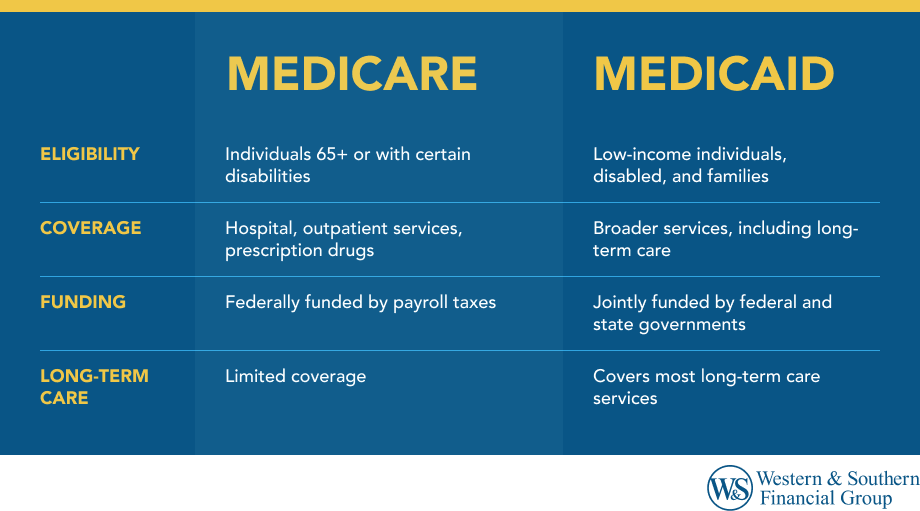
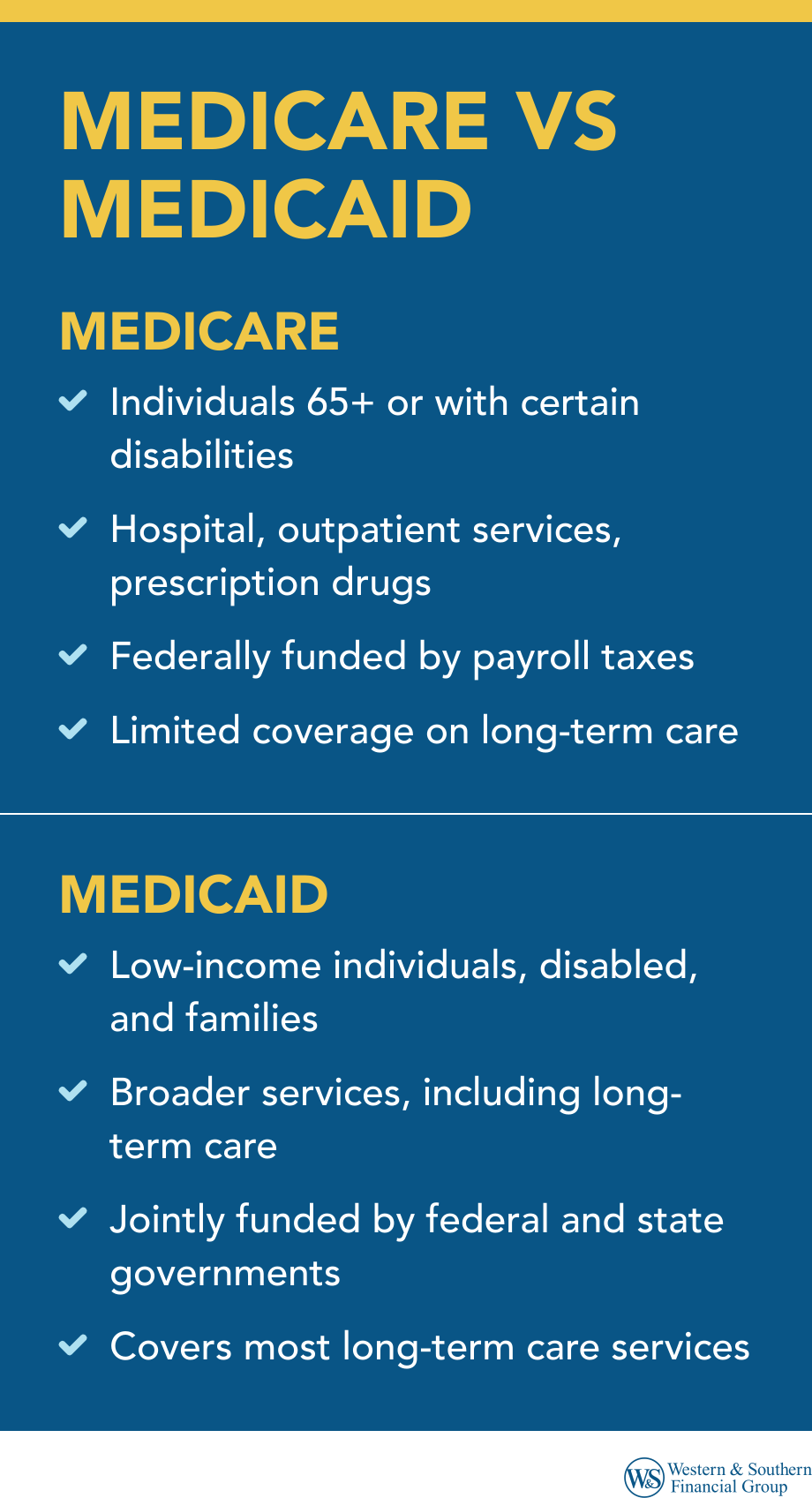
Medicare and Medicaid are both government programs that provide health coverage, but they serve different purposes. Medicare is mainly for people age 65 and older or those with certain disabilities, while Medicaid provides coverage for individuals with limited income and resources.
Here’s a quick comparison:
- Eligibility: Medicare is based on age or disability; Medicaid is based on income.
- Administration: Medicare is run by the federal government; Medicaid is managed by states within federal guidelines.
- Costs: Medicare often includes premiums and out-of-pocket costs; Medicaid may have low or no costs for those who qualify.
- Coverage: Medicare focuses on medical care; Medicaid may include additional services like long-term care.
While they are separate programs, some individuals may qualify for both, which can help lower overall healthcare expenses.
What Is Medicare?
Medicare is one of the largest health insurance programs in the U.S. It serves millions of people and helps cover many types of medical care. However, it does not cover all expenses.1
Most people contribute to Medicare through payroll taxes over time. This works in a similar way to Social Security, which is funded through dedicated trust funds.
Who Qualifies for Medicare
You may qualify for Medicare if you meet certain requirements:
- Age 65 or older
- Under age 65 with certain disabilities
- Diagnosed with specific conditions, such as end-stage renal disease or ALS
You must also qualify through the Social Security Administration. In many cases, enrollment begins automatically if you are already receiving Social Security benefits.
What Medicare Covers
Medicare is divided into different parts. Each part covers a specific type of care.
- Medicare Part A (Hospital Insurance): Part A helps cover care received in a hospital or similar setting. This includes inpatient hospital stays, skilled nursing facility care, hospice care, and limited home health services.
- Medicare Part B: Part B focuses on medical services outside of a hospital stay. It covers doctor visits, outpatient care, preventive services, and certain medical equipment such as wheelchairs and oxygen.
- Medicare Part D: Part D provides prescription drug coverage. It helps lower the cost of medications, which can be a major expense for many retirees.
- Medicare Part C (Medicare Advantage): These plans are offered by private insurance companies. These plans combine Part A and Part B coverage and often include Part D as well. Some plans may also offer added benefits, such as dental, vision, or wellness programs.
Some individuals also choose supplemental insurance, often called Medigap, to help cover certain out-of-pocket costs not included in Medicare.
Medicare Costs in Retirement
Medicare is not free. Even with coverage, you will still have healthcare expenses.
Common costs include:
- Monthly premiums, especially for Part B
- Deductibles before coverage begins
- Copayments and coinsurance for services
There are also services that Original Medicare does not cover. Because of this, many retirees set aside funds to help manage healthcare expenses during retirement.
What Is Medicaid?
Medicaid provides health coverage for people with limited income and financial resources.2
Unlike Medicare, Medicaid is managed by both the federal government and individual states. Because of this, eligibility rules, benefits, and covered services can vary by state.
Who Qualifies for Medicaid
Eligibility is mainly based on income and financial resources. While eligibility requirements differ by state, Medicaid commonly covers:
- Low-income adults
- Children and families
- Pregnant women
- Seniors who need long-term care
- Individuals with disabilities
Each state sets its own income limits and decides which groups qualify.
What Medicaid Covers
Medicaid may offer a wider range of benefits than Medicare in some areas.
Common covered services include:
- Doctor visits
- Hospital care
- Nursing services
- Personal care services
Many states also cover:
- Nursing facility care
- Dental services
- Preventive and wellness care
Medicaid also covers several services that Medicare typically does not.
Medicaid and Long-Term Care
Medicaid plays a large role in long-term care coverage.
Long-term care includes help with daily activities such as:
- Bathing
- Dressing
- Eating
- Using the restroom
These services are often needed over time and can be costly.
Medicaid is the largest payer of long-term care in the United States.3 It may cover:
- Nursing home care
- In-home support services
- Assisted living services (in some states)
Without Medicaid, many people may need to rely on personal savings or separate insurance to pay for these expenses.
Key Differences Between Medicare & Medicaid
While Medicare and Medicaid both provide health coverage, they differ in several important ways that can affect your costs, benefits, and eligibility.
Coverage Differences
Medicare primarily covers hospital stays, doctor visits, and prescription drugs coverage through its different parts. Medicaid may offer a broader range of services, including long-term care, personal care services, and extended nursing facility coverage. These are services that Medicare typically limits.
Cost Structure
Medicare often includes monthly premiums, deductibles, copayments, and coinsurance. These costs can add up over time, especially in retirement. Medicaid, however, is designed for individuals with limited income, so costs are often reduced or eliminated depending on eligibility.
Administration
Medicare is a federal government program with standardized benefits across the country. Medicaid is jointly funded by federal governments and state programs, which means coverage options, eligibility rules, and benefits can vary depending on where you live.
Enrollment
Medicare eligibility is generally based on age (65 or older) or certain qualifying disabilities or conditions. Medicaid eligibility is based on financial need, including income and assets, and may also consider factors such as family size and medical needs.
Can You Have Both Medicare & Medicaid?
Yes, you can have both Medicare and Medicaid, and for many people, having both programs can lower medical costs. Individuals who qualify for both are called dual eligible or dual eligibles.
If you qualify for both programs, Medicare serves as your primary coverage. Medicaid then helps pay for remaining costs that Medicare does not fully cover.
This may include help with Medicare premiums, deductibles, and copays. Medicaid may also cover certain services that Medicare does not include.
Programs such as the Qualified Medicare Beneficiary (QMB) program and other Medicare Savings Programs can further reduce out-of-pocket costs.
How Medicare & Medicaid Affect Retirement Planning
Healthcare is one of the largest expenses in retirement and is often underestimated. Understanding how Medicare and Medicaid work can help you prepare for these costs.
Healthcare as a Major Retirement Expense
Even with Medicare, you will likely face several healthcare costs. These can include monthly premiums, out-of-pocket expenses, and services that are not covered. Over time, these costs can add up. Planning for them early can help reduce financial strain later in life.
Planning for Long-Term Care
Long-term care is an area many people overlook. Medicare provides limited coverage for short-term care, such as recovery after a hospital stay. It does not typically cover extended care needs.
Medicaid may help cover long-term services, but only for those who meet certain eligibility requirements. These rules are based on income and assets, which makes early preparation important.
Income Planning Considerations
When planning for retirement, review both your income and expenses.
Steps to Consider
- Estimate your total expenses, including healthcare
- Review expected income sources, such as Social Security and savings
- Identify any gaps between income and expenses
- Consider options to help cover those gaps
You may also look into long-term care insurance or structuring assets to meet Medicaid eligibility requirements.
Planning ahead can help you better understand your options and make informed decisions about your future.
Conclusion
Medicare and Medicaid serve different roles, but together they shape how millions of Americans access care. One is tied to age and work history. The other depends on income and need.
Understanding how they differ, and where they overlap, can help you make more informed decisions about coverage, costs, and long-term care as you move through retirement.
Sources
- Medicare - SSA. https://www.ssa.gov/pubs/EN-05-10043.pdf.
- Medicaid. https://www.medicaid.gov/medicaid.
- Who Pays for Long-Term Services and Supports? https://www.congress.gov/crs-product/IF10343.