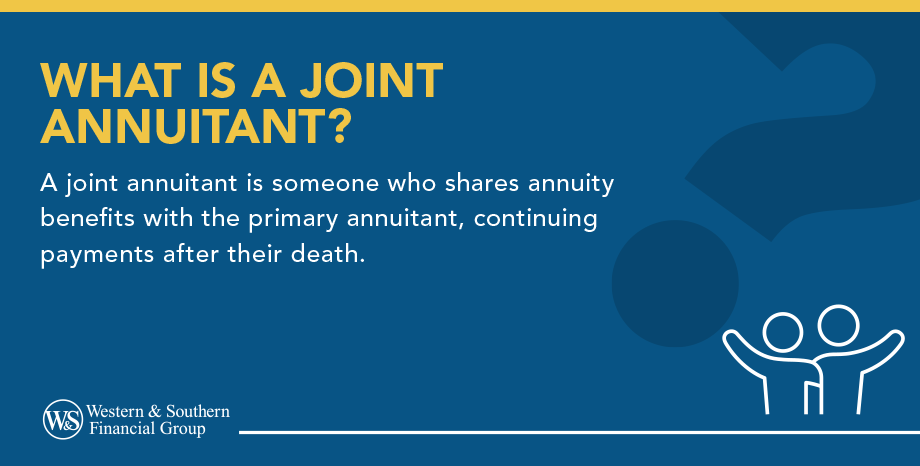
An annuitant is a person whose age and life expectancy affect the size of the monthly payments that are paid to the owner of an annuity. When an annuity owner names two annuitants, they are commonly known as joint annuitants. If you're married, this may be a good option for you and your spouse. Here's some information on what's involved when you name or become a joint annuitant.
Annuitants & Annuity Owners
Annuity owners and annuitants are not always the same person:
- Annuity Owners: Individuals who purchase the annuity and can make changes to the contracts.
- Annuitant: The person whose life expectancy is used to calculate payments.
In many cases, the owner and annuitant are the same person. However, some contracts allow the owner to name two annuitants. These are called joint annuitants. Married couples often choose this option.
Joint & Survivor Annuities
A joint and survivor annuity is a common option for joint annuitants. It is often selected by married couples.
This type of annuity:
- Provides income based on the lives of two people, usually spouses
- Continues to pay benefits of the annuity to the surviving annuitant after one spouse dies
Depending on the option selected, the monthly payment may decrease after one spouse dies. Any reduction is outlined in the annuity contract.
For joint and survivor annuities in certain tax-qualified retirement plans, the Internal Revenue Service sets guidelines:
- Payments to the surviving annuitant must continue after the first death
- Survivor payments must be at least 50% and no more than 100% of the original joint payment¹
How Payments Can Differ for Joint Annuitants
Annuity payments are based in part on how long the issuer expects to make payments.
In general:
- Fewer expected payments can result in higher individual payments
- More expected payments can result in lower individual payments
For example, payments expected over 10 years will likely be higher than payments expected over 20 years.
With a joint annuity:
- Payments are based on the longer of the two lifespans
- The contract is expected to pay for a longer period
- Payments may be smaller than those from a single-life annuity
Because the annuity may pay out longer, the cost may also be higher compared to an annuity covering one person.
What to Consider Before Naming a Joint Annuitant
If you are deciding whether to name a joint annuitant, consider how this choice fits your long-term goals.
A joint annuity may provide continued income for a surviving spouse or other joint annuitant. However, payments during your lifetime may be lower than those from a single-life annuity.
You may want to ask:
- What payment amount is needed to cover both annuitants’ expenses?
- Do you have other assets, such as life insurance, to support the surviving annuitant?
- How much would payments decrease after one annuitant dies?
Reviewing these questions can help you decide whether a joint annuitant option fits your situation. You may also consider speaking with a financial representative to review your contract details.
Final Thoughts
Choosing between a single and joint annuity depends on your income needs and long term goals. While joint annuities may offer lower payments, they can continue income for a surviving spouse. A financial professional can help you decide which option fits your retirement plan.
Sources
- Retirement Topics - Qualified Joint and Survivor Annuity. https://www.irs.gov/retirement-plans/plan-participant-employee/retirement-topics-qualified-joint-and-survivor-annuity.