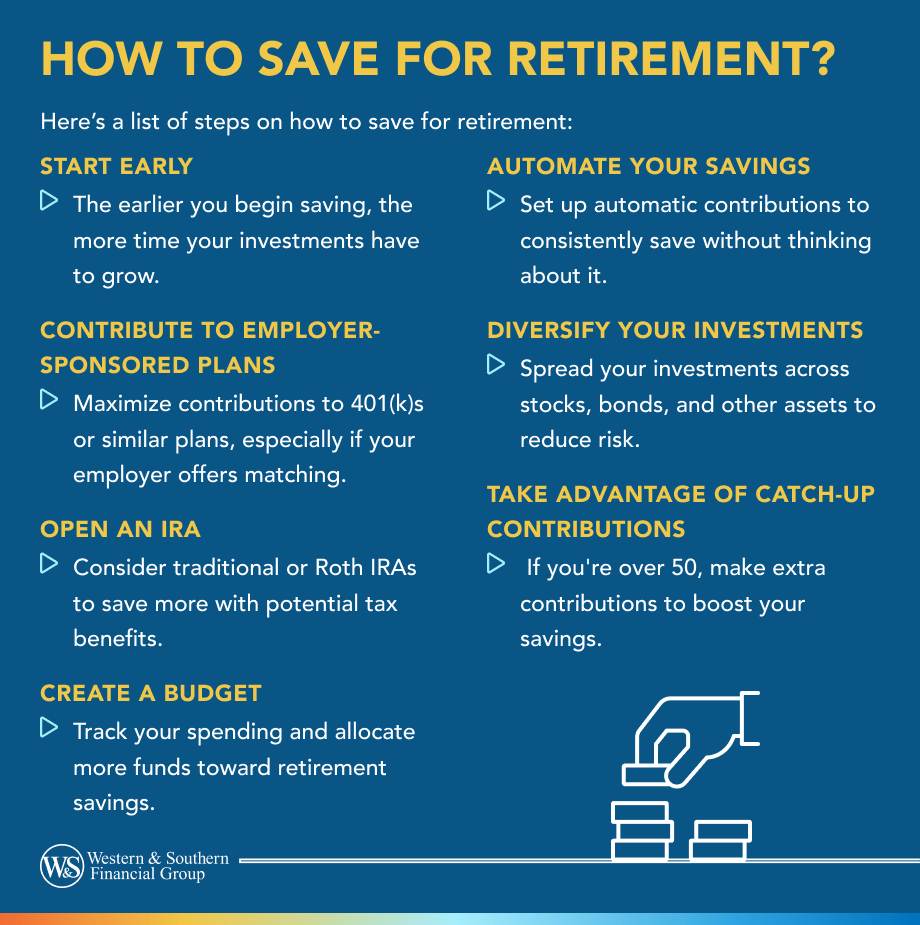

Many Americans worry about how to save for retirement and whether their money will last. You might think you are saving enough, but what does that really mean? Some people aim for $1 million by the end of their career. Others plan to replace 70% to 80% of their current income.
If you have not clearly mapped out how much to save for your desired retirement lifestyle, you may be estimating your savings goal without enough detail. It can be hard to know how long your money needs to last and how much you will spend.
Here is a look at how to estimate your future needs and take steps today to help build a more stable retirement.
Figure Out How Much You Need to Save
Figuring out how much to save depends on your income and personal goals. One simple way to measure your progress is by using a rule of thumb based on your age and your annual income.
This rule suggests:
- By age 30, save enough to match your annual salary.
- By age 40, save three times your annual salary.
- By age 50, save six times your annual salary.
- By age 60, save eight times your annual salary.
- By age 65, save 10 times your annual salary.
These are general estimates. The amount you need may be higher or lower based on your situation. However, these rules give you a target for staying on track. You can also compare your savings to average retirement balances by age.
Determine a Monthly Savings Rate
The more you save each month, the more you may have for retirement. Many experts suggest aiming for at least $1 million in savings.
Reaching this goal is easier when you start early. For example, if you save $6,000 a year starting at age 20 and earn an average return of 8%, you could have nearly $1.7 million by age 60. If you waited until age 40 to save the same amount, you may have less than $300,000 by age 60.
If you are concerned about your progress, look for ways to increase your monthly savings. You might earn more by working extra hours or cut back on spending. Any additional savings today can help improve your future results.
Choose a Retirement Account
You can use different types of retirement accounts to grow your savings with tax advantages. Each account has its own rules, limits, and features. It helps to understand your options before deciding where to invest for retirement.
Employer-Sponsored Retirement Accounts
An employer-sponsored retirement account is offered through your job, such as a 401(k) or 403(b). You can only contribute if your employer provides one.
With these plans, money is taken directly from your paycheck and placed into your account. Contributions may lower your taxable income for the year. Your investments can grow without being taxed until you withdraw the money.
Many employers also offer matching contributions. This means they add money to your account when you contribute. In many cases, you can contribute more to these plans each year than to an individual retirement account.
Traditional IRA
If you do not have a 401(k) at work or want more control over your investments, you can open a traditional IRA. These accounts may allow you to deduct contributions on your taxes, and your investments grow without being taxed right away. Since it is your personal account, you choose how to invest your money.
Roth IRA
A Roth IRA is another option you can open on your own. With this account, contributions are made with after-tax income, so you do not get a tax break upfront. However, withdrawals in retirement may be tax-free if you meet certain rules. This includes any investment growth.
With a 401(k) or traditional IRA, withdrawals are usually taxed as income. Some employers also offer a Roth 401(k), which follows similar tax rules as a Roth IRA.
How to Save in Your 20s
When you are in your 20s, retirement can feel far away. You may have other priorities, like paying down student loans. Still, money you save now has the most time to grow. Starting early can make it easier to reach your goals later.
If your job offers a 401(k), check if there is an employer match. This is extra money your employer adds based on your contributions. Try to save at least enough to receive the full match. Saving more can put you further ahead. If you can, consider working a few extra hours each month or cutting back on expenses, like fewer nights out. Small changes today can add up over time.
How to Save in Your 30s
In your 30s, your income and career often start to grow. Your savings should grow as well. Each year, review how much of your income you can set aside. Try to go beyond the amount needed to get your 401(k) match. Increasing your contributions over time can make a big difference.
If you get a raise, think about putting part of that extra income toward retirement. Watch out for lifestyle inflation. This happens when spending increases along with income.
It's a good idea to have three years of your annual salary saved up by the time you turn 40. This can help you see if you are on track. Reviewing your budget in more detail can help you find opportunities to save more in your 30s.
How to Save in Your 40s
By your 40s, you may have already made progress toward your retirement goal. This is not the time to slow down.
Saving can feel harder during this stage. You may be helping pay for college for your children or supporting aging parents. If you are helping others, try not to reduce your retirement contributions. There are loan options for education, but not for retirement.
If you feel behind, focus on what you can do now. Increase your savings where possible. Instead of focusing on the past, look for ways to improve your position moving forward.
How to Save in Your 50s
In your 50s, you are getting closer to retirement. This is an important time to increase your savings. Once you turn 50, you can contribute more each year to retirement accounts like a 401(k) or IRA. These are called catch-up contributions.
If you have a health savings account, you can also contribute more starting at age 55. Taking advantage of these higher limits can help you build more savings before retirement.
You may also start thinking about when to retire. You can begin Social Security benefits at age 62, but waiting longer can increase your monthly payments. Working a few more years can also give you more time to save.
How to Save When Close to Retirement
When you are near retirement, think about how you can finish your career strong. You still have access to the catch-up contributions for workplace retirement plans and IRAs. This means you can set aside more each year than you could when you were younger. Review your budget and look for ways to get as close to the contribution limits as possible.
Think about what retirement might look like for you. Would you be open to working part time for a few years? Even a small amount of extra income can ease pressure on your savings and help your money last longer.
Calculate How Much You Need to Retire
Figuring out how much you need to retire is a personal decision, but there are general strategies that can help. You can create your personal retirement budget based on your expected lifestyle, location, living costs, and health needs. Once you estimate your yearly expenses, you can begin to calculate how much you may need to save.
The 4% rule is one common approach. It suggests you can withdraw 4% of your savings in the first year of retirement and continue taking that amount each year, adjusted for inflation, for about 30 years. For example, if you need $40,000 per year from your savings, you would need about $1 million using this rule.
Estimating your needs involves both careful planning and some guesswork. You can also explore other methods to set your savings goals.
Adjust Your Investments
Market fluctuations can significantly affect your retirement savings, especially as you get closer to retirement. While younger investors may recover from downturns over time, losses later in life can be harder to manage. Shifting to a more conservative mix, with more bonds and fewer stocks, can help protect what you have saved.
Earlier in life, a stock-heavy portfolio may support growth. As your balance grows, large losses can have a bigger impact. This approach may also reduce sequence of return risk, which happens when market declines occur while you are taking withdrawals. Adjusting your investments over time can help create more stability.
Bottom Line
Saving for retirement helps support your income later in life, and it is never too early or too late to start. Choosing the right accounts and having a clear savings target can make a difference over time. If you want more guidance, consider speaking with a financial professional who can provide advice based on your situation.