When you think of estate planning, you might think of a will and how your assets will be divided when you die. Do you have legal documents in place to help direct your medical and financial matters if you were unable to do so?
Here's some information to consider.
What Is a Health Care Proxy?
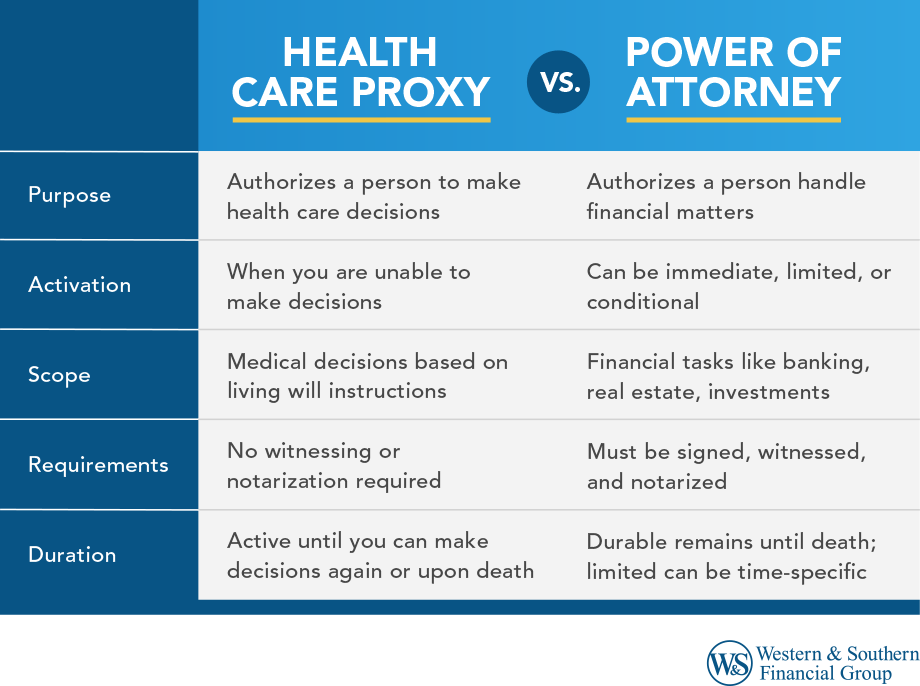
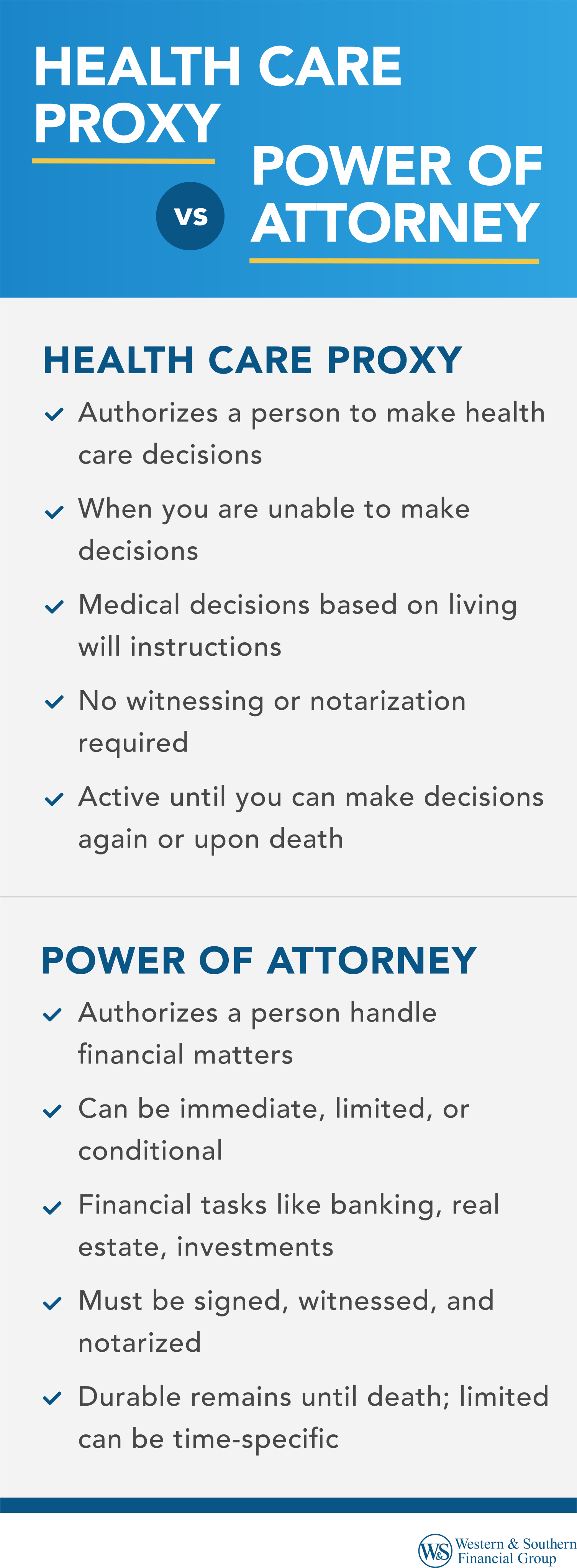
A health care proxy (or health care agent/power of attorney) gives a person the authority to make health care decisions for you if you are unable to do so. The person you appoint is referred to as your agent, proxy, representative or surrogate. Without a health care proxy, the decision-making authority may be given to a spouse or blood relative.
Health care proxies are used in conjunction with a living will. Your living will provides instructions for your health care proxy on how to handle making specific medical decisions. Common items to include in a living will are your wishes regarding life-sustaining treatment and living arrangements if you were to become incapacitated.
How to Set Up a Health Care Proxy
Each state has its own forms for health care proxies and other advanced directives. You can find the forms on your state's website. Consider giving a copy of the completed form to your health care proxy, your doctor and the hospital where you receive care.
What Is Power of Attorney?
A power of attorney is a legal document that appoints a person to handle your financial matters if you are not able to. This person is called your agent and can be a:
- Family member
- Close friend
- Organization
- Attorney
An agent can have the authority to handle your:
- Personal banking
- Real estate transactions
- Trusts
- Investments
- Tax returns
- Insurance
- Business decisions
There are different types of powers of attorney, and the document will outline what your agent is authorized to handle.
- A durable power of attorney remains in effect even if you become incapacitated and ends when you die.
- A limited power of attorney gives your agent authority to make only decisions specified by you under specific circumstances.
For example, if you have to leave the country for an extended period of time, you might consider leaving someone temporarily in control of certain assets. Set up a springing power of attorney that only takes effect if you become incapacitated.
How to Set Up a Power of Attorney
Each state also has its own form for setting up a power of attorney. Another difference between a health care proxy and power of attorney is that the power of attorney form must be signed, witnessed and notarized by another adult. On the form, you'll need to include your agent's name and the specific duties and responsibilities you are giving them. You may also specify a time frame and termination date for the document to be in effect. You can sign a form to revoke power of attorney at any time as long as you're mentally able.
Health Care Proxy vs. Power of Attorney: The Bottom Line
Having key legal documents in place as part of your estate plan can help prepare you and your family for the unexpected. By making your wishes known in advance, you can remove some of the burden from your loved ones during a difficult time. When setting up your health care proxy and power of attorney, you should consult with a legal professional.
A retirement plan can help support your long-term financial goals. Start Your Free Plan