While an inheritance can be a meaningful gift, it can also create conflict in certain situations. When family members are grieving and coping with the loss of a loved one, emotions can lead to disagreements over assets. This is more likely when instructions are unclear or beneficiaries are surprised by the terms.
Planning ahead may help reduce family inheritance disputes. Here are several strategies to help limit conflict, both while your loved one is still alive and after their passing.
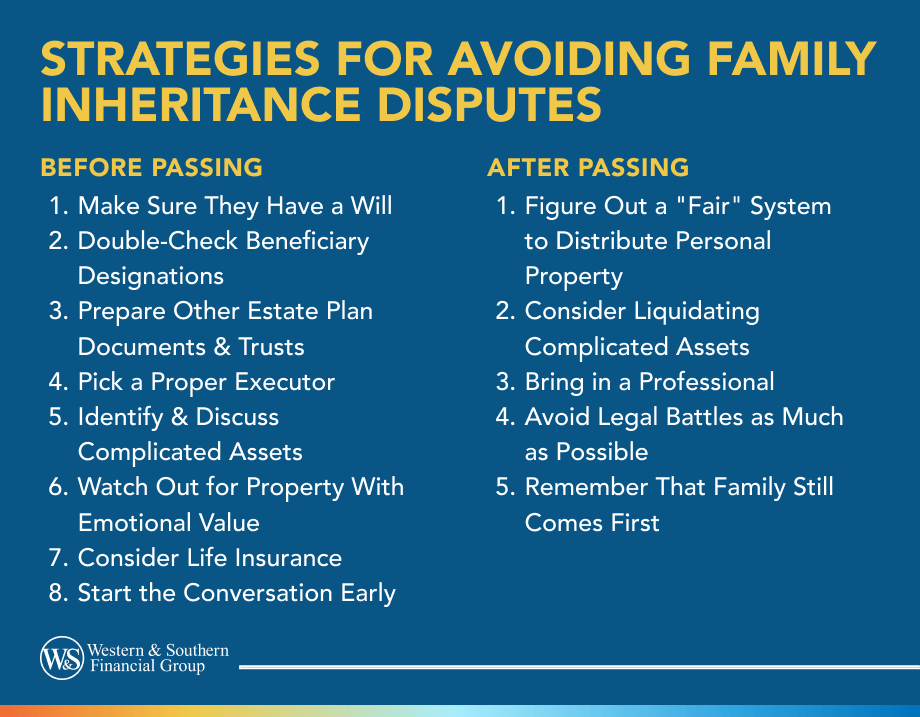
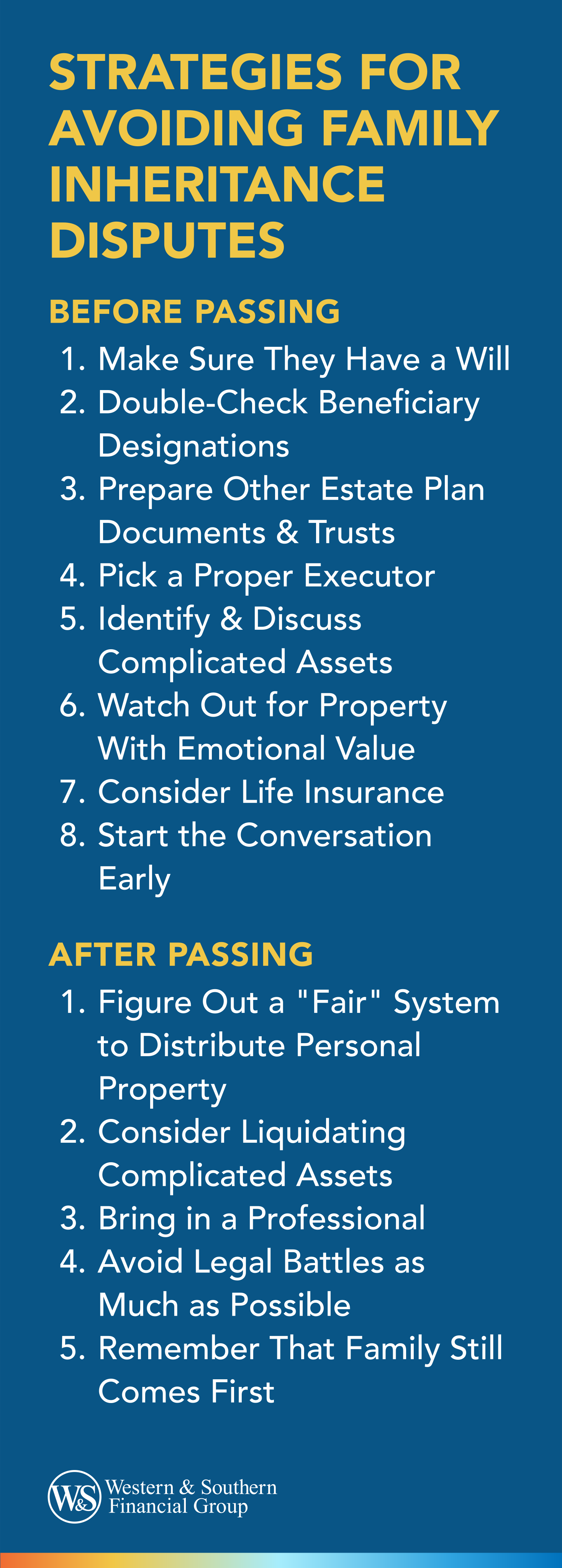
8 Strategies While Your Loved One Is Alive
Your loved one can help reduce inheritance issues by creating an estate plan before they pass away. This allows them to give clear instructions, organize documents, and address concerns. If your family member is still alive, here are strategies you can work on together.
1. Make Sure They Have a Will
A will outlines how a person wants their property and assets distributed after death. It can reduce disagreements by clearly stating who receives what. If someone dies without a will, known as dying intestate, the court decides how to divide their property based on state law. This removes control from the family and may increase the chance of disputes.
Ask your loved one if they have a will and whether it is up to date. They may want to share their plans ahead of time so no one is caught off guard. Surprises after death can quickly lead to conflict over inheritance.
2. Double Check Beneficiary Designations
Not all assets are transferred through a wil. Life insurance policies and retirement plans identify who is a beneficiary. A beneficiary is the person who receives the death benefit after the policyholder passes away. Even if a will says something different, the beneficiary designation on the account takes priority.
For example, your loved one may have divorced but forgot to remove an ex-spouse as a beneficiary on a retirement plan. This is why it is important to review and update these designations.
Your loved one should also review any bank or brokerage accounts with a co-owner. That person may take ownership of the account after death, even if the will says otherwise.
3. Prepare Other Estate Plan Documents & Trusts
In addition to a will, other documents can help prevent disagreements. Your loved one may want to create a living will, also called an advance directive. This document explains their wishes for medical care if they cannot communicate, such as during a serious illness. They can also name someone to make health care decisions on their behalf.
A financial power of attorney is another important document. It allows a trusted person to manage finances if your loved one becomes unable to do so. Naming someone in advance can help prevent disputes.
If there are concerns about how a beneficiary may manage an inheritance, your loved one could set up a trust. A trust manages assets on behalf of a beneficiary and follows specific instructions. For example, funds may be distributed only after the beneficiary reaches a certain age.
4. Pick a Responsible Executor
An executor is in charge of managing a deceased person's final affairs, including distributing their assets for an inheritance. This person reviews the will and oversees the estate until everything is transferred to beneficiaries. For example, they may maintain a home until ownership is transferred.
This role requires organization and responsibility. Your loved one should choose carefully. If no executor is named, a family member must request the role through the court. If there are concerns about choosing a family member, a professional such as an attorney can serve in this role.
5. Identify & Discuss Complicated Assets
Some assets are easier to divide than others. Cash and investment accounts can be split more easily. Real estate or a business can be more complex. These assets may involve ongoing costs such as maintenance, taxes, and insurance.
Not all beneficiaries may want these types of assets. For example, two siblings may want to keep a family home while another does not. This can lead to conflict. It may help to discuss these situations in advance and agree on a plan.
One option is for one beneficiary to receive a different asset of equal value. Another option is for one party to buy out the others. If no agreement is possible, selling the asset before death and distributing the proceeds may reduce future disputes.
Selling before death may lead to capital gains taxes. However, holding the asset until death may allow for a step up in basis, which can reduce taxes for beneficiaries. There may be trade-offs to consider when deciding which approach to take.
6. Watch Out for Property With Emotional Value
Items with sentimental value can lead to strong disagreements, even if they are not worth much financially. Examples include jewelry, family heirlooms, or keepsakes passed down through generations.
If multiple people want the same item, it helps to discuss this ahead of time. Your loved one can help guide the conversation and make final decisions. Clear instructions in a will can also reduce confusion and conflict.
7. Consider Life Insurance
Life insurance can support an inheritance plan. When a person passes away, the policy pays a cash death benefit to beneficiaries. Cash is easier to divide than physical assets.
The payout can also help cover final expenses and other costs related to settling the estate. It may also help balance situations where one beneficiary receives a specific asset, such as a business, while another receives cash.
Your loved one must qualify for coverage, and a medical exam may be required. Eligibility can depend on factors such as age and health.
8. Start the Conversation Early
Starting early gives your loved one more time to consider options and make informed decisions. It also allows time to address complex assets and resolve disagreements.
Waiting until health declines can make planning more difficult. After death, there are fewer options, and some decisions cannot be changed.
It may help to start this conversation when family members are together, such as during holidays. Framing the discussion around preparation and clarity may encourage participation.
5 Strategies for After Your Loved One Passes
After your loved one passes away, family inheritance issues can become more likely. Emotions often run high. People may focus on what they will inherit and what they will not. Your family member is no longer there to mediate. If you expect a disagreement, these strategies can help you work through it.
1. Figure Out a "Fair" System to Distribute Personal Property
If your loved one had personal property that several family members want but did not leave instructions for, it can lead to arguments over each item. Trying to debate or mediate every disagreement can leave everyone feeling frustrated.
Instead, you and the other beneficiaries could agree on a system for dividing items. For example, each person could take turns choosing one item. You could also hold a lottery and draw names for each item. While some people may not like the outcome, this approach relies on chance rather than conflict to make decisions.
2. Consider Liquidating Complicated Assets
More complex assets, such as real estate or businesses, can be harder to manage as part of an inheritance. These assets often require ongoing work and expenses. If some beneficiaries do not want the responsibility, it may be easier to liquidate the asset.
One option is for one beneficiary to buy out the others. Another is to sell the asset and divide the proceeds. This approach can simplify the process and reduce disagreements.
3. Bring in a Professional
If your family cannot reach an agreement, you may want to hire a mediator. A mediator helps people with a dispute work toward a resolution without going to court. Each side can present their point of view.
The mediator may highlight the strengths and weaknesses of each position and guide the conversation toward an agreement. A mediator is not a judge and cannot make final decisions. Their role is to provide an unbiased perspective and keep discussions productive.
4. Avoid Legal Battles as Much as Possible
When emotions run high and your family cannot agree, going to court may seem like the only option. Take time to think this through. Legal disputes can escalate quickly, and costs can add up fast. In some cases, inheritance funds have been used up due to ongoing legal fees.
There may be situations where legal action is necessary. For example, someone may believe a will was created under suspicious circumstances. Before taking that step, consider whether it is truly the only option left.
5. Remember That Family Still Comes First
You can replace assets and property over time, but family relationships are harder to rebuild. Keep this in mind during difficult moments. If one person is especially upset, consider whether you would be willing to give up part of your share to maintain the relationship.
Handling an inheritance can bring stress and strong emotions. These strategies can help reduce conflict and keep conversations focused. You may also consider speaking with a financial professional for additional guidance.
Final Thoughts
Clear planning and open communication can help reduce confusion and conflict around inheritance. Taking steps before and after a loved one passes may help families stay aligned and focused on what matters most. When in doubt, working with a financial or legal professional can help guide decisions and keep the process on track.