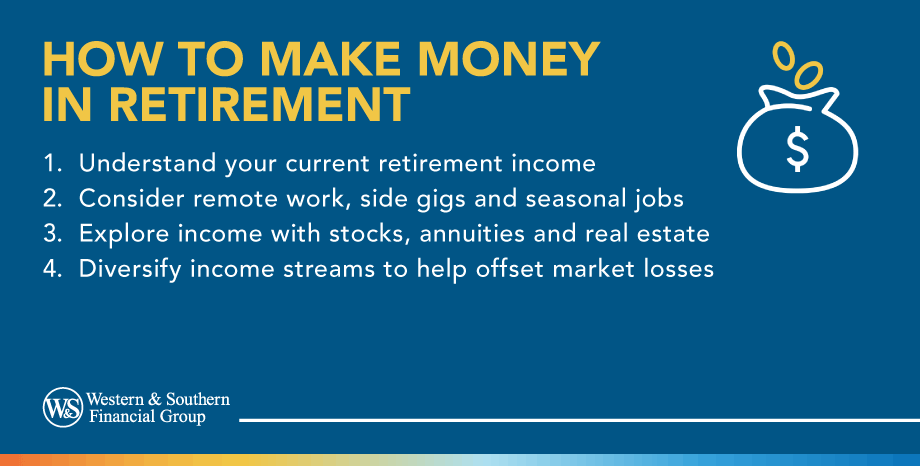
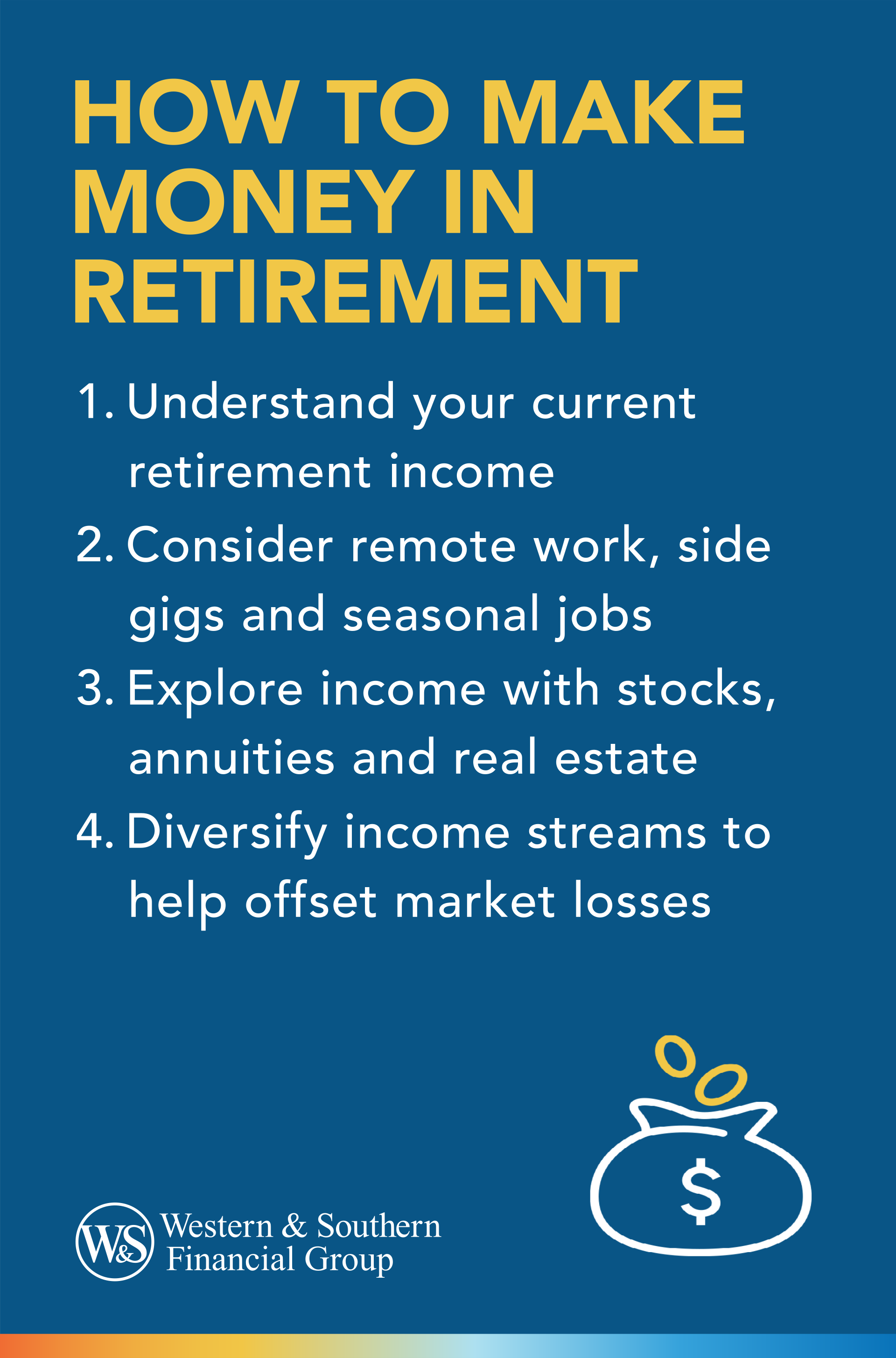
Retirement income often looks different than many people expect. Monthly expenses continue, markets fluctuate and retirement may last decades, leading some retirees to explore additional ways of earning income after leaving full-time employment.
Retirees today have access to a wider range of income opportunities, from flexible online jobs to property-related income strategies.
Why More Retirees Are Looking for Extra Income
For decades, retirement was often viewed as a phase supported by pensions and Social Security. Today, the picture is more layered. According to the Bureau of Labor Statistics, since 1985 labor force participation among adults age 65 and older has been on the rise, reaching 19.5% in 2024.1
Several factors may contribute to the search for additional income in retirement:
- Rising living costs: Housing, food and health care expenses have generally increased over time
- Market volatility: Investment values can fluctuate, especially during economic uncertainty
- Longer retirements: Many people potentially spend 20 to 30 years in retirement
- Lifestyle flexibility: Some retirees simply enjoy staying active or connected through work
- Inflation: Over long retirements, inflation may gradually reduce purchasing power
For some, making money in retirement is less about necessity and more about creating options.
Understanding Your Current Retirement Income
Before exploring new income streams, you may want to look closely at your existing sources of retirement income. That often includes:
| Retirement Income Source | Typical Characteristics | Potential Considerations |
|---|---|---|
| Social Security Benefits | Monthly lifetime income | Claiming age may affect payment amounts |
| Retirement Accounts | Tax-advantaged savings | Withdrawals may create tax implications |
| Roth IRAs | Generally tax-free qualified withdrawals | Contribution limits apply |
| Dividend Stocks | Potential investment income | Subject to market risk |
| Real Estate | Rental or property income | Property maintenance costs may apply |
The right mix varies from person to person. Someone with substantial retirement savings may approach extra income differently than someone relying heavily on Social Security.
Supplement Income With Part-Time Work
For many retirees, part-time work remains one of the most straightforward ways to earn additional income. But retirement jobs have changed significantly in recent years.
Flexible schedules, remote opportunities and project-based work have expanded options beyond traditional retail or seasonal work.
Popular Part-Time Work Ideas for Retirees
- Consulting: Former professionals may consider freelance or consulting work within their previous industry
- Community college instruction: Teaching continuing education or vocational courses may provide flexible schedules
- Customer support roles: Many companies hire remote representatives
- Bookkeeping or administrative support: Businesses increasingly outsource these tasks virtually
- Tourism or hospitality: Seasonal work often increases during holidays or travel seasons
Pros & Cons of Part-Time Work
| Potential Advantages | Potential Challenges |
|---|---|
| Flexible schedules may be available | Earned income from work could temporarily affect Social Security benefits before full retirement age |
| Opportunity for social interaction | Some positions require physical activity |
| Potential to supplement retirement savings | Earnings may create tax considerations |
| Skills & experience may remain valuable | Remote work scams occasionally target retirees, which makes protecting personal banking and bank account information important |
If you claim Social Security before reaching full retirement age, earned income may temporarily reduce benefits if earnings exceed annual limits established by the Social Security Administration.2
The Gig Economy Offers Flexible Opportunities
The gig economy has created income opportunities that barely existed 15 years ago.
Retirees now work as virtual assistants, online tutors, delivery drivers, pet sitters and freelance writers, often with flexible hours.
Online Jobs Retirees Often Explore
- Virtual assistant work
- Freelance writing or editing
- Graphic design
- Online tutoring
- Selling handmade products
- Customer service chat support
- Data entry
These online jobs may appeal to retirees looking for location flexibility or reduced commuting.
That said, caution matters. Some online opportunities advertise unrealistic income expectations or require upfront payments. Researching companies carefully and protecting personal banking information remains important.
Explore Additional Income Streams
Some retirees focus on creating income streams tied to market-based assets or insurance products rather than employment.
This approach may involve dividend stocks, bonds or income annuities. The tradeoff? Additional income opportunities often come with varying levels of market risk, reduced liquidity or contractual limitations.
Dividend Stocks
Dividend stocks distribute a portion of company earnings to shareholders, typically quarterly.
Some retirees consider dividend-paying investments because certain companies distribute recurring payments to shareholders.
However, dividend payments are not guaranteed. Companies may reduce or eliminate dividends during difficult financial periods.
Income Annuities
Income annuities generally involve exchanging assets for a stream of income payments guaranteed by the claims-paying ability of the issuing insurer.
For retirees concerned about longevity risk (the possibility of outliving savings), income annuities may offer predictable cash flow.
Still, there are considerations:
- Inflation risk: Payments may not keep pace with rising living costs
- Liquidity limitations: Access to principal could become restricted
- Contract complexity: Fees, payout structures and rider options vary significantly
- Insurance company strength: Guarantees are backed by the claims-paying ability of the issuing insurer
A financial professional may help explain how different annuity structures work and where they may fit within broader retirement income goals.
Real Estate & Rental Properties
Real estate has long been associated with passive income, though “passive” sometimes understates the work involved.
Rental properties may generate recurring income, but they also come with expenses, maintenance responsibilities and vacancy risks.
Common Real Estate Income Approaches
- Long-Term Rentals: Traditional rental properties may provide monthly income, though repairs, taxes and tenant turnover may affect profitability.
- Short-Term Rentals: Platforms like Airbnb have expanded opportunities for retirees with extra living space. Local regulations and occupancy rates, however, vary widely.
- Real Estate Investment Trusts (REITs): REITs allow investors to participate in real estate markets without directly managing properties. For retirees who prefer less hands-on involvement, REITs may feel more manageable than property ownership. Some REITs are publicly traded, while others are not, which can affect liquidity and risk.3
Using Skills & Hobbies To Generate Income
Sometimes the most practical side gig starts with something familiar.
Retirees often underestimate the value of skills they’ve developed over decades.
Hobby-Based Income Ideas
- Photography
- Craft sales
- Gardening services
- Music lessons
- Pet sitting
- Baking or catering
- Writing or blogging
A retired accountant might help small businesses seasonally. A former teacher could tutor students online. Someone who enjoys woodworking may sell products locally or online.
The income may not replace a full-time salary. It may not have to.
Managing Taxes While Making Money in Retirement
Extra income can affect more than your bank account.
Depending on the source, additional earnings and higher income levels may influence:
- Tax brackets
- Medicare premiums4
- Social Security taxation
- Taxes associated with required minimum distributions from retirement accounts5
For example, withdrawals from traditional retirement accounts are typically taxable, while qualified Roth IRA withdrawals are generally tax-free.6
Even part-time work could temporarily affect Social Security benefits if claimed before full retirement age.
These moving pieces are one reason some retirees consult tax professionals or financial professionals when evaluating income strategies.
Preparing for Market Volatility
When markets decline, retirement withdrawals can feel more stressful.
This is sometimes called sequence-of-returns risk, which refers to the potential impact of withdrawing assets during periods of market decline, particularly early in retirement.
That’s one reason some retirees explore diversified income streams rather than relying heavily on investment withdrawals alone.
A mix of Social Security, part-time work, income annuities or cash reserves may help reduce pressure during periods of market volatility.
A Realistic Example
Consider a hypothetical retiree named Linda. Linda is 68, receives Social Security and has retirement savings in a traditional IRA and Roth IRA. Rising housing and medical costs prompted her to look for supplemental income, though she didn’t want full-time employment.
She began tutoring part time through an online platform, earning roughly $600 per month. She also shifted part of her investment portfolio toward dividend-paying investments and rented a spare room seasonally during local sporting events.
Later, during a period of market volatility, Linda’s retirement accounts temporarily declined in value. Because she had multiple income streams, including Social Security, tutoring income and seasonal rental income, she felt less pressure to withdraw as much from her investment accounts while markets were down.
None of those strategies completely transformed her finances overnight. Together, however, they potentially created more flexibility in her monthly cash flow and helped diversify where her retirement income came from.
Every retirement situation differs. Income strategies that feel manageable for one person may not align with someone else’s goals, risk tolerance or health considerations.
Conclusion
Learning how to make money in retirement often involves balancing flexibility, income needs and personal priorities. Some retirees focus on part-time work. Others lean toward investment income, real estate or online side gigs. Often, the approach ends up being a mix of several smaller income streams rather than one major solution.
The important part is understanding the tradeoffs. Every income source carries different levels of risk, tax considerations, time commitments and unpredictability.
You may want to consider reviewing your current retirement income picture, evaluating realistic opportunities and speaking with qualified financial professionals when complex tax or investment questions arise.
Sources
- Golden years: older Americans at work and play. https://www.bls.gov/opub/btn/volume-14/golden-years-older-americans-at-work-and-play.htm
- Receiving Benefits While Working. https://www.ssa.gov/benefits/retirement/planner/whileworking.html
- Real Estate Investment Trusts (REITs). https://www.investor.gov/introduction-investing/investing-basics/investment-products/real-estate-investment-trusts-reits
- Premiums: Rules for Higher-Income Beneficiaries. https://www.ssa.gov/benefits/medicare/medicare-premiums.html
- Retirement plan and IRA required minimum distributions FAQs. https://www.irs.gov/retirement-plans/retirement-plan-and-ira-required-minimum-distributions-faqs
- Roth IRAs. https://www.irs.gov/retirement-plans/roth-iras