Social Security began in 1935 during the Great Depression. It was created to support older adults and unemployed workers through monthly benefits funded by payroll taxes. Benefit amounts are based on your full retirement age and lifetime earnings. The program was a response to widespread poverty and continues to play a key role in retirement income.1
Even after more than 90 years, misunderstandings about Social Security are still common. Here are several myths and the facts behind them.
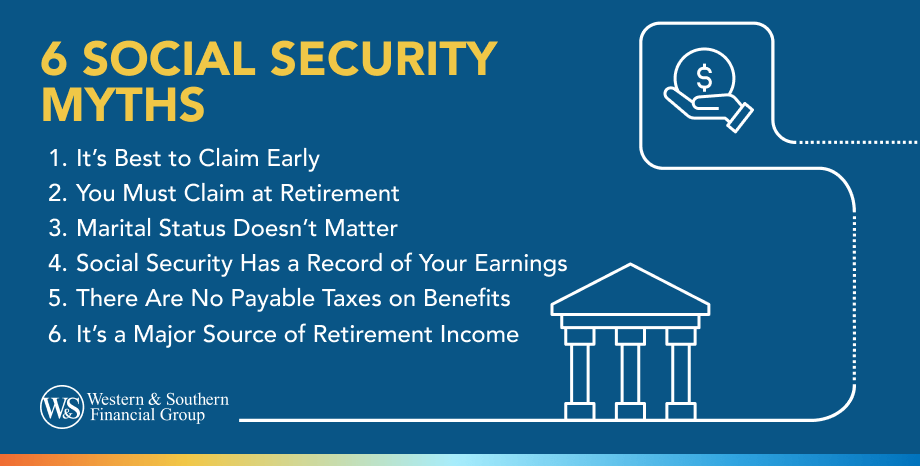
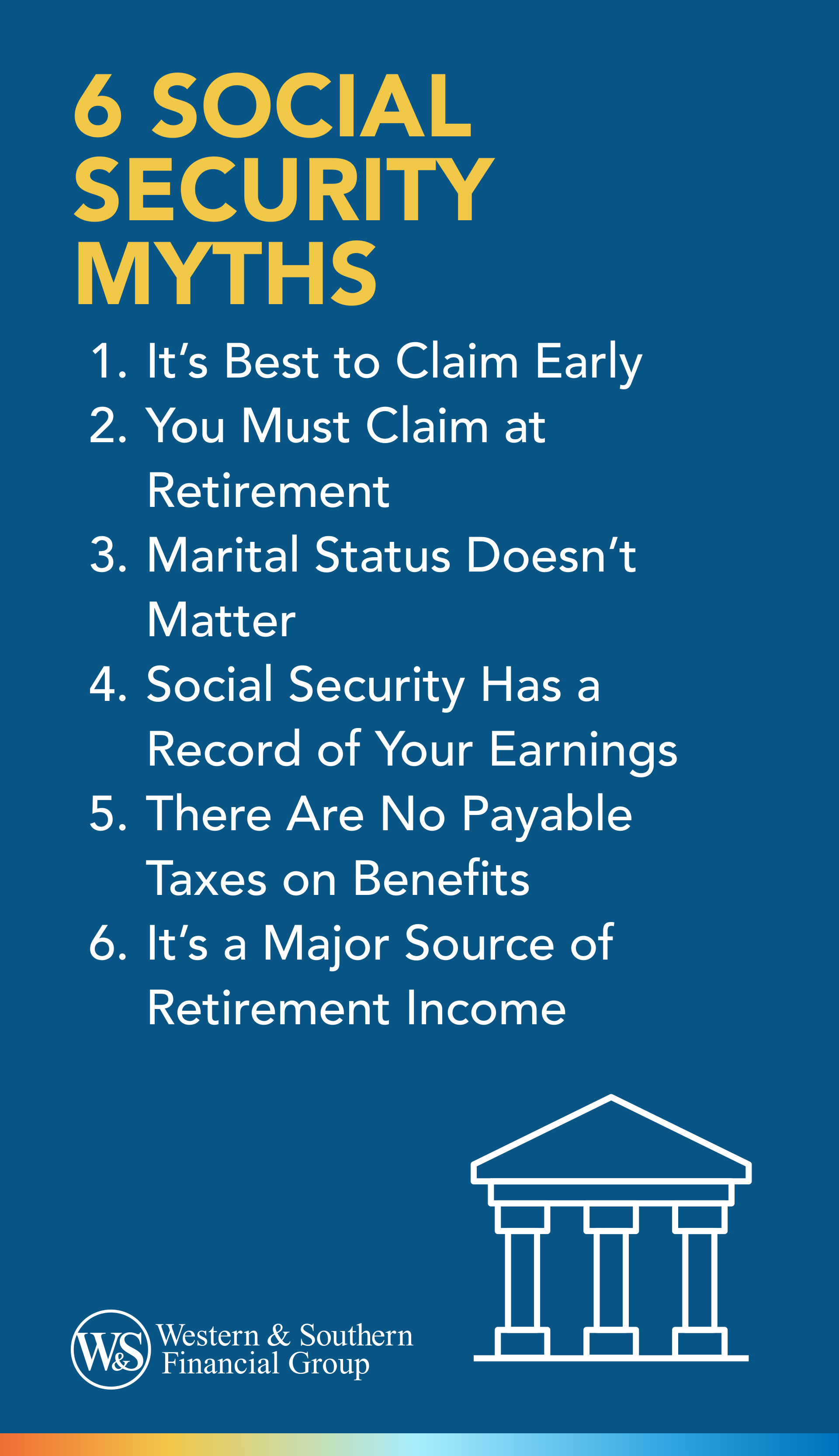
Myth #1: It's Best to Claim Early
Fact: You can start collecting benefits as early as age 62. However, you will not receive your full monthly benefit unless you wait until your full retirement age, which depends on your birth year.2
For instance:
- If you were born between 1943 and 1954, your full retirement age is 66.3
- If you collect benefits at age 62, you'll receive 75% of what you're entitled to at your full retirement age.
- At age 65, you'll receive about 93.3% of your monthly benefit.
Myth #2: You Must Claim at Retirement
Fact: Many people continue working past traditional retirement age. If you delay claiming Social Security, your monthly benefit increases.4
If you're one of them, this could benefit you when it comes to Social Security. Delaying your benefits will increase the monthly amount you get when you eventually claim your entitlement.4
For example, if you were born between 1943 and 1954 and your full retirement age is 66:
- If you don't begin collecting Social Security until age 67, you'll receive 108% of the monthly benefit to which you're entitled.
- If you wait until age 70, that percentage jumps to 132%.
Myth #3: Marital Status Doesn't Matter
Fact: Marriage has several financial benefits within the Social Security system.5
Marriage can affect how much you receive from Social Security. In many cases, spouses may receive up to 50% of their partner’s benefit.
You may qualify for spousal benefits if:
- You are at least age 62
- Your spouse is already receiving benefits
- You have not worked or your own benefit is lower
If your personal benefit is less than the spousal amount, you may receive a combined benefit that matches the higher spousal amount.
Even if you qualify for Social Security based on your own work history, you can still receive spousal benefits. The Social Security Administration will adjust your payment so your total benefit equals the higher amount available to you as a spouse.
Divorced individuals may also qualify. You can receive spousal benefits based on a former spouse’s record if:
- The marriage lasted at least 10 years
- You are currently unmarried
- You are at least age 62
- Your own benefit is lower than the spousal benefit
- Your former spouse is eligible for Social Security
The timing of when you claim benefits matters. Whether married or divorced, starting benefits before full retirement age, between age 62 and full retirement age, will reduce the total amount you receive.
Myth #4: Social Security Has an Accurate Record of Your Earnings
Fact: Unfortunately, this is not always true. To get a clearer view of your earnings history, create an account on the Social Security website.6
Once you create an account, you can access regular statements, review your earnings history, and see estimates of your future monthly benefit. Social Security calculates monthly benefits based on your lifetime earnings and your average monthly earnings during the 35 years you earned the most.
If you notice any errors, contact the agency or your local Social Security office to correct the information. You have up to three years, three months, and 15 days after the calendar year in which you received the earnings to make corrections.7
Myth #5: There Are No Payable Taxes on Social Security Benefits
Fact: Depending on your total income, a portion of your Social Security benefits may be subject to federal income taxes. If your combined income exceeds certain limits, up to 85% of your benefits could be taxable.8
Combined income usually includes your adjusted gross income, nontaxable interest, and half of your Social Security benefits. Some states also tax benefits, while others do not. Understanding how your benefits are taxed can help you better prepare for retirement income.
Myth #6: Social Security Will Be a Major Source of Retirement Income
Fact: Social Security is designed to replace only a portion of your pre-retirement income. For most people, it covers about 40% of average earnings, which may not be enough to maintain the same standard of living in retirement.9
That is why it is often suggested to build additional savings through retirement accounts, pensions, or other income sources. Social Security can provide a base level of income, but relying on it as your primary source may leave gaps in your long-term strategy.
Using Social Security to Your Benefit
Misunderstandings should not prevent you from collecting all the Social Security benefits you may be eligible to receive. As you approach the end of your working years, these benefits can add extra income on top of your other retirement savings.
If you have spent your lifetime working, or have a spouse who has contributed to Social Security, you have earned access to these benefits, and they may play an important role as you move into retirement.
Sources
- Historical Background And Development Of Social Security. https://www.ssa.gov/history/briefhistory3.html.
- You Can Receive Benefits Before Your Full Retirement Age. https://www.ssa.gov/benefits/retirement/planner/applying2.html.
- If you were born between 1943 and 1954 your full retirement age is 66. https://www.ssa.gov/benefits/retirement/planner/1943.html.
- If you were born between 1943 and 1954 your full retirement age is 66 - Delayed Retirement. https://www.ssa.gov/benefits/retirement/planner/1943-delay.html.
- Family benefits. https://www.ssa.gov/family.
- Social Security Administration. https://www.ssa.gov/.
- Social Security Handbook. https://www.ssa.gov/OP_Home/handbook/handbook.14/handbook-1423.html.
- Must I pay taxes on Social Security benefits? https://www.ssa.gov/faqs/en/questions/KA-02471.html.
- The Importance of Social Security Benefits to the Income of the Aged Population. https://www.ssa.gov/policy/docs/ssb/v77n2/v77n2p1.html.