Many new parents try to avoid financial mistakes, but it can be challenging. Expenses often begin quickly, from prenatal care to buying baby essentials like a crib.
There is some encouraging news. Most new parents today are millennials. While they often carry more student debt than earlier generations, they also tend to plan and save for children more consistently.1
Even so, financial missteps can still happen. Here are five common pitfalls to watch for.
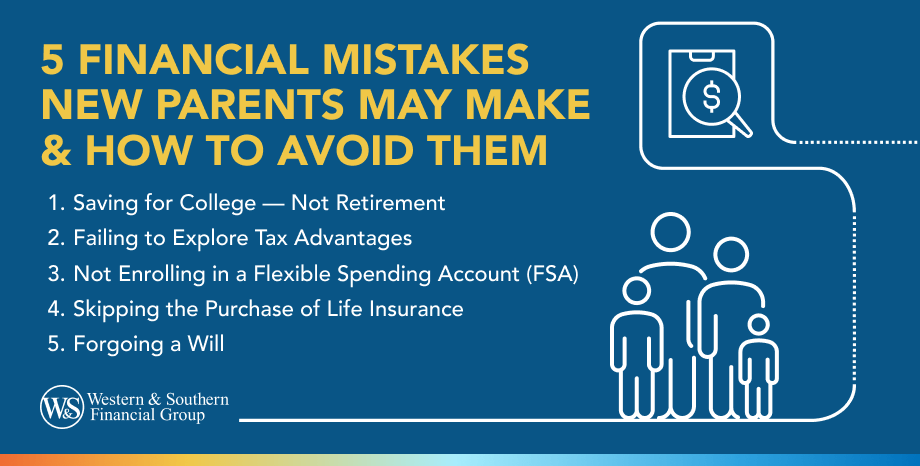
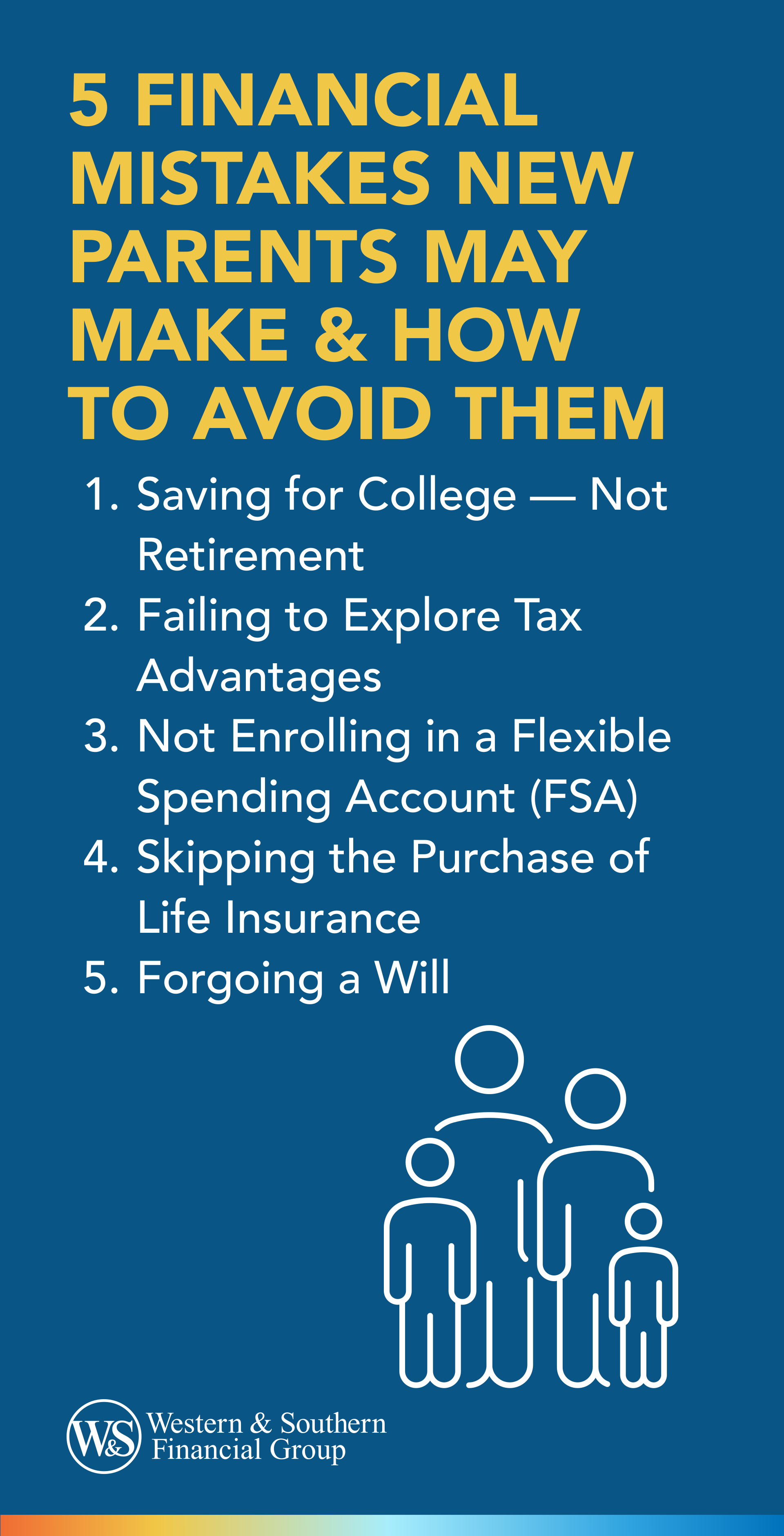
1. Saving for College Instead of Retirement
Some parents focus on saving for college while putting little or nothing toward retirement. This approach could create financial strain later in life.
When your child reaches college age, they may have access to:
- Grants
- Loans
- Scholarships
- Other forms of financial aid
Retirement does not offer similar funding options. It may last 20 to 30 years or more, so building savings early can make a difference.
2. Failing to Explore Tax Advantages
New parents may have access to tax benefits, starting as early as the hospital. When applying for a birth certificate, you can often request a Social Security number for your child.2 This number is required to claim your child as a dependent on your tax return.
If you cannot apply at the hospital, such as in the case of adoption, you can submit Form SS-5 to the Social Security Administration along with proof of age, identity, and U.S. citizenship.
When filing taxes, consider these areas:
- Child tax credit ($2,200): Parents can claim this credit regardless of when the child is born or adopted during the year. It applies for up to 17 years. Higher-income households may not qualify.3
- Withholding adjustments: Filing a new W-4 can reflect your dependent and reduce the amount withheld from your paycheck. Single parents may also qualify for head of household status, which can offer added tax benefits.
Standard Deduction and Additional Credits
| Filing Status | 2026 Standard Deduction4 |
|---|---|
| Single or Married Filing Separately | $16,100 |
| Married Filing Jointly | $32,200 |
| Head of Household | $24,150 |
The Child Tax Credit may provide up to $2,200 per qualifying child. Full eligibility generally applies to incomes up to $200,000, or $400,000 for joint filers.3
If you have little or no federal income tax liability, the Additional Child Tax Credit may offer up to $1,700 per child. You must have at least $2,500 in earned income to qualify.3
3. Not Enrolling in a Flexible Spending Account (FSA)
Flexible Spending Accounts allow you to set aside pretax dollars for medical and child care costs. Some parents either skip this option or contribute only small amounts.
A common concern is the “use it or lose it” rule. However, new parents may face both expected and unexpected expenses, including:
- Routine medical visits
- Delivery costs
- Cesarean section expenses
- Specialized care, such as for premature births
Even with insurance, out-of-pocket costs can add up. Estimating these expenses ahead of time may help you decide how much to contribute to your FSA.
4. Skipping the Purchase of Life Insurance
Some new parents put off buying life insurance, even though it can support their family’s financial needs. Choosing the right coverage depends on your situation, and speaking with a financial representative can help you evaluate options. Many families consider coverage for both parents, especially if both contribute to household expenses like a mortgage.
5. Forgoing a Will
A will allows parents to name a guardian for their child. Without one, decisions about care could become unclear if something unexpected happens. This step can be especially important for blended families and second marriages. A will can also help outline how assets are handled and provide direction for those left behind.
The Bottom Line
Planning for a growing family often involves many financial decisions. Understanding common mistakes can make it easier to prioritize what matters most. Taking advantage of available tax benefits and financial tools can help you move forward with more clarity as you adjust to life as a parent.
Sources
- Millennial parents are saving for their children's education but most still feel unprepared. https://ca.finance.yahoo.com/news/millennial-parents-saving-childrens-education-201304549.html.
- Social Security Numbers for Children. https://www.ssa.gov/pubs/EN-05-10023.pdf.
- Child Tax Credit - IRS. https://www.irs.gov/credits-deductions/individuals/child-tax-credit.
- IRS releases tax inflation adjustments for tax year 2026, including amendments from the One, Big, Beautiful Bill. https://www.irs.gov/newsroom/irs-releases-tax-inflation-adjustments-for-tax-year-2026-including-amendments-from-the-one-big-beautiful-bill.