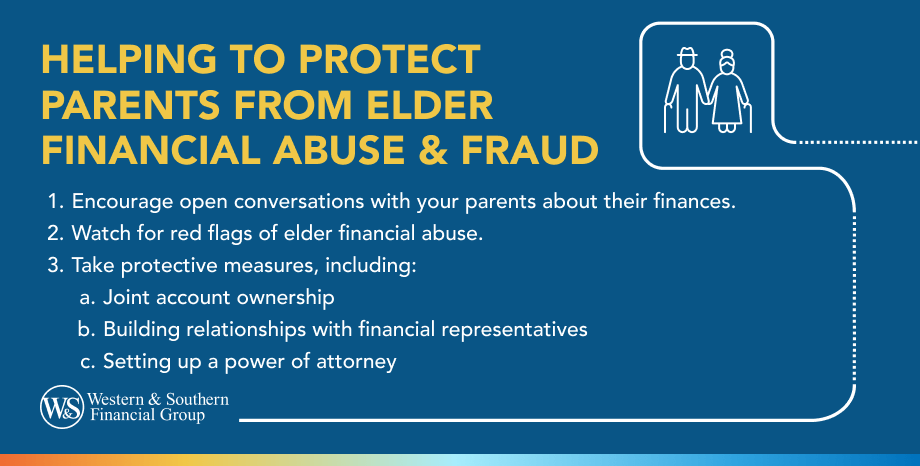
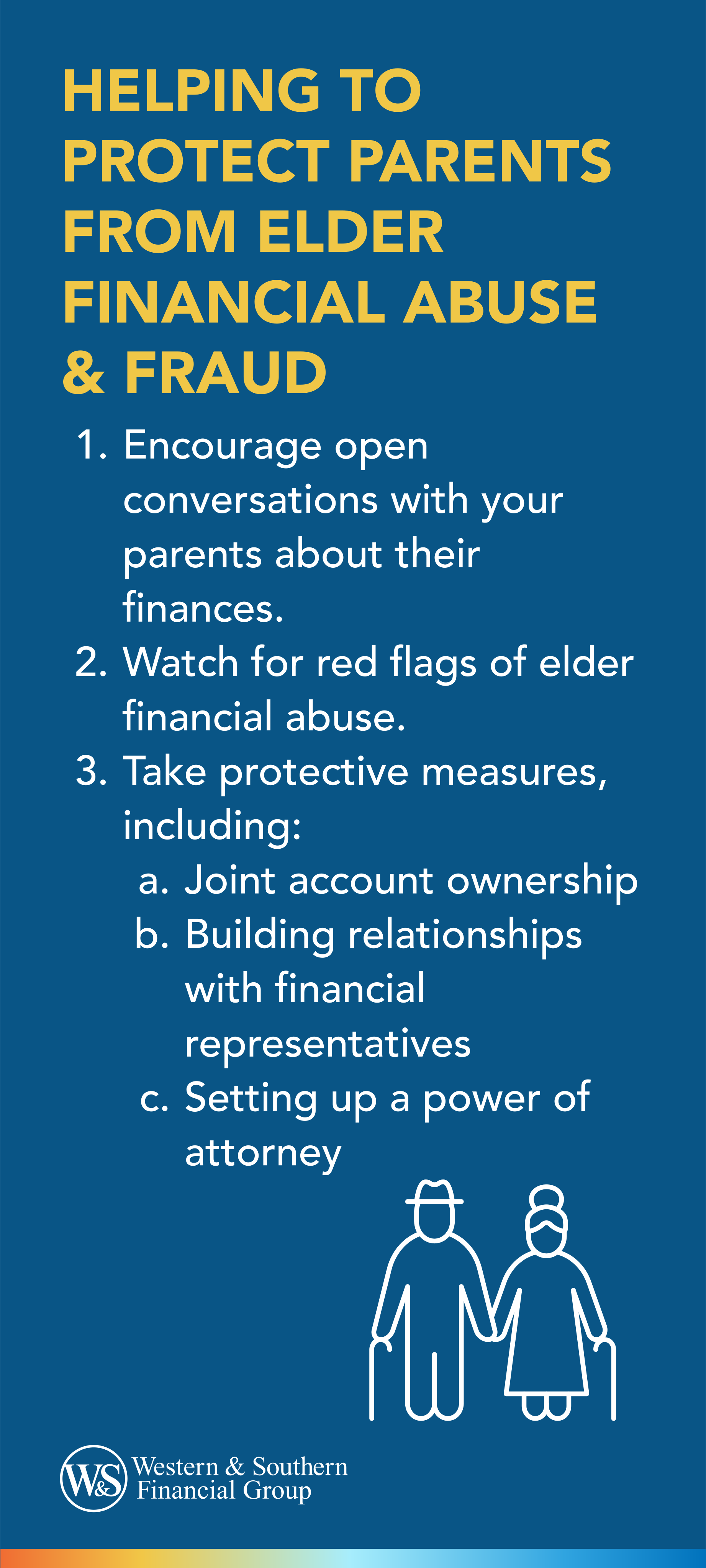
As your parents age, it becomes more important to stay aware of elder financial abuse. While anyone can be targeted by fraud, older adults are often a focus for scammers. In 2018, Congress addressed this concern by passing the Senior Safe Act.1 This law allows financial professionals to take action if they suspect an older client is being exploited.
If you have aging parents, there are practical steps you can take to help protect their finances.
Starting the Conversation About Financial Abuse
The first step is opening a conversation about finances. This can help create transparency and make it easier to talk about fraud, common scams, and ways to avoid them.
Encourage your parents to:
- Share basic details about their accounts and policies
- Talk with you before making major financial decisions
- Discuss how scams work and how they can recognize warning signs
These conversations often go beyond basic account details. You may also want to cover:
- Insurance policies
- Bank and investment accounts
- Retirement savings
- Social Security benefits
- Estate planning intentions
Having this information can make it easier to notice unusual changes and ask informed questions.
This topic can feel sensitive. One way to ease into it is by asking how they managed finances for their own parents and how things have changed over time. If you have siblings, consider discussing as a family who is best positioned to take an active role.
Knowing the Red Flags
Once your parents are open to sharing information, you may be better able to spot signs of potential abuse. While changes in mental sharpness can be a factor, there are other warning signs to watch for:
- Unusual or large purchases
- A sudden change in a long-time financial advisor
- Updates to beneficiary designations
- Abrupt shifts in spending or investment habits
- Large or unexpected withdrawals or wire transfers
Some financial institutions also offer account monitoring tools that send alerts when unusual activity occurs.
Taking the Right Financial Safety Measures
If your parents are willing, there are several steps you can take to add oversight and reduce risk.
Consider Joint Ownership of Accounts
You may want to limit direct access to large sums of money by:
- Keeping a primary account with enough funds for routine expenses
- Requiring dual approval for withdrawals or transfers above a set amount
- Adjusting account permissions so both you and a parent must approve certain transactions
Another option is a living trust. This legal arrangement allows a designated person to manage finances and assets, while also documenting your parents’ wishes.
Build Relationships With Financial Representatives
Try to connect with the professionals who assist your parents, such as:
- Bank representatives
- Investment advisors
- Tax professionals
- Estate attorneys
Building these relationships can make communication easier and allow them to flag unusual activity. Be sure proper authorization is in place so they can share relevant information with you.
Set Up Power of Attorney
A power of attorney allows you or another trusted person to act on your parents’ behalf. This can include:
- Requesting information from financial professionals
- Managing accounts if needed
There are different types of power of attorney. For example, a limited power of attorney grants authority only in specific situations outlined in the agreement.
The Bottom Line
While you may not be able to eliminate the risk of elder financial abuse entirely, staying involved and taking preventive steps can make a meaningful difference. Open communication and thoughtful planning can help reduce the chances of financial harm.
Sources
- Senior Safe Act Fact Sheet. https://www.investor.gov/senior-safe-act-fact-sheet.