Do you keep joint finances with your spouse or partner? If so, it may help to understand money management for couples, including how to stay involved together without causing stress or conflict over finances.
Here's what to consider when managing money together to strengthen your financial situation and possibly your relationship.
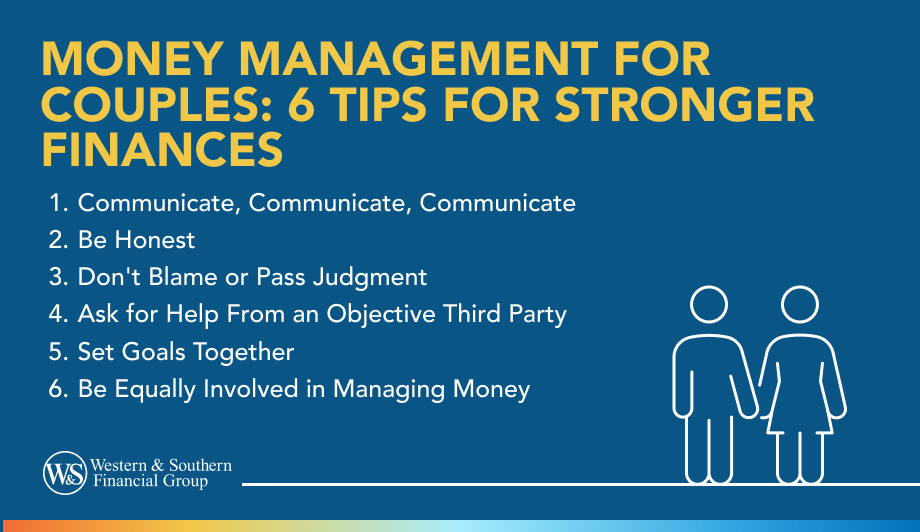
1. Communicate, Communicate, Communicate
Communication is one of the most important parts of managing money together. When communication breaks down, it can slow progress and lead to misunderstandings. This applies to your finances and your relationship overall.
Good communication is not just about talking. It also means listening. Pay close attention to what your partner says, then repeat it back in your own words to confirm understanding.
If a conversation becomes tense, take a break. It can be hard to think clearly in the moment. Giving each other space can help both of you return to the discussion with a calmer, more productive mindset.
2. Be Honest
Honesty may seem obvious, but many couples struggle with it when it comes to money. Studies show that two in five Americans admit to some form of financial infidelity, such as hiding purchases, debts, or accounts.1
Being dishonest about money can create problems in two ways:
- It can damage trust in your relationship
- It can lead to inaccurate budgeting and poor decisions
If spending or debt is hidden, your numbers will not reflect reality. This can disrupt savings goals and may lead to more debt over time. Being open about your finances helps both of you stay on track.
3. Don't Blame or Pass Judgment
Honesty works best when both partners feel safe sharing. If one person expects blame or criticism, they may hold back important information.
Blame and judgment often do more harm than good, they:
- Rarely lead to meaningful change
- Can shift focus away from solving the problem
- May create frustration or resentment
It's not always easy to avoid these reactions. If money discussions often turn into arguments, you may want to consider bringing in a neutral third party to help guide the conversation.
4. Ask for Help From an Objective Third Party
An outside perspective can be helpful, especially during difficult conversations. A neutral third party can review your situation and offer unbiased input.
In the case of your finances, a financial representative can:
- Help you build a structured approach to managing money
- Outline steps to follow
- Provide accountability as you work toward your goals
This type of support can make conversations more productive and focused.
5. Set Goals Together
If you are building a life together, it makes sense to plan for the future together. Goals act as a guide for how you use your money.
You may have two types of goals:
- Individual goals: These are personal priorities. Share them with your partner and agree on how they fit into your overall finances.
- Joint goals: These are shared priorities, such as saving for retirement or making long-term investments.
It can help to list your goals and rank them by importance. This process may require compromise, especially when deciding which goals, like retirement planning or investing, to focus on first.
6. Be Equally Involved in Managing Money
Both partners should take part in managing household finances. Contributions may differ, but each person plays a role in building your life together.
Equal involvement does not mean doing the same tasks. It means staying informed and engaged. One way to do this is by setting a regular check-in, such as a monthly meeting.
During that time, you can:
- Review income and expenses
- Track progress toward goals
- Talk through any concerns
Consistent check-ins can help keep both of you aligned.
The Bottom Line
Managing money as a couple can support both your relationship and your financial progress. Working together, staying honest, and communicating clearly can make the process smoother. Approach it as a team effort, and support each other as you move forward.
Sources
- Survey: More than 2 in 5 Americans believe financial secrets are at least as bad as cheating. https://www.bankrate.com/credit-cards/news/financial-infidelity-survey/.