When it comes to deciding between renting or owning a home, the answer is rarely simple. Both renting and owning offer advantages and potential downsides that can affect your long-term financial wellness. Depending on your personal goals, current lifestyle, and overall financial health, one option may make more sense than the other.
This article explores the pros and cons of renting and owning and provides a clear guide to help you decide which choice fits your future goals.
Understanding Renting
Renting is often viewed as a flexible option for individuals who prefer mobility, fewer responsibilities, or who are not ready for the long-term commitment of owning property. Here are some key advantages and disadvantages of renting
Benefits of Renting
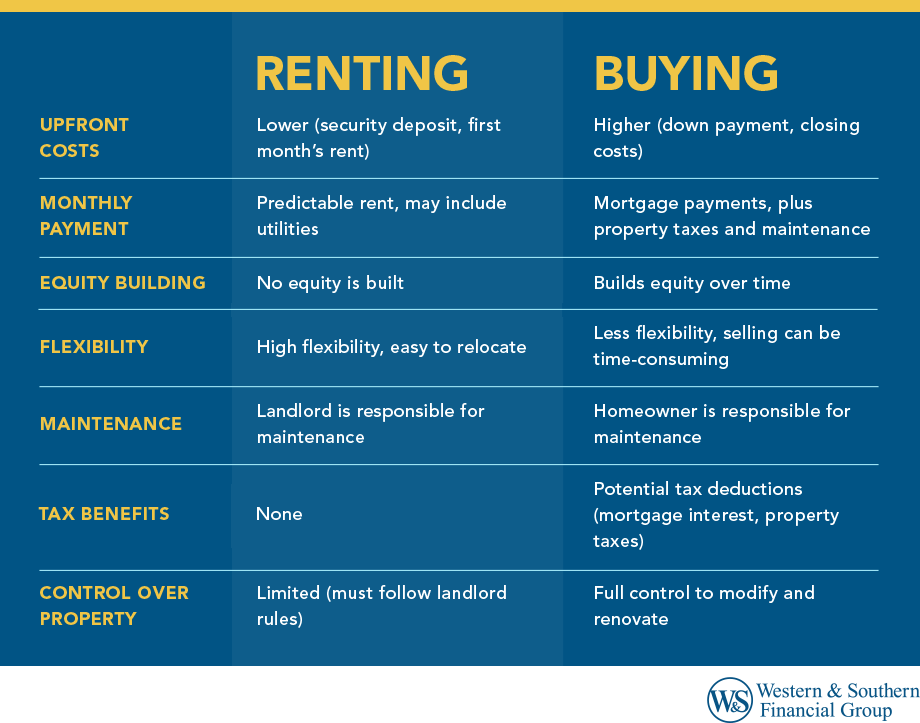
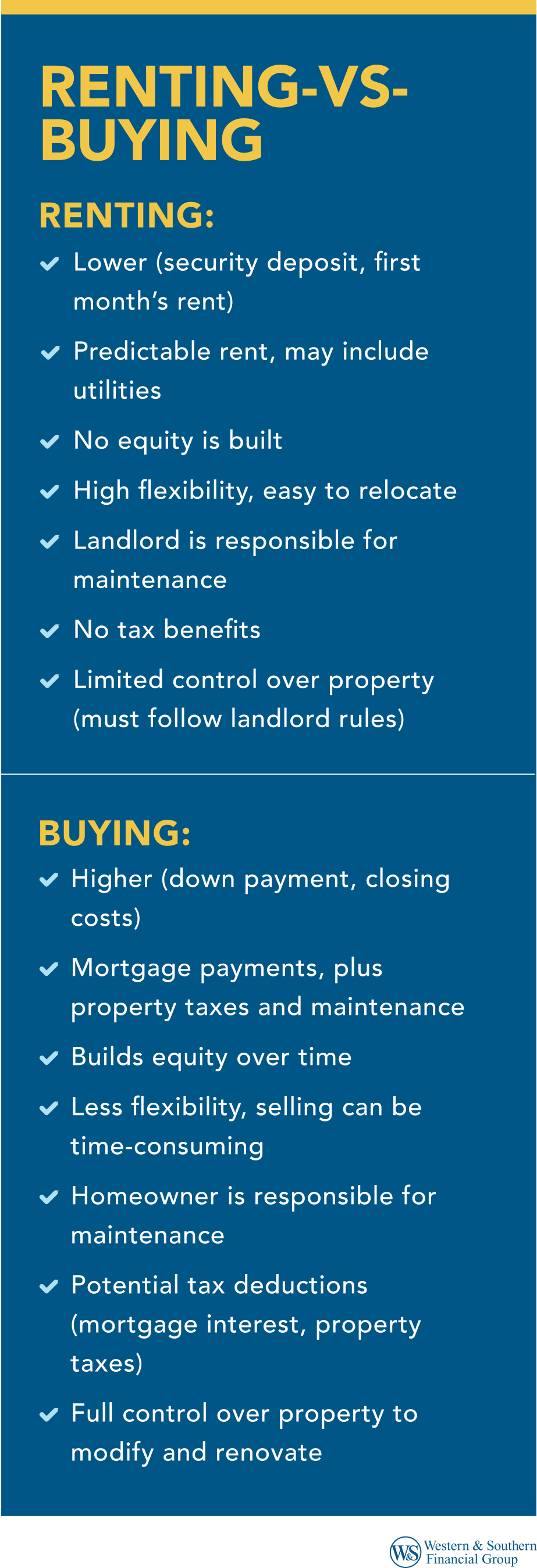
- Flexibility and Mobility: Renting offers a high level of flexibility. With a lease that typically lasts 6 to 12 months, renters can relocate more easily without the process of selling a home. This can work well for individuals who are uncertain about long-term plans or expect to move due to work or personal reasons.
- Lower Upfront Costs: Renting usually involves lower upfront costs compared to buying a home. You may need to provide a security deposit and the first month’s rent, but these costs are generally lower than a down payment and closing costs.1
- Maintenance-Free Living: Maintenance and repairs are typically the landlord’s responsibility. Renters do not have to cover the cost of unexpected repairs, such as a leaky faucet or a broken air conditioning unit.
Drawbacks of Renting
- No Equity Building: Monthly rent payments do not build equity. Unlike homeowners, renters do not gain ownership in a property through their payments.
- Rent Increases: Rent prices may increase over time, especially in high-demand areas. Renters may face rising costs without the predictability that can come with a fixed-rate mortgage.
- Limited Control Over Property: Renters often have restrictions on decorating or making changes to the property. Lease terms and renewal decisions are also typically controlled by the property owner.
Understanding Buying
Homeownership is often seen as a milestone and part of the American Dream. However, owning a home comes with both advantages and challenges.
Benefits of Buying
- Building Equity and Wealth: When you own a home, your mortgage payments contribute to equity. Over time, as you pay down the loan and property values potentially increase, homeownership can support long-term wealth building.
- Stability: Owning a home provides greater control over how long you stay and how you manage the property. You are not subject to lease renewals.
- Tax Benefits: Some homeowners may qualify for tax deductions, such as mortgage interest and property taxes. These deductions can reduce overall housing costs over time.
- Creative Freedom: Homeowners can make improvements, renovations, and modifications to their property. From painting walls to adding new features, you can tailor the space to fit your preferences.
Drawbacks of Buying
- Upfront Payment: Purchasing a home involves significant upfront costs, including a down payment, closing costs, and moving expenses. These expenses can add up quickly.2
- Maintenance and Repairs: Homeowners are responsible for all maintenance and repair costs. Large repairs, such as roof replacement or plumbing issues, can be expensive and unpredictable.
- Less Flexibility: Selling a home can take time and may involve additional costs. This can make relocating more complicated compared to renting.
Financial Comparisons: Renting vs. Buying
The financial implications of renting versus buying often play a major role in this decision. Both options have financial advantages and disadvantages that can affect long-term wealth building.
Upfront Costs
- Renting: Upfront costs are typically limited to a security deposit, first month’s rent, renters insurance, and possible application fees.
- Buying: Buying usually requires a down payment ranging from 3% to 20% of the purchase price. Buyers must also pay closing costs, which often range from 1% to 5% of the loan amount. Some lenders may require private mortgage insurance.
Monthly Housing Costs
- Renting: Monthly rent payments are generally predictable during the lease term. However, rent may increase when the lease renews.
- Buying: Monthly mortgage payments may remain consistent with a fixed-rate loan. In addition to the mortgage, homeowners must budget for property taxes, homeowners insurance, and maintenance.
Opportunity Costs
Opportunity cost is another factor to consider. Money used for a down payment and closing costs could potentially be invested elsewhere, such as in stocks or retirement accounts. On the other hand, mortgage payments build equity over time, which can contribute to net worth growth.
Lifestyle & Personal Goals
When choosing between renting and owning, consider your goals and lifestyle. Renting may make sense if you value flexibility, have an unpredictable career path, or are not ready to settle in one area. It can also appeal to those who prefer not to handle property maintenance.
If you are looking for stability, plan to stay in one location for several years, or want to build equity in a property, buying may be a suitable option. Homeownership can be especially rewarding for financially prepared people who want greater control over their living space.
Making the Right Choice: Renting vs. Buying
The decision to rent or own should align with your income, family goals, and lifestyle preferences. Here are scenarios that may help guide your choice.
When Renting Might Be the Better Option
- You Need Flexibility: Renting may be a practical choice if your job requires frequent relocation or you are unsure where you want to settle.
- You’re Early in Your Career: If you are building your career or do not yet have significant savings, renting can allow you to manage expenses without a large down payment.
- Income Uncertainty: If your income fluctuates or your budget is tight, renting may reduce exposure to large, unexpected repair costs.
When Buying Might Be the Better Option
- You Plan to Stay Long-Term: If you expect to remain in one place for several years, owning may support long-term equity growth and potential property appreciation.
- You Want Greater Stability: Owning provides more control over your housing situation and the possibility of fixed mortgage payments.
- You Want to Build Wealth: Paying down a mortgage builds equity, and rising property values may increase overall net worth.
Final Thoughts
The decision to rent or own depends on your income, lifestyle, and long-term goals. Renting offers flexibility, fewer responsibilities, and lower upfront costs. Buying a home can help build equity and give you more control over your living space. Review your income, career plans, future goals, and priorities before deciding. Comparing the pros and cons can help you choose the option that fits your needs.
For guidance, consider speaking with a financial professional to review your options and outline a path that fits your situation.
Sources
- How much is a down payment on a house? - Bankrate. https://www.bankrate.com/mortgages/how-much-is-a-down-payment-on-a-house/.
- Average closing costs on a house - Bankrate. https://www.bankrate.com/real-estate/average-closing-costs-by-state/.