
Considering saying “I do”? Congratulations on taking this big step. You may be thinking about a happy future together, but it is also a good time to talk about money in marriage. It may not feel romantic, but it matters. Finances are a common source of stress in relationships and one of the main reasons couples say they argue.1
Talking through possible areas of disagreement about money before you get married and understanding what each person brings financially can help you work better as a team. Here are five money conversations to have before marriage so you can start your lives together on the same page.
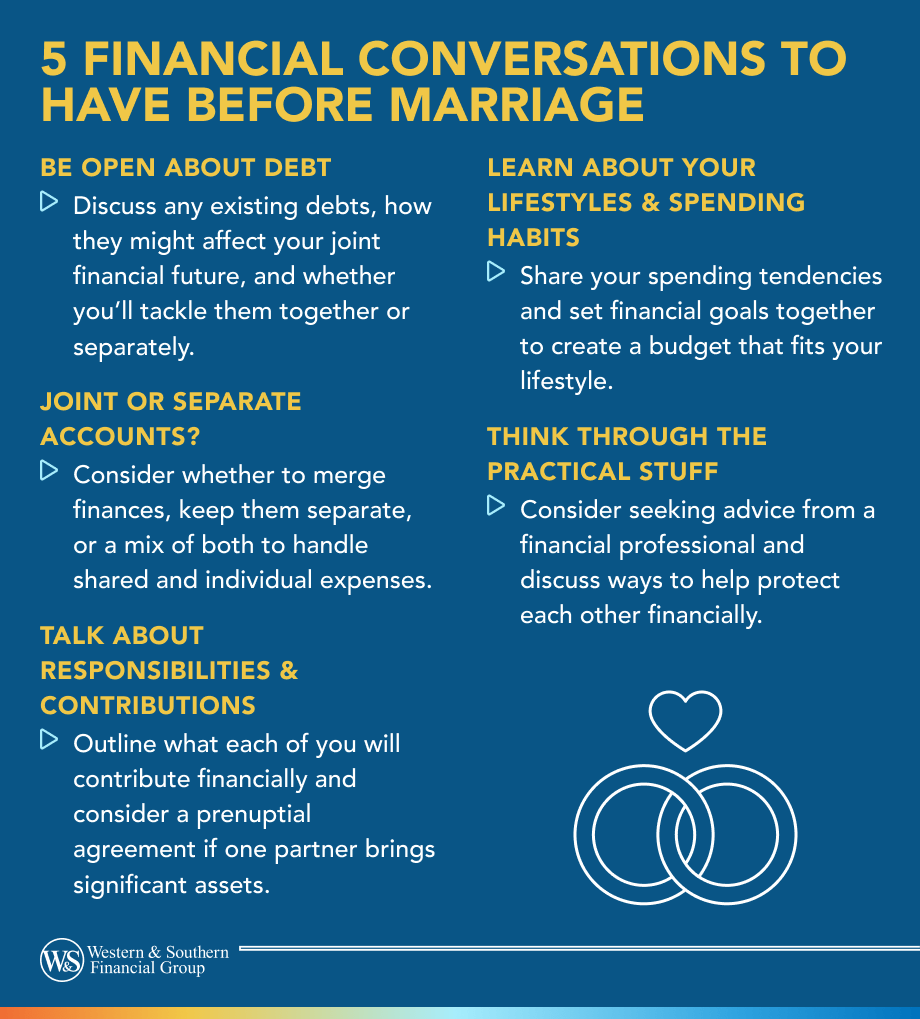
1. Be Open About Debt
Your partner’s debt could impact your credit score or your ability to get a loan if you decide to apply for financing together, such as when buying a home. If either of you carries a balance, make sure the other partner knows. Think about how you will handle that debt in your marriage. Will each person be responsible for paying off the debt they brought into the marriage, or will you work together to repay it?
Understand the liabilities each of you may bring and talk through a plan for handling them before you legally bind yourselves and your debts together.
2. Decide: Joint or Separate?
Will you merge accounts? There is no single answer. Each couple should choose what fits their situation. If you are unsure or cannot agree, a mix of both can work well.
Common Options
| Approach | How It Works |
|---|---|
| Joint accounts | Both partners deposit income and pay shared bills like rent or a mortgage from one account |
| Separate accounts | Each person keeps their own account for personal spending |
| Hybrid approach | Combine a joint account for bills with separate accounts for individual use |
For example, you might agree that each person gets $250 per month for personal use, kept in their own account.
3. Talk About Responsibilities & Contributions
Whether you merge your finances or keep money separate, be transparent about what each of you will bring to the relationship as you build your household together. If one or both of you are bringing significant assets, consider a prenuptial agreement. It may not feel romantic, but it is a practical step that can help protect both partners if things do not go as planned.
As you look ahead, income levels may change over time. You and your spouse may not always earn the same amount or contribute equal time, effort, and energy to your household.
That is okay. This is your relationship, so you can shape it in a way that works for both of you. Talk through your roles and responsibilities. For every Plan A, have a Plan B in case circumstances shift. Be open about what you can contribute, and ask for help where you need it.
4. Learn About Your Lifestyles & Spending Habits
You love your partner, but that does not mean you love their habit of making impulse purchases every time they shop. Talk openly about your money habits, preferences, goals, and concerns without judging each other.
Together, you can build a spending plan and budget that fits your income and lets you enjoy your money without overspending or living beyond your means. It can also help to set shared financial goals so you both stay motivated and avoid spending on short-term wants or instant gratification.
5. Think Through the Practical Stuff
If these conversations become difficult to handle on your own, consider speaking with a financial professional. They can help you build a plan and act as a neutral third party to guide discussions and reduce conflict.
In addition to creating a plan to stay on track, talk with your partner about whether you may need ways to protect each other from financial hardship after marriage. Life insurance can help support your partner and provide financial support during uncertain times.
The Bottom Line
These topics may not be easy to discuss, but they are important. Taking these steps can help you and your partner feel more confident about how you manage money together and support each other through different stages of life.
Sources
- Couples argue this many times a year about money. https://talkerresearch.com/couples-argue-this-many-times-a-year-about-money/.