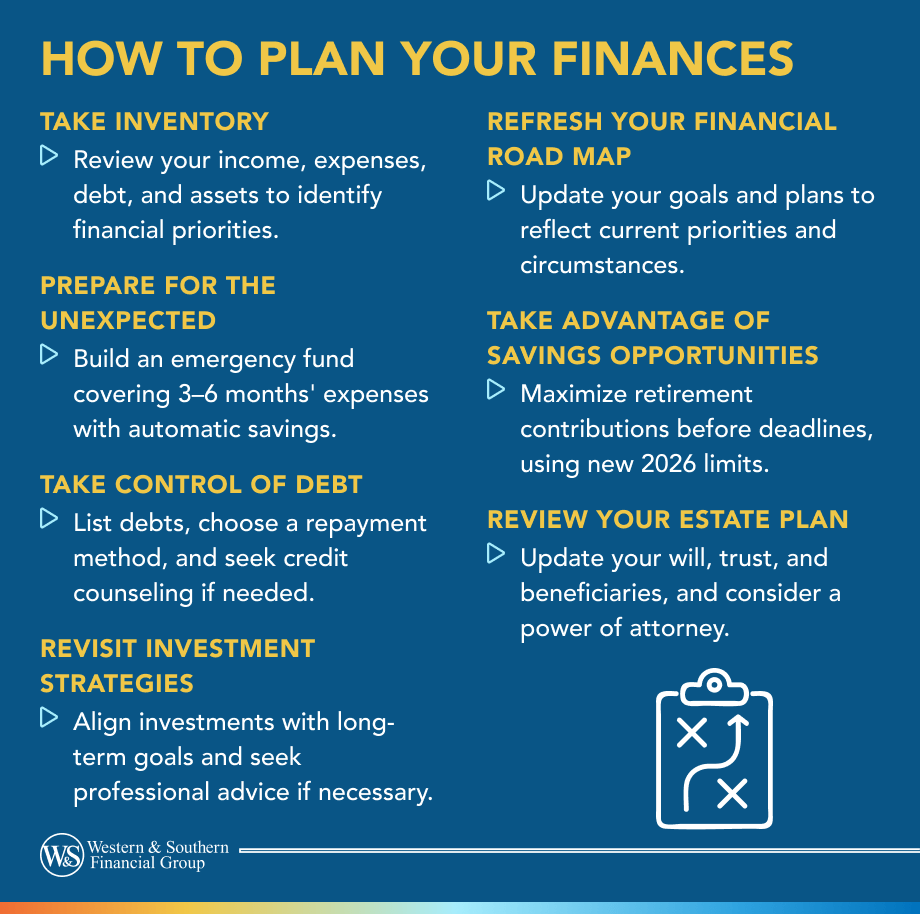

As a new year commences, it's a great time to give some thought to your finances and the position you wish to be in 12 months from now. Given all the recent upheaval in the financial world - and perhaps in your life as well - you may want to put personal financial building practices to work for a better 2026.
Understanding how to plan finances with the past (and the future) in mind can help. Here are seven strategies you may want to consider when reviewing your financial goals for the new year.
1. Take Inventory
First know where you stand. Before making any decisions for the coming year, consider reviewing all of your finances. Start with key financial metrics, such as these:
- Your income
- How much you spend
- Current debt levels
- Financial assets (savings and investments)
- Other assets
This can give you an idea of your current financial situation and help identify any areas in need of attention. Then you can start making a plan.
2. Prepare for the Unexpected
It's now more clear than ever that things can change quickly. A healthy emergency fund can help you address surprise expenses, but you may have tapped into your savings in the last few years. If so, take steps to help rebuild your rainy day fund. Preparing for the unexpected can help you cover unanticipated costs without disrupting your regular spending.
One way to save money is to set up automatic monthly transfers to a dedicated account. With that approach, your savings can grow over time without extra effort on your part. A good rule of thumb is saving enough for three to six months' worth of expenses, but consider your job security and other factors as you choose the right amount.
Develop a personal finance budget to guide your 2026 spending. Get My Free Financial Review
3. Take Control of Debt
The COVID-19 pandemic caused many people to lose their jobs or work fewer hours, leading some to rely on debt. If you're coping with debts you'd like to eliminate, consider making a plan for paying off those loans.
Start by making a list of each debt, and take note of the interest rate and loan balance. Then pick a strategy for paying down your balances, such as the debt snowball. And if you need help, a nonprofit credit counseling agency might be able to offer assistance.
4. Revisit Investment Strategies
In recent years, many investors have become enthusiastic about new investment strategies such as meme stocks, digital assets, and day trading. While these trends can be exciting, it’s smart to periodically evaluate your investment strategy to confirm you’re staying on the right track.
If you’ve jumped into new investments for the thrill or the potential for quick profits, take a moment to reflect on whether these choices align with your long-term financial goals. Some approaches - especially active trading - carry higher risks:
- You might gain significantly, but you could also lose money quickly.
- These activities can distract you from the fundamentals that often lead to lasting success, such as:
- Consistent saving
- Patience
- A steady, disciplined approach
For important goals like retirement and education funding, it might be appropriate to take a long-term view of investing instead of hoping for quick gains. Consider asking a financial professional about what strategies might make sense for you, and evaluate all of the alternatives before deciding how to proceed.
Remember: Investments cannot guarantee growth or sustainment of principal value; they may lose value over time. Past performance is not an indication of future results.
5. Refresh Your Financial Road Map
The world looks different than it did several years ago, so it may be a good time to review your progress toward your financial goals. Run some numbers with the latest information available, and evaluate if you still want the same things as before. For example, you might have decided that you can live on less or that you want more meaningful work - even if that means changing your financial expectations.
If you haven't yet made a plan for retirement or other goals, this could be an excellent time to start. If you need help, consider reaching out to a professional financial planner who can design a customized plan aligned with your goals.
6. Take Advantage of Savings Opportunities
Each year brings new opportunities to save in your retirement accounts. It’s important to meet annual deadlines to make the most of your savings - once the tax year closes, your window to contribute does, too.
Before New Year’s Eve, take time to review your contributions:
- Individual and workplace retirement plans: Check that you’ve contributed as much as you’d like.
- Health Savings Account (HSA): If eligible, weigh the pros and cons of contributing to this account as well.
For 2026, the IRS increased some of the retirement plan annual contribution limits, which can help you save more for the future:1
| Account Type | Annual Contribution Limit | Catch-Up Contribution (Age 50+) |
|---|---|---|
| 401(k), 403(b) |
$24,500 |
$32,500 |
| Traditional/Roth IRA |
$7,500 | $8,600 |
If you have access to these accounts through an employer, check with your benefits department to learn about any opportunities to save more and to update your contributions.
7. Review Your Estate Plan
A lot has changed in recent years, so it's wise to revisit your estate plan periodically. Certain elements may need renewed attention.
For example, do you need to update your will (or get your first will)? Or perhaps you want to establish a trust or change the provisions of an existing trust. Do you have enough life insurance, and are the beneficiaries up to date on all of your policies?
Give thought to meeting with an estate planning attorney to evaluate opportunities, and remember that estate planning isn't just about death. For example, suppose you're incapacitated due to an illness or injury. In that case, you may want a power of attorney to help manage your affairs as well as somebody to provide medical guidance on your behalf. If you haven't already identified a power of attorney, now can be a good time to do so.
Looking Forward to 2026
Hopefully, with these ideas around how to plan finances for the new year, you'll be well on your way to a productive and fulfilling 2026. By taking care of the essential financial tasks above, you can improve the chances of staying on track with your goals. Plus, with a solid estate plan in place, you can reduce stress for your loved ones and provide for them if the unexpected happens.
Personal financial building requires ongoing attention and course corrections. You'll be off to a good start with these steps. If you find that you'd like more information, consider reaching out to a financial professional for personalized attention and assistance.
Refine your personal finance approach for a successful 2026. Get My Free Financial Review
Sources
- 401(k) limit increases to $24,500 for 2026, IRA limit increases to $7,500. https://www.irs.gov/newsroom/401k-limit-increases-to-24500-for-2026-ira-limit-increases-to-7500.