

In this article, we'll explore how to approach family financial planning during the holidays effectively, why it's important, and tips to make these conversations productive without disrupting the festive spirit.
Why Holidays Are the Perfect Time for Financial Future Discussions
The holiday season provides a rare opportunity for family members and relatives to come together, often under the same roof. Getting everyone together outside the holidays is difficult because of daily commitments, work schedules, and distance. These gatherings are ideal for open and honest discussions about finances and future planning.
Here are some reasons why holidays are a good opportunity for these discussions:
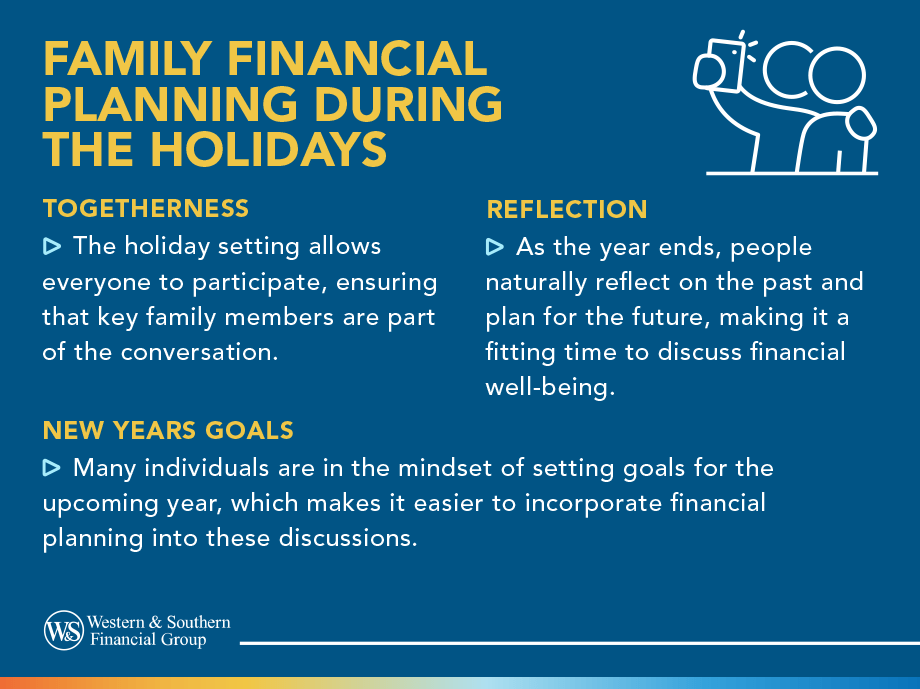
- Togetherness: The holiday setting allows everyone to participate, helping ensure that key family members are part of the conversation.
- Reflection: As the year ends, people naturally reflect on the past and plan for the future, making it a fitting time to discuss financial well-being.
- New Year Goals: Many individuals are in the mindset of setting goals for the upcoming year, which makes it easier to incorporate financial planning into these discussions.
How to Introduce Financial Planning During the Holidays
Bringing up topics like life insurance, wills, and retirement during a festive gathering requires a sensitive approach. These topics are important for long-term security, emphasizing the importance of having this conversation despite the timing.
The goal is to help ensure that everyone feels comfortable and understands the importance of the conversation. Here are some strategies for introducing financial strategy without disrupting the festive atmosphere:
Choose the Right Moment
Timing is everything when it comes to discussing financial matters. Avoid bringing it up during the main event, like Christmas dinner or opening presents. Instead, look for a quieter moment when everyone is relaxed, perhaps during a casual conversation after a meal or while enjoying coffee by the fireplace.
Frame the Conversation Positively
Present financial planning as an act of care and love. Explain that the goal is to help protect the family and help ensure everyone's future is secure. For instance, you could say, "I’ve been thinking a lot about how we can all make sure we’re taken care of in case anything unexpected happens. I thought it might be good to discuss it while we’re all together."
Use Personal Stories
Personal stories are powerful tools for opening a conversation. You can share a story about a friend or family member who experienced the benefits of having a solid financial plan or the difficulties of lacking one. This highlights the importance of financial planning without being pushy.
Key Topics to Cover in a Family Financial Planning Discussion
Once the conversation has started, focus on key topics that can significantly impact the family's financial future. Here are the main areas you might want to cover:
Financial Goals
Discussing financial goals helps set a clear vision for what each family member wants to achieve.
- Short-term and long-term goals: Encourage everyone to share their short-term and long-term financial goals, such as saving for a home, funding education, or planning for retirement.
- Prioritizing goals: Help family members prioritize their financial goals to meet important needs first.
- Emergency funds: Discuss the importance of having an emergency fund to cover unexpected expenses and provide financial stability.
- Tracking progress: Talk about the importance of tracking progress toward these goals and adjusting plans as necessary.
Life Insurance
Life insurance plays a important role in the financial planning process by providing for your loved ones.
- Why life insurance matters: Explain how life insurance can help protect family members financially in the event of an unexpected death, covering expenses like mortgage payments, education costs, and daily living expenses.
- Types of life insurance: Offer a brief overview of term life and whole life insurance, and why each might be suitable depending on individual needs.
- Updating beneficiaries: If family members already have policies, encourage them to review and update their beneficiaries to help ensure everything is current.
Wills and Estate Plans
Creating or updating a will is important in helping ensure that assets are distributed according to one’s wishes. Conversations about estate planning can help alleviate future disputes and confusion.
- Importance of a will: Explain that a will helps ensure that assets are passed on as intended and helps avoid family disputes.
- Power of attorney: Discuss the importance of assigning someone as the power of attorney to make financial decisions if a family member becomes unable to do so themselves.
- Trusts and guardianships: For families with children, setting up trusts or naming guardians can help ensure that children are cared for if something happens to the parents.
Retirement Planning
Retirement planning helps ensure that family members can maintain their lifestyle after they stop working. This conversation can provide insight into how prepared everyone is for retirement and what steps might still be necessary.
- Assess retirement readiness: Encourage everyone to think about how much they’ve saved and whether they’re on track to meet their retirement goals.
- 401(k) and IRA contributions: Remind family members of the importance of contributing to retirement accounts and taking advantage of employer matches.
- Social Security considerations: Depending on individual circumstances, discuss when it might make sense to start collecting Social Security benefits.
Tips for Keeping the Conversation Positive and Productive
Discussing financial matters can be sensitive, but there are ways to make sure the conversation remains constructive and positive.
Be Transparent and Honest
Approach the conversation with openness and honesty. Share your own financial plans and concerns, and encourage others to do the same. This transparency can help create a sense of unity and collaboration.
Keep It Judgment-Free
Everyone’s financial situation is different, and it’s important to avoid passing judgment. The goal is to support each other and develop plans that benefit the entire family. Make sure everyone feels heard and respected during the discussion.
Use Open-Ended Questions
Engage family members by asking open-ended questions that invite discussion. For example:
- "What are your thoughts about having a retirement plan?"
- "How can we help ensure our family is financially secure no matter what happens?"
- "Have you considered updating your will or life insurance beneficiaries recently?"
These broader questions help facilitate dialogue without making anyone feel pressured.
Actionable Steps to Take After the Holidays
A productive conversation during the holidays is a great start, but taking action afterward is equally important. Here are some steps you can take:
1. Set Up Meetings with Financial Professionals
Consider meeting with financial planners or advisors to help create or update financial plans. A professional can provide valuable insights and help ensure each family member is on the right track.
2. Create or Update Important Documents
Encourage family members to draft or update their wills, establish powers of attorney, and review their life insurance policies. Encourage them to complete these tasks by the end of January to help ensure follow-through. These documents are critical to helping ensure that wishes are carried out and that loved ones are protected.
3. Revisit the Conversation Annually
Family financial planning is not a one-time conversation. Encourage everyone to revisit these topics annually - perhaps making it a regular holiday tradition. The family can adjust plans based on changing circumstances, such as new marriages, births, or financial situations.
Overcoming Common Challenges
It’s natural for financial planning discussions to come with some challenges, especially given the topic's sensitive nature. Here are a few common obstacles and how to overcome a difficult conversation:
Resistance to Talking About Money
Money is often a taboo topic, and some adult children or family members may resist discussing it. To overcome this:
- Normalize the conversation: Emphasize that discussing finances is responsible and motivated by caring for each other.
- Start small: If there is resistance, start with a smaller topic, such as updating beneficiaries or reviewing basic retirement contributions, and gradually work your way up to more detailed discussions. Consult a financial professional, as required when discussing specific policy actions.
Emotional Sensitivities
Discussions about life insurance and wills can bring up emotions related to mortality, which can make some family members uncomfortable.
- Acknowledge emotions: Be sensitive to the emotional charge of these topics. Acknowledge that it’s difficult, but stress the importance of being prepared.
- Keep the tone positive: Focus on how planning now can help bring peace of mind and help ensure that the family is cared for, which can help ease some of the discomfort.
Conclusion: Making Financial Choices Can Impact Your Family’s Legacy
The holidays are a time for family, celebration, and reflection. While discussing financial planning during this time may seem unconventional, it is one of the most caring and responsible steps you can take for your loved ones. The holidays offer a chance to discuss important topics like life insurance, wills, and retirement. These topics can help protect your family and prepare for the future.
Make helping protect your family’s future part of your holiday tradition. Get My Free Financial Review