What Is Probate?
Probate is the legal procedure that oversees the distribution of a deceased person’s assets to their heirs and beneficiaries and settles any debts owed to creditors.1 It typically involves validating the deceased person’s will, appointing a legal executor, and administering the estate. Understanding probate can help people manage estate matters more effectively.
The length and complexity of the probate process can vary widely. It depends on the size and structure of the estate, how clear the will is, and whether disputes arise among heirs or creditors. Some assets may not go through probate. These can include assets held in a living trust, jointly owned property, or accounts with named beneficiaries such as life insurance policies or retirement accounts.
How Does Probate Work?
Probate follows a series of steps to help distribute a deceased person’s assets in a legal and orderly way.2 Here’s a general overview of how the court-supervised process works.
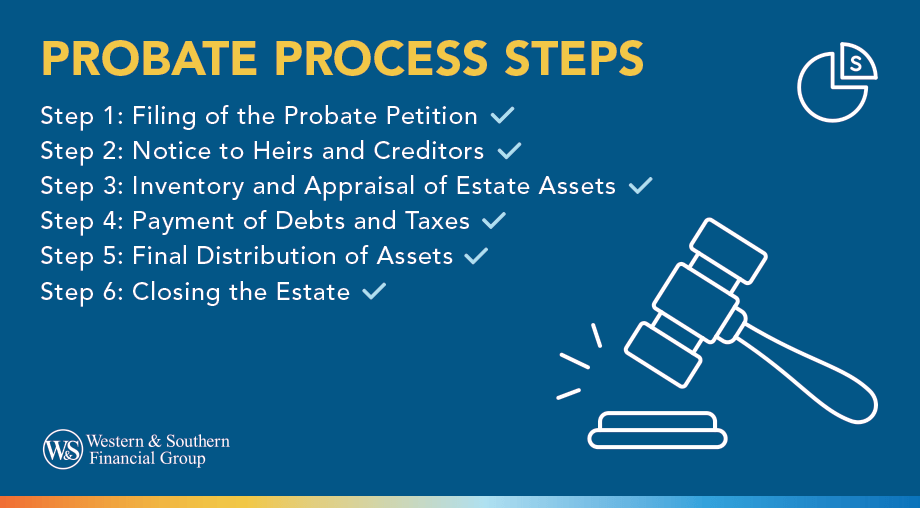
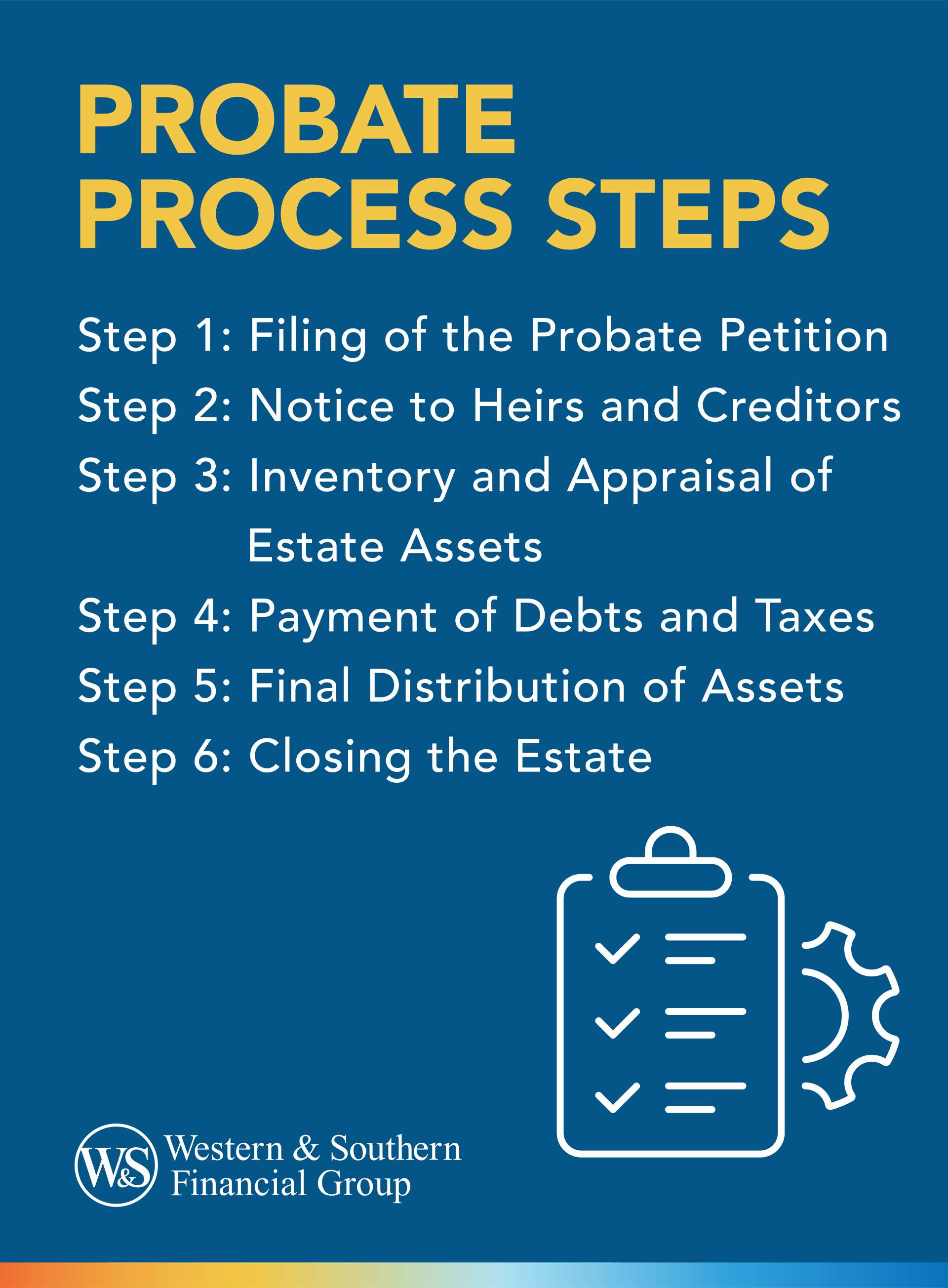
Step 1: Filing of the Probate Petition
With a Will
To begin the probate process for a will, someone must file a probate petition in the county where the deceased person lived. This is often the executor named in the will or another representative. The petition must include the valid will and the death certificate. This step starts the legal process and allows the probate court to review the will and confirm that it is valid.
After the probate petition is filed, the probate court schedules a hearing. The court reviews whether the will follows probate laws and considers any objections. If there are no disputes and the will is valid, the court officially opens the probate case.
This step is important because it allows the court to formally appoint the executor. The executor is the person named in the will to manage the estate. Once appointed, the executor has the legal authority to act on behalf of the estate. This role involves handling important duties under court supervision.
Without a Will
When a person dies without a will, this is called dying intestate. In this situation, state intestacy laws decide how assets are distributed. These laws vary by state, but they usually pass assets to close family members such as a spouse, children, parents, or siblings in a set order.
Because there is no will naming an executor, the probate court appoints an administrator. This person is often a close relative. The administrator has similar duties to an executor. These duties include collecting and valuing assets, paying debts and taxes, and distributing what remains.
Probate without a will can take more time and may be more complex than probate with a will. The court must identify legal heirs and determine their share of the estate. This can be difficult, especially when there are multiple heirs or disagreements.
Without clear instructions from a will, disputes among family members are more likely. These disagreements can lead to legal challenges and may affect family relationships.
Implications of No Will
- Higher costs: The probate process without a will can lead to higher costs. These may include legal fees and administrator fees, especially if the process takes longer due to disputes or a complex estate.
- Guardianship of minor children: The court will appoint a guardian if the deceased has minor children without a surviving parent. A will often names a preferred guardianship, but without one, the court makes the decision.
- Potential for unintended heirs: State laws control how assets are distributed. This means assets may go to relatives the deceased did not intend to include. Friends, unmarried partners, or charities will not receive anything unless they are named in a will.
Creating a will can help avoid these issues. It provides clear instructions for how assets should be distributed and can reduce the risk of disputes or legal challenges.
Step 2: Notice to Heirs and Creditors
After the executor is appointed, they must notify heirs and beneficiaries about the probate process. This informs them of their potential interest in the estate and their right to raise concerns.
The executor typically sends formal notices that include:
- Information about the deceased
- Details about the executor’s appointment
- The probate court handling the case
The executor must also follow state requirements for notifying creditors. This may include publishing a notice in a local newspaper. This step allows creditors to come forward and make claims against the estate.
Step 3: Inventory and Appraisal of Estate Assets
Next, the executor identifies and values assets that are part of the probate estate. These may include:
- Real estate
- Personal property, such as jewelry, vehicles, or collectibles
- Other assets subject to probate
Creating an accurate inventory helps the executor manage the estate and distribute assets according to the will or state law. Missing information can cause delays and complications during probate.
Step 4: Payment of Debts and Taxes
After completing a full inventory of the deceased’s assets, the executor must settle any unpaid debts and taxes owed by the estate. This step includes reviewing the estate’s liabilities to help confirm all financial obligations are handled according to probate law. The following actions apply:
- Review and payment of debts: The executor must review all claims against the estate to determine their validity and priority before using estate funds to pay them.
- Tax obligations: File a final income tax return for the deceased and pay any income taxes due. Depending on the size and circumstances of the estate, a separate estate tax return may also be required, and estate taxes may apply. Professional tax guidance can help navigate these requirements.
- Estate account management: Establish an estate account to track payments and maintain transparency.
Executors must carefully pay debts and taxes, as they are legally responsible for managing the estate’s finances. When handling matters such as intestate succession or small estate procedures, seeking legal guidance can help determine whether probate is required and support compliance with relevant laws. Executors may also need an attorney to handle the details of settling debts and meeting tax requirements.
Step 5: Final Distribution of Assets
After paying all outstanding debts and taxes, the executor distributes the remaining assets based on the decedent’s will. This step involves transferring property, accounts, and other assets to the named beneficiaries.
The executor is responsible for following the instructions in the will and carrying out the decedent’s wishes. They must also maintain clear, detailed records throughout the process to support transparency and accountability.
Before distributing assets, the executor may need to cover certain costs, including:
- Recording fees
- Expenses related to selling property
- Administrative costs tied to transferring ownership
These expenses must be paid before the remaining assets are passed on to beneficiaries.
Assets held in a properly funded living trust generally bypass probate and are distributed according to the trust's terms. However, any assets not transferred to the trust or otherwise structured to avoid probate may still be subject to the probate process. Separately, some estates may be required to file an estate tax return and could owe estate taxes, depending on the estate's size and applicable tax laws.
If someone dies without a will, this is called intestate. In that case, the estate is distributed according to state intestacy laws. The executor or a court-appointed administrator must manage the process and follow all legal requirements.
Executors need to handle this step carefully, as errors can lead to legal issues or disputes among heirs.
Step 6: Closing the Estate
Once all debts, taxes, and distributions are complete, the executor or administrator submits a final account and petition to the probate court to request approval for distribution and closure of the estate. After the court approves the request, the estate is officially closed, which marks the end of the probate process.
Is Probate Always Required?
No, probate is not always required. Here's the breakdown.
Scenarios Where Probate Is Typically Needed
- When someone dies with assets that are not set up to transfer automatically to beneficiaries: Probate may be required, depending on state law and the nature of the assets.
- When the deceased lacks a valid will: In this case, state laws, called intestacy rules, decide who inherits. Probate helps carry out those rules.
- When assets are not titled jointly or do not have beneficiary designations: Assets that are jointly owned with rights of survivorship or that have named beneficiaries can usually avoid probate.
Scenarios Where Probate Might Not Be Required
- Small estates: Some states offer simplified processes for estates below a certain value.
- Assets with beneficiary designations: Retirement accounts, life insurance policies, and bank accounts with named beneficiaries can generally transfer directly to those beneficiaries without going through probate.
- Jointly owned assets with rights of survivorship: The surviving owner automatically receives ownership, which avoids probate.
- Living trusts: Assets held in a living trust avoid probate because the trustee manages and distributes them based on the trust terms.
Important Considerations
- Legal complexity: Some strategies, such as living trusts, involve legal steps and may require guidance from a professional.
- Tax implications: A tax professional can help explain the possible tax impact of different approaches.
- Estate size and composition: The effectiveness of each option depends on the size of your estate and the types of assets you own.
It's important to consult an estate planning attorney to review your situation and determine if probate is required. They can guide you through strategies that may reduce or avoid probate, which can save time, lower costs, and reduce stress for your loved ones.
How Can I Avoid Probate?
Avoiding probate can save time, reduce costs, and limit public exposure of your estate. Here are several strategies to consider.
Create a Living Trust
One of the most effective ways to avoid probate is by setting up a revocable living trust. You transfer your assets into the trust and manage them as the trustee during your lifetime.
After your death, the successor trustee distributes the assets to your beneficiaries. This process happens outside of probate.
Use Joint Ownership with Right of Survivorship
Owning property jointly with a right of survivorship allows ownership to transfer automatically when one owner dies. The surviving owner becomes the sole owner without going through probate. Common forms include a joint tenancy and community property with right of survivorship.
Designate Beneficiaries
Many financial accounts let you name a beneficiary. These assets can pass directly to that person without probate.
Common examples include:
- Retirement accounts
- Life insurance policies
- Bank accounts with payable-on-death (POD) or transfer-on-death (TOD) designations
Make Lifetime Gifts
Giving away assets during your lifetime can help reduce the size of your estate, which may help them avoid probate. However, there are exceptions where certain transferred assets may still be included in your estate for tax or estate settlement purposes. Large gifts may also have tax implications depending on their size and type.
Check for Simplified Small Estates Procedures
Many states offer simplified probate options for smaller estates. If your estate meets the requirements, it may qualify for a faster and less complex process. The definition of a “small estate” varies by state.
Use Beneficiary Deeds for Real Estate
Some states allow transfer-on-death deeds, also called beneficiary deeds. These let you name a beneficiary who will receive the property directly when you pass away, without probate.
Working with an estate planning attorney can help you apply these strategies correctly. Each option has specific legal requirements, and the right approach depends on your assets, family situation, and state laws.
What Assets Are Subject to Probate?
Assets subject to probate generally fall into two categories: solely owned assets and assets not titled with beneficiary designations or right of survivorship. Here's a breakdown.
Assets Typically Subject to Probate
- Real estate: Homes, land, and other properties owned solely by the deceased.
- Bank accounts: Solely owned checking, savings, and investment accounts that do not have payable-on-death (POD) or transfer-on-death (TOD) beneficiaries.
- Vehicles: Cars, motorcycles, boats, and other vehicles titled only in the deceased’s name.
- Stocks and bonds: Individually owned shares and bonds not held in a jointly titled account or trust.
- Business interests: Ownership shares in companies or partnerships held solely by the deceased.
- Personal property: Furniture, artwork, jewelry, and other valuables owned solely by the deceased.
- Life insurance proceeds: If there are no named beneficiaries or if they are invalid, the proceeds may go through probate.
- Intangible assets: Intellectual property, patents, and copyrights owned solely by the deceased.
Assets Typically Not Subject to Probate
- Jointly owned assets with right of survivorship: The surviving owner automatically receives ownership, which bypasses probate.
- Assets with named beneficiaries: Individual retirement accounts, life insurance policies, and some bank accounts with designated beneficiaries avoid probate.
- Living trusts: Assets placed in a revocable living trust are managed by the trustee and do not go through probate.
- Payable-on-death (POD) or transfer-on-death (TOD) accounts: These designations direct assets to beneficiaries upon death and bypass probate.
Important Considerations
State laws can vary, so it helps to consult an estate planning attorney who understands your state’s rules and your situation. Even if you use strategies to avoid probate for some assets, others may still go through the process.
Working with a professional can help create a clear estate strategy and reduce potential legal and financial issues for your loved ones.
How Much Does Probate Cost?
The cost of probate can vary based on several factors. It is not always possible to give an exact estimate without more details.
Factors Impacting Probate Cost
- Estate value: In many cases, a larger estate leads to higher probate costs. Fees are often based on a percentage of the estate’s value.
- Complexity of the estate: Estates with complex assets, many beneficiaries, or contested wills often lead to higher costs due to added legal work and possible disputes.
- State laws: Probate fees and procedures differ by state. Some states offer simplified processes for smaller estates, while others have more detailed requirements.
- Executor or attorney fees: Legal fees can be significant and often range from 3% to 7% of the estate’s value, depending on complexity and experience.
- Court fees: Filing fees, publication costs, and other court-related expenses can add up, though they are usually lower than attorney fees.
Breakdown of Typical Cost Components
- Attorney fees: These are often the largest expense and can range from thousands to tens of thousands of dollars, depending on the estate.
- Filing fees: Court fees for starting probate and submitting documents vary by state but usually range from a few hundred to a few thousand dollars.
- Appraisal fees: If the estate includes assets that need professional appraisal, such as real estate or collectibles, additional fees may apply.
- Publication costs: Some states require legal notices in newspapers to notify creditors, which can increase costs.
- Bonding: If required by the court, the executor may need to purchase a surety bond, which adds another expense.
- Miscellaneous expenses: Accounting fees, travel costs, and other administrative expenses can increase the total cost.
Conclusion
Understanding how probate works can help you make informed decisions when planning your estate. Whether you are creating a will or organizing your affairs, taking steps in advance may help make the probate process smoother for your loved ones.
Sources
- The Probate Process. https://www.americanbar.org/groups/real_property_trust_estate/resources/estate-planning/probate-process/.
- Deceased person. https://www.irs.gov/individuals/deceased-person.