Table of Contents
Key Takeaways
- Monitor if aging parents or grandparents struggle to pay bills, as this could signal a need for financial help.
- Ensure aging parents or grandparents have proper legal documents to protect assets, and review them periodically.
- Organize health and insurance paperwork for easy access and review policies to ensure appropriate coverage.
- Understand aging parents' or grandparents' Medicare and long-term care coverage to assist with future care decisions.
- Assess your financial readiness for retirement and long-term care needs, as caring for parents or grandparents may affect your finances.
It can be tough to see your father, the man who worked long hours to provide for your family, become disorganized when it comes to paying bills or dealing with other financial matters. If you are caring for aging parents or grandparents, however, scenarios like this could be common.
While an illness or a fall is a sign that an aging parent or grandparent may need help, problems handling their finances could also indicate that more involvement may be needed on your part. You may find yourself considering ways you could help them straighten out their finances to help keep their lives running smoothly. Here are some questions to consider that could help them get on the right track.
1. Are They Paying Their Bills on Time?
Have you noticed that as your parents or grandparents have gotten older, there are more and more messy piles of mail lying around? If you see large piles of unopened bills, late notices (a sign that bills are being missed and not paid), or no bills at all (a sign that they're possibly being thrown away), there's a good chance they need help organizing and paying their bills.
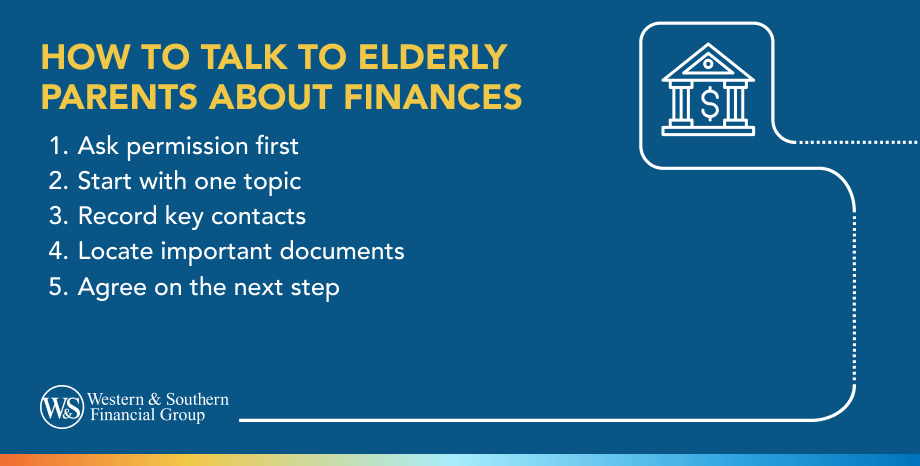
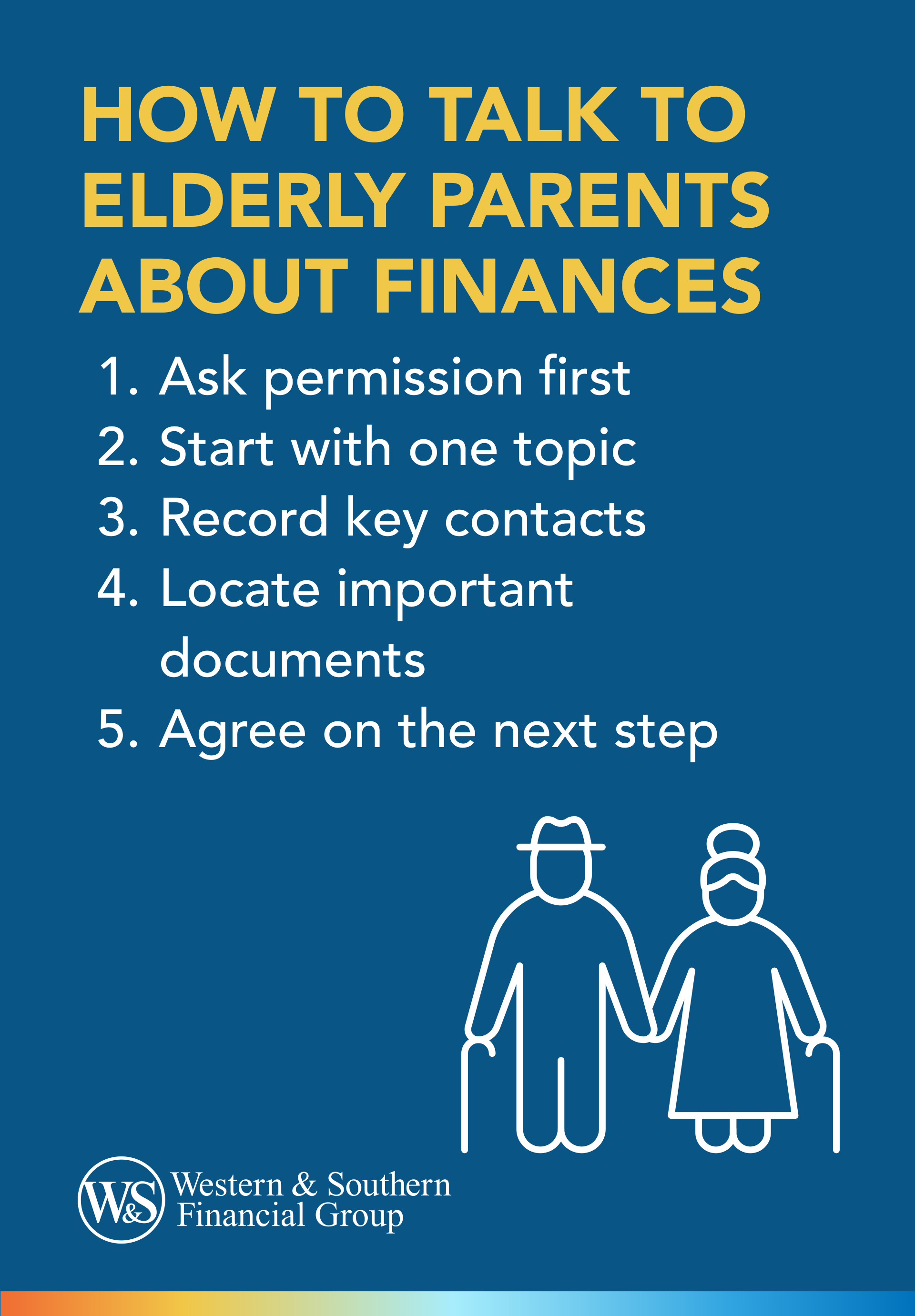
This could be a good time to speak to them about how you could help them manage their finances. When caring for aging parents or grandparents, a financial conversation like this could be difficult — but a positive and problem-solving attitude could go a long way toward coming up with mutual solutions.
2. Are Their Assets Protected?
An illness in an elderly parent or grandparent — or the aging process itself — could cause a mental decline. You could be speaking to them about their assets or bills normally one month and the next month notice they suddenly have no knowledge, are very secretive or no longer seem to care about their finances.
If you suspect your parents' or grandparents' financial management skills are slipping, it could help to ask important questions directly. Do they have a will in place and, if so, where is it kept? Have they seen an estate-planning lawyer and a tax adviser to help protect their assets, such as real estate, investment accounts, life insurance policies, a business or anything else of value that they may want to include in an inheritance?
Maybe they did this planning long ago, and now you want to review it together to verify that nothing has changed. Beneficiary designations might no longer be appropriate, insurance policies could have expired and assets could have been sold — so updating legal documents to accurately reflect your parents' or grandparents' savings (and their specific desires now) could help you avoid problems later.
3. Is Their Insurance Information Organized?
You could consider asking your parents or grandparents for all of their insurance policy information, such as health, life, car, long-term care and homeowners insurance. Having all of the correct paperwork could make all the difference if something were to happen. It could also be helpful to review each policy to ensure the coverage is still appropriate and that policies remain in force (especially if they have had problems paying the bills on time).
4. What Health Care Coverage Do They Have?
As people age, health care often becomes an increasingly important topic. Knowing more about your parents' or grandparents' health care coverage could help you handle a health crisis in the future. The peace of mind that could come from knowing their long-term care insurance policy hasn't lapsed could help you focus when looking into care options someday, such as assisted-living facilities, nursing homes or in-home care.
When it comes to Medicare, you might not be familiar with how it works. Luckily, the Medicare Rights Center operates a national helpline for anyone who wants to learn and understand Medicare benefits, evaluate their parents' or grandparents' coverage and understand how any additional coverage works with Medicare.1
5. Do They Need Further Help?
Financial considerations are important, but what if your parents or grandparents require additional care? The AARP has an assessment checklist of behaviors to watch out for, such as ignoring medication schedules, personal hygiene changes and avoiding previous interests, such as hobbies, friends or family gatherings.2 If you notice any of these signs, you might want to consider initiating a conversation to see if they could use additional help.
The Consumer Financial Protection Bureau offers a free booklet series that could help you learn how to manage your aging parents' or grandparents' finances under four specific circumstances: power of attorney, court-appointed guardianship, trusteeship and government fiduciaries.3 This could help give you a framework for discussing these issues with your parents or grandparents to figure out which role is best for you.
6. Where Do You Stand?
Finally, have you considered your own needs? Now could be an important time to evaluate your future financial plans. From long-term care insurance to your retirement savings plan, there are many matters to consider. However, thinking about tomorrow today could help you ensure the best possible outcome. Consider consulting a financial representative to do a personalized needs analysis to evaluate where you stand.
The Bottom Line
It's difficult to watch your parents or grandparents struggle to organize their finances, but you could take steps now to help ease the financial worry. Consider learning more about your role in handling their finances before they are unable to make decisions on their own. A little hard work (and a lot of optimism) now could go a long way toward a brighter — more secure — future.
Sources
- MedicareRights.Org. https://www.medicarerights.org/.
- Family Caregiving. https://www.aarp.org/caregiving/.
- Guides for Managing Someone Else's money. https://www.consumerfinance.gov/consumer-tools/managing-someone-elses-money/.