
Table of Contents
Key Takeaways
- Trusts are powerful tools for asset management, estate planning, and wealth transfer.
- Trusts provide various benefits, such as bypassing probate, maximizing estate tax exemptions, protecting assets from creditors, and enabling children as beneficiaries.
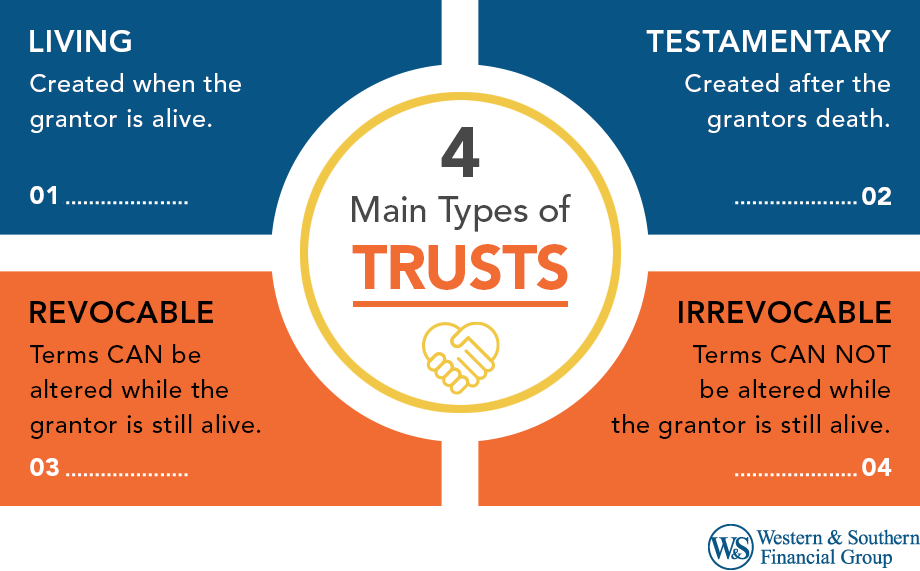
- Trusts can be broadly categorized into four main types: Living Trusts, Testamentary Trusts, Revocable Trusts, and Irrevocable Trusts.
- There are many different types of trusts you can choose from, and understanding how they are different can help you pick the right one for your needs.
- It is important to consult an estate planning attorney to determine the appropriate trust type for your needs.
If you're seeking a method to transfer assets, manage your estate plan, and provide for your loved ones, trusts can be an effective tool for individuals, families, and businesses. Trusts can be used to achieve various goals, such as avoiding probate, reducing estate taxes, and providing financial support for minors and disabled individuals.
What Are The Four Main Types of Trusts?
For help in understanding the different types of trusts, it's useful to compare the four main categories:
Living Trust vs. Testamentary Trust
Every trust set up can be classified as either a living trust or a testamentary trust, depending on the time of its creation.
- Living Trust: Also called an inter vivos trust, a living trust is created while the grantor (the individual setting up the trust) is still alive.
- Testamentary Trust: A testamentary trust, created after death according to the grantor's last will and testament, has terms that can be altered before the grantor passes, as they are established in the will.
Revocable Trust vs. Irrevocable Trust
All trusts will either be revocable or irrevocable:
- Revocable Trust: A revocable trust is a living trust established during the grantor's lifetime, named for its ability to alter its terms while the grantor is still alive.
- Irrevocable Trust: The terms of an irrevocable trust cannot be amended or revoked by the grantor once they have been created.
What Are The Different Types of Trusts?
There are many different types of trusts, and understanding how they differ may help you choose the appropriate type to meet your estate planning needs.
AB Trusts
An AB Trust, or Marital Trust, is a joint trust for married couples to maximize estate tax exemptions. Upon the death of the first spouse, the trust splits into two: the "A" trust (or survivor's trust) for the surviving spouse and the "B" trust (or bypass trust) containing assets up to the estate tax exemption and will pass to heirs. This structure ensures that spouses utilize individual estate tax exemptions, potentially reducing or eliminating federal estate taxes.
Asset Protection Trusts
An Asset Protection Trust is a legally binding trust designed to protect your assets on behalf of a beneficiary from claims by future creditors or lawsuits. An irrevocable asset protection trust allows assets to be transferred into them so that those assets are no longer legally owned by you. Asset protection trusts are usually set up in jurisdictions with creditor-friendly trust laws.
Blind Trusts
A Blind Trust is a financial arrangement where the owner transfers control of assets to independent trustees to manage on their behalf. The owner has no knowledge or influence over how the assets are invested, avoiding potential conflicts of interest. Politicians and public figures commonly use blind trusts to separate their asset management from their official duties.
Bypass Trusts
A Bypass Trust, also commonly known as a Credit Shelter Trust, is an irrevocable trust designed for couples enabling them to strategically move assets to minimize estate tax, protecting assets for beneficiaries while providing for the surviving spouse.
Charitable Trusts
A Charitable Trust is an irrevocable trust set up to simultaneously benefit you, your beneficiaries, and a qualified charitable organization under IRS rules.1 There are two primary types of charitable trust: charitable lead trusts (CLTs) and charitable remainder trusts (CRTs).
- Charitable Lead Trust: Also called a charitable lead annuity trust (CLAT), this trust is set up to provide financial support through an annuity to the chosen charity or charities for a specified period of time. The remaining assets eventually go to the beneficiaries.
- Charitable Remainder Trust: Also called a charitable remainder annuity trust (CRAT), this trust works like the opposite of a CLT. A CRAT can create an income stream for you and beneficiaries with an annuity for a specified period of time, with the remainder of the assets going to charity.
Constructive Trusts
A Constructive Trust is a legal remedy that can be used to correct unjust enrichment. It is imposed by a court when one person has obtained or holds legal title to property that they should not have or when they have broken a fiduciary duty. Constructive trusts can protect many assets, including real estate, bank accounts, and investments.
Crummey Trusts
A Crummey Trust is an irrevocable trust that allows the transfer of assets to beneficiaries without consuming the lifetime gift tax exemption by providing the beneficiaries a short-term withdrawal right, usually within 30 to 60 days, over the contributions made to the trust.
Discretionary Trusts
A Discretionary Trust is an estate planning tool that gives the trustees the power to decide how and when to distribute the trust assets and income to the beneficiaries. The trustees have complete discretion over the trust assets, meaning beneficiaries do not possess an automatic right to receive any.
Dynasty Trusts
A Dynasty Trust is an irrevocable trust designed to transfer wealth across generations without incurring estate or generation-skipping transfer taxes, enabling wealth to grow long-term and benefit multiple generations.
Family Trusts
A Family Trust, also commonly known as an AB Trust, is a type of Bypass Trust that ensures wealth is managed, protected, and transferred across generations effectively, aligning with the family’s financial goals and objectives. It's commonly used for wealth distribution, estate planning, and tax benefits. The trust provides a mechanism to control and protect assets, ensuring they are distributed according to the grantor's wishes.
Funeral Trusts
A Funeral Trust sets aside money to cover burial and funeral costs. The funeral home sometimes serves as the trustee. Funeral trusts are typically funded with cash, bonds, or the proceeds from a life insurance policy. This arrangement not only provides peace of mind to the individual but also ensures that funeral expenses are covered, reducing the financial burden on loved ones after their passing.
Generation-Skipping Trusts
As the name suggests, a Generation-Skipping Trust is designed to transfer assets to a beneficiary who is two or more generations younger than the grantor (the person who creates the trust). A Generation Skipping Trust is subject to the Generation-Skipping Transfer Tax with certain exemptions.
Grantor Retained Annuity Trusts
A Grantor Retained Annuity Trust (GRAT) is an irrevocable trust set up for a certain period to minimize taxes on large financial gifts to family members or other beneficiaries. The grantor pays the taxes on the assets when the trust is established and receives an annual annuity payment for the term of the GRAT. When the established term ends, the beneficiaries receive the remaining assets.
Land Trusts
A Land Trust allows you to transfer ownership (title to real property) to a legal entity that holds the land for the benefit of a beneficiary. Land trusts can provide anonymity, protect land from development, provide for future generations, avoid probate, and protect assets from creditors and lawsuits.
Life Insurance Trusts
An irrevocable Life Insurance Trust (ILIT) is designed to hold and manage a life insurance policy, keeping the policy proceeds outside of the insured's taxable estate. Irrevocable life insurance trusts (ILIT) can provide estate tax benefits, protect the proceeds from creditors, and offer more control over how the funds are utilized for beneficiaries.
Qualified Personal Residence Trusts
A Qualified Personal Residence Trust (QPRT) is a type of irrevocable trust that allows you to transfer your primary residence to the trust for a specific period of time. During the trust term, you retain the right to live in the home and pay for its upkeep. When the Qualified Personal Residence Trust term ends, the home is transferred to the beneficiaries without going through probate.
Qualified Terminable Interest Property Trusts
A Qualified Terminable Interest Property Trust (QTIP) is set up to provide income for a surviving spouse and for the grantor to control assets after the death of a spouse. QTIPs may be useful when beneficiaries exist from a previous marriage and the grantor dies before the subsequent spouse.
Pet Trusts
A Pet Trust provides for the care and financial support of one's pets after the owner's death or incapacity. It specifies a designated caregiver for the pets and provides funds for their ongoing needs. A Pet Trust ensures that pets receive the intended care and attention throughout their lifetime.
Special Needs Trusts
A Special Needs Trust is designed to benefit individuals with disabilities without jeopardizing their eligibility for government benefits. Assets held in this trust are not counted for means-tested programs like Medicaid or Supplemental Security Income. The trust funds are used to pay for supplementary expenses that enhance the beneficiary's quality of life without replacing government assistance.
Spendthrift Trusts
A Spendthrift Trust is designed to protect the assets of a trust from the beneficiaries' creditors and to restrict the beneficiaries' access to the trust principal. This type of trust prevents beneficiaries from recklessly spending their inheritance, as distributions are made at the trustee's discretion. A Spendthrift Trust is particularly useful for beneficiaries who might be financially irresponsible or face potential legal judgments.
Totten Trusts
A Totten Trust, also known as a payable-on-death (POD) account, is a type of informal revocable trust where a depositor establishes an account in their name with the intent for the funds to be transferred to a named beneficiary upon the depositor's death. It allows for the easy transfer of bank or investment accounts without going through probate. The depositor retains full control over the funds during their lifetime, including the ability to change the beneficiary or withdraw the funds.
Bottom Line
A trust can be a valuable estate planning tool with potential benefits. However, trusts can be complex, and they may not be appropriate for everyone. It's essential to speak with an estate planning attorney to review the various benefits of trusts and to determine if a trust is right for you and your estate planning needs.