Table of Contents
Key Takeaways
- Consolidating multiple student loans into one payment can simplify repayment.
- Refinancing may allow you to reduce your interest rate and total repayment costs.
- However, refinancing federal loans into a private loan causes you to lose federal borrower benefits like income-driven repayment and loan forgiveness programs.
- Your credit history plays a role in determining if you qualify for refinancing and the terms you receive. Those with good credit may get better rates.
- While you can refinance at any time, doing so when you can improve your rate and terms the most may provide the greatest financial benefit.
Refinancing student loans has a number of potential benefits for borrowers. For one, you could potentially consolidate multiple debts into a single monthly payment. You may also be able to reduce your interest rate or the amount you will pay over the life of the loan, and you might even have the opportunity to adjust your repayment term to be more beneficial for you.
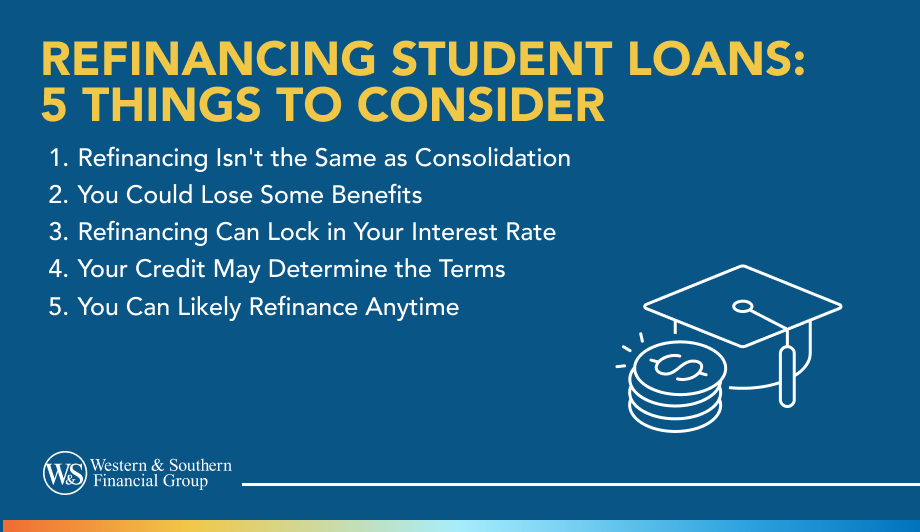
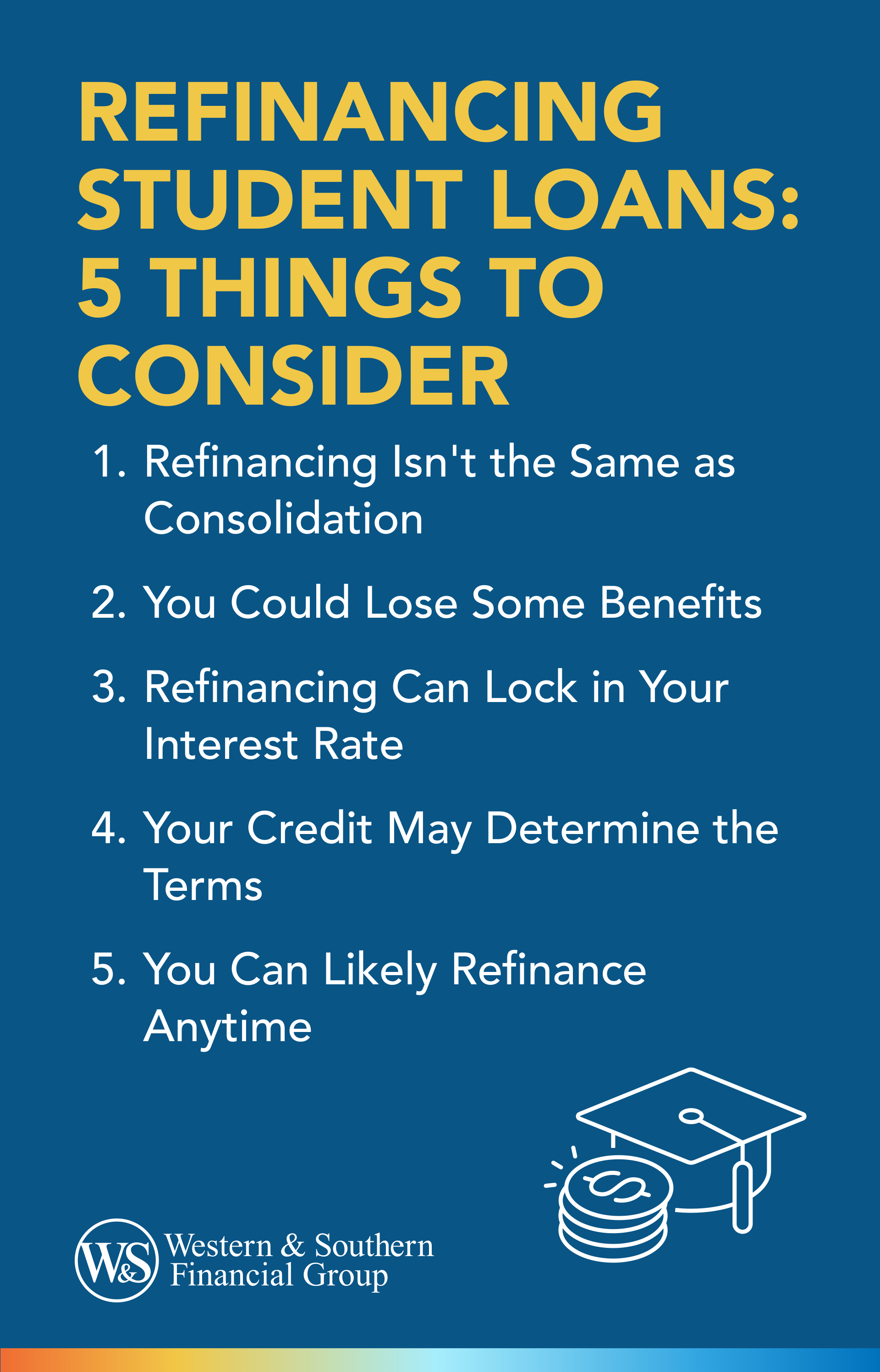
However, just because refinancing can help make student loan debt more manageable for some, that doesn't mean it's always the best option. Here are five things to keep in mind before you refinance your student loans.
1. Refinancing Isn't the Same as Consolidation
Student loan refinancing and federal student loan consolidation are two different processes with different potential benefits. Student loan refinancing is when a borrower applies for a new loan to pay off one or more existing loans.1 Federal student loan consolidation, on the other hand, allows a borrower to group multiple federal student loans into one loan with a single repayment schedule. Federal student loan consolidation is not available for private loans, and generally does not reduce your interest rate.
2. You Could Lose Some Benefits
While you can't refinance a federal loan into a new federal loan, you may be able to refinance federal loans into a private loan. However, if you go this route, you could lose your federal borrower benefits, such as public service loan forgiveness, income-driven repayment plans, and deferral and forbearance options.2 You'll have to determine whether those benefits are more necessary for your overall financial goals than a refinanced loan.
3. Refinancing Can Lock in Your Interest Rate
Some borrowers explore student loan refinancing options because they have a variable-rate private loan. This means their interest rates can rise or fall. Variable-rate student loans may get more expensive over time as rates go up, so locking in a lower rate by refinancing might be a financial move to consider. However, it's always possible interest rates may instead fall, so there's no guarantee that the fixed interest you get from refinancing will be better than a variable rate.
4. Your Credit May Determine the Terms
Unlike federal student loan consolidation, which is available to any federal student loan borrower regardless of their credit-worthiness or income, your student loan refinancing options depend in large part on your credit history. With a lower credit score or a high debt-to-income ratio, you may be less likely to qualify for refinancing. However, you don't necessarily need perfect credit to qualify. You might want to do your research to find the right refinancing option that meets your needs.
5. You Can Likely Refinance Anytime
Student loan refinancing is not tied to any particular time frame. Whether you're a recent graduate who hasn't reached the end of the six-month grace period many lenders offer or you've been paying your student loan debt for years, you can potentially qualify for refinancing.
But while there may not be a wrong time to refinance your student loans, the right time is likely when refinancing will help you improve your bottom line. For instance, depending on your situation, you may want to wait until you've improved your credit score or increased your salary because both of those scenarios could help you qualify for a lower-cost loan.
Though student loan refinancing can help make debt repayment more manageable, even the most beneficial refinanced loan will likely lead to years of monthly payments. The right move for you will depend on your unique financial situation.
Sources
- Consolidating or refinancing your student loans. https://www.salliemae.com/student-loans/graduate-school-information/consolidating-or-refinancing-your-student-loans/.
- Federal Versus Private Loans. https://studentaid.gov/understand-aid/types/loans/federal-vs-private.