Why Building Financial Habits Matters
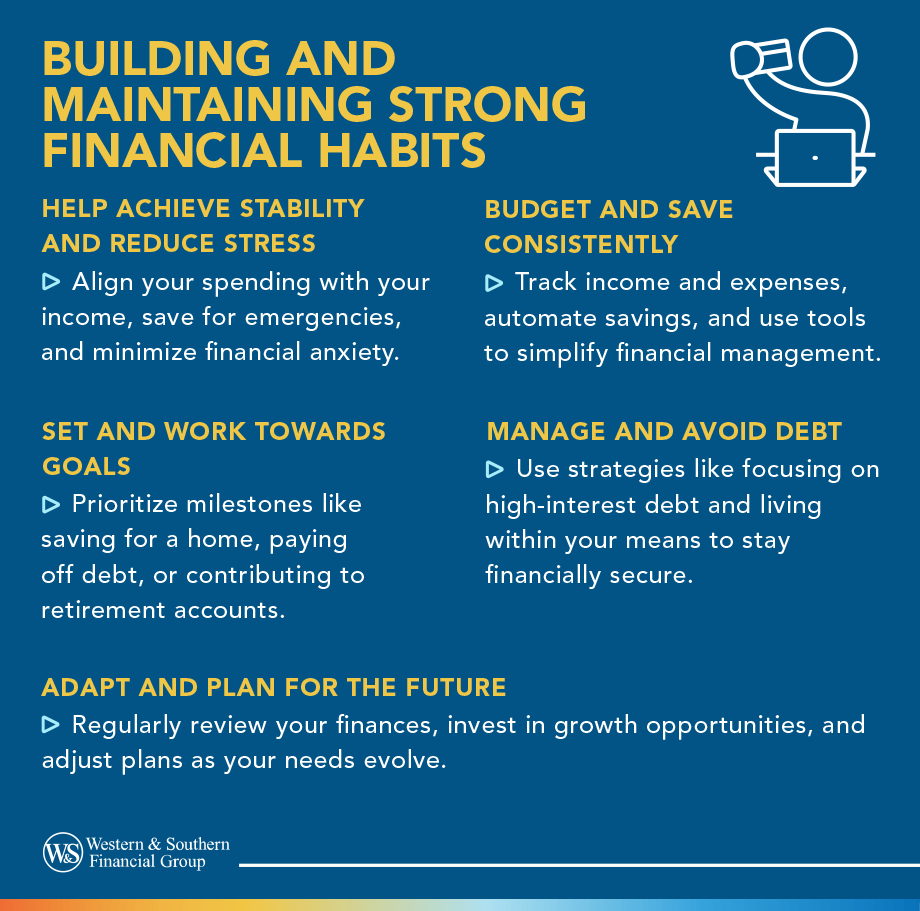
Building good financial habits is important for a stable future. Budgeting, saving, and managing debt can reduce stress and support goals like buying a home or retiring. Experts note that strong money habits can improve overall financial health and provide a clearer view of where your money goes.
Benefits of Building Financial Habits
- Improved Financial Stability: Helps prevent overspending and supports living within your means.
- Preparedness For Emergency Expenses: Builds an emergency fund to handle unexpected costs, with a goal of saving three to six months of living expenses.
- Reduced Financial Stress: Helps you feel more in control by understanding where your money is going.
- Achievement of Goals: Supports progress toward milestones like buying a home, saving for retirement, or paying off debt.
- Increased Confidence: Helps you make informed decisions about your money.
Developing these habits does not require major changes. Small, steady steps can lead to meaningful progress and a healthier relationship with money.
Budgeting as the Foundation of Good Financial Habits
Budgeting is a key part of managing money because it helps you track income and expenses. A budget can help you direct your money toward your goals and avoid taking on unnecessary debt. Experts often suggest aligning your spending with your goals to create a budget that fits your needs.
Steps to Create an Effective Budget
- Track Your Income and Expenses: Record all income sources and monthly expenses to understand your cash flow.
- Set Financial Priorities: Separate needs, wants, and savings goals. Then assign money to each category.
- Choose a Budgeting Method: Try methods like the 50/30/20 rule or a zero-based budget to find what works for you.
- Monitor and Adjust: Review your budget often and update it as your situation changes.
Budgeting Tools to Simplify the Process
- Apps and Software: Use tools like Mint, YNAB, or Excel to track and organize spending.
- Spending Logs: Keep a notebook or spreadsheet to record daily expenses.
- Bank Alerts: Set alerts to track transactions in real time.
Benefits of Budgeting
- Improved Spending Awareness: Helps identify and reduce unnecessary expenses.
- Savings Growth: Makes it easier to set aside money for future savings goals automatically.
- Debt Prevention: Helps you avoid spending more than you earn.
A simple budgeting routine can create a strong base for long-term financial health.
Saving Strategies That Fit Any Budget
Saving can begin with small amounts, such as $10 or $20 each week. As your income grows, you can increase your contributions. Even small amounts add up over time. Having savings can also help you handle unexpected expenses without disrupting your goals.
Leverage Savings Tools
- Recurring Transfers: Set up automatic transfers from checking to savings to build consistency.
- Round-Up Programs: Use tools that round up purchases and deposit the difference into savings.
- Savings Challenges: Try short-term challenges, like increasing your savings amount each week.
Maximize Everyday Savings
- Use Discounts and Coupons: Take advantage of deals, rewards, and cashback offers to save money on daily expenses.
- Reduce Unnecessary Subscriptions: Review your subscriptions and cancel those you do not use.
- Cook at Home: Preparing meals at home can lower daily expenses.
Create Specific Savings Goals
- Emergency Fund: Aim to save three to six months of basic living expenses.
- Short-Term Goals: Save for items like vacations or holiday gifts.
- Long-Term Goals: Contribute regularly to retirement accounts or other growth-focused options.
Using these strategies can help you build a savings approach that fits your budget and supports your future goals.
Debt Management & Reduction Techniques
Understanding the Impact of Debt
Debt can make it harder to save and reach your goals. Managing and reducing debt debt is an important step toward gaining control of your finances. Maintaining a strong credit score is also important, as it can affect loan terms and interest rates.
Strategies for Managing Debt
- Create a Debt Repayment Plan: List all debts, including balances, interest rates, and minimum payments. Then prioritize them.
- Focus on High-Interest Debt: Paying off high-interest balances first can reduce overall borrowing costs.
- Consider Debt Consolidation: Combining debts into one payment may simplify management and lower interest rates.
Effective Repayment Methods
- Snowball Method: Pay off the smallest debts first to build momentum.
- Avalanche Method: Focus on debts with the highest interest rates to reduce total costs.
- Biweekly Payments: Split monthly payments in half and pay every two weeks to reduce interest and pay down debt faster.
Results may vary based on individual circumstances.
Tips to Avoid Future Debt
- Live Within Your Means: Stick to a budget and avoid overspending.
- Build an Emergency Fund: Save for unexpected expenses to reduce reliance on credit cards or loans.
- Audit Subscription Services: Cancel services that are not needed or rarely used.
Reducing debt takes time, but steady effort and clear strategies can help you regain control and move forward.
Building Long-Term Financial Success
Reaching long-term financial stability requires consistent effort and thoughtful decisions. Focusing on saving, investing, and creating multiple income sources can support lasting progress.
Investing for the Future
Long-term success often includes investing. You can start with options like index funds, mutual funds, or employer-sponsored retirement plans. These options can help grow your money over time. Making regular contributions can also support future stability.
Importance of an Emergency Fund
An emergency fund that covers three to six months of expenses can help you handle unexpected events, such as medical bills or job loss. This can help you stay on track with long-term goals. This is not intended as specific investment advice. Consult a licensed professional for guidance based on your situation.
Diversify Your Income Streams
Relying on one source of income can be risky. Consider side work, freelance opportunities, or rental income to add more income sources. Having multiple streams can help you manage changes in income. Building long-term success takes time, but consistent actions can lead to steady progress.
How to Maintain Your Financial Habits
Maintaining strong habits is just as important as building them. Staying consistent can help your efforts lead to lasting results.
Regularly Review Your Finances
Review your budget, savings, and investment accounts each month. This helps you stay aligned with your goals and make updates when needed.
Stay Accountable
Share your goals with someone you trust, such as a friend, family member, or advisor. Regular check-ins can help you stay focused.
Adapt as Life Changes
Your needs may change due to events like marriage, children, or career shifts. Be ready to adjust your approach as needed.
Use Reminders and Tools
Set reminders for bill payments and use apps to track spending and savings. These tools can help you stay consistent and avoid missed payments.
Staying committed to these habits can help you continue making progress toward your goals.
Final Thoughts on Financial Habits
Building and maintaining strong habits can feel challenging at first, but small, consistent actions can lead to real progress. By applying these strategies, you can improve stability and move closer to your long-term goals. Start today and take control of your future, one step at a time.
















.jpg?rev=b30888445a984cb9af391aebc08860da&la=en&h=130&w=270&hash=811D9A81F81B2D381CDBDE831D4D12BA)