
With the end of the year approaching, many people start thinking about what they can do to make the upcoming year their best. And while focusing on health and relationships tend to be popular choices, it can also be helpful to think about your financial goals and well-being for the upcoming year.
Here are a handful of New Year's financial resolutions to consider.
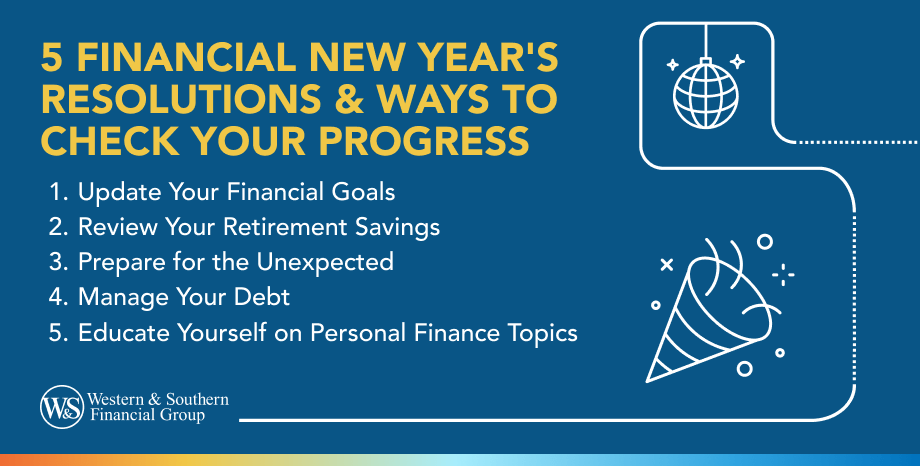

1. Update Your Financial Goals
You might already have a budget. However, the start of a new year can be the perfect time to review your spending habits and savings, and reassess some of your goals.
After all, it's not uncommon for life changes - a new job, moving to a new home or a big wedding - to happen. Scheduling some time to go over last year's budget and making tweaks based on what's coming in the new year can help set you up for success.
2. Review Your Retirement Savings
Even if your retirement is decades away, it doesn't hurt to review your plan and see if any changes are needed. You might also consider reviewing your portfolio to see if it makes sense to diversify or rebalance it in the coming year.
If you have a 401(k), individual retirement account (IRA) or similar savings account, consider reviewing your contributions. A nice bonus or year-end raise might mean you have a bit more to contribute to retirement accounts in the coming year. If you're over the age of 50, you might also take advantage of catch-up contributions that are permitted by the IRS, but consider consulting with a tax advisor first.
3. Prepare for the Unexpected
Even though you can’t predict what’s ahead, having a few plans in place can help during an emergency. Here are practical approaches to consider:
- Build an Emergency Fund: Setting aside savings can offer support if you face a sudden layoff or medical expenses. A common guideline:
- Save three to six months of living expenses
- Keep the money easily accessible
- Add a little each month to grow the fund over time
- Review Key Insurance Policies: Looking ahead also involves keeping your coverage current. Review the following to make sure everything aligns with your needs:
| Coverage Type | What to Check |
|---|---|
| Life Insurance | Is the policy active and up to date? |
| Long-term Care Insurance | Does the coverage still fit your situation? |
| Disability Insurance | Are the benefits and terms still appropriate? |
| Other Policies | Confirm they match your goals and any recent changes in your life |
As the new year approaches, consider meeting with a financial representative to discuss whether any updates may better support your goals.
4. Manage Your Debt
One of your New Year's financial resolutions might be to get out of debt. One approach is to focus on fully paying off a chunk of debt, whether it's a credit card, a medical bill or student loans.
You might also consider chipping away at high-interest debts first, so they're paid off, and then moving on to others. On the other hand, you might prefer to gradually pay down all of your debts simultaneously. Consider speaking with a financial representative to determine an approach that may work for you.
If you have a big purchase coming up, such as a new car or home, use your budget to help plan for and anticipate costs. That way, your progress won't end up being derailed with extra expenses.
5. Educate Yourself on Personal Finance Topics
Taking the time to educate yourself on personal finance can be a worthwhile resolution. Consider making a list of topics you want to learn more about. These may include budgeting, investing, compound interest or managing money. Then find ways to learn about each throughout the year.
A financial representative will likely be able to provide some educational materials to help you learn about various topics. You could also enroll in a class, listen to a podcast or read a book about finances. Committing yourself to learning more about money in the coming year may help improve your finances in the long run.
As a new year approaches, it's time to start thinking about your New Year's financial resolutions. With some extra planning, time and effort, you can take steps that will help you reach your financial goals.
Stay on top of your finance goals this new year by reviewing your progress regularly. Get My Free Financial Review
Ways to Check In on Your Financial Resolutions
It’s often easier to make a New Year’s resolution than to stick with it. If you set financial goals earlier in the year but feel your progress has stalled, that’s completely normal. The good news is there are several ways to check in and help yourself get back on track.
Revisit Your Personal Finance Goals
Tracking your progress can make it easier to follow a budget, increasing your savings, manage student loan debt, or reach any other financial goal. If you check in on what you’ve saved and notice you’re falling short, start by asking yourself why.
For example, if your goal is to save $200 a month for a down payment but you’re still spending a lot on dining out, you may want to make small adjustments in that category.
If cutting back on dining out isn’t realistic for you, look at other areas where you can reduce spending or boost income, such as:
- Switching to a less expensive gym membership
- Earning extra money through a side job
- Choosing a local vacation over one that requires costly airfare.
It’s possible your original target was more ambitious than you realized. That’s completely fine - financial goals can be adjusted at any time.
If saving $100 a month feels out of reach, try lowering the amount to $75, $50, or even $25. What matters most is building steady habits you can increase later. If you haven’t used the SMART goal-setting framework before - setting goals that are specific, measurable, achievable, results-focused, and time-sensitive - can be a helpful way to get started.
Leverage Technology to Help You
If your financial goals involve a lot of manual steps - like moving money into savings each month - automating the process can help. Many banks let you schedule recurring transfers or payments, making it easier to stay consistent whether you’re reducing debt or saving for retirement.
Technology can also support debt repayment. If tackling your highest-interest debt first isn’t working, try using an app or calculator to test different strategies. You may find that paying off your smallest balance first gives you a quick win and helps build momentum.
Create a Reasonable Reward System
Reaching a goal can feel even better when you give yourself a small reward. If you’ve been working hard to pay off debt or save for a big purchase, consider treating yourself - maybe brunch you’ve been skipping or a weekend of guilt-free binge-watching.
If you prefer a purchase, keep it modest but meaningful. For example, if you maxed out your 401(k) for the first time, you might buy new running shoes for an upcoming 5K. Small rewards along the way can help you stay motivated and keep moving toward your bigger goals.
Hold Yourself Accountable
Research indicates that sharing your goals with others actually deepens your commitment to the goal. To make yourself more accountable, consider posting your financial resolution or financial goal on social media, or tell your friends and family. This could be a good way to make progress and find yourself at the December 31 finish line having accomplished what you promised to do on January 1.
Conclusion
A new year brings new chances to strengthen your financial foundation. By setting clear goals, reviewing your progress, and staying consistent, you can build lasting habits that support your future. With focus and flexibility, your resolutions can turn into real financial growth throughout the year.
Start the new year strong by aligning your finance goals. Get My Free Financial Review