Table of Contents
Key Takeaways
- Assisted living suits those needing some help but not full nursing care.
- Costs range from $66,126/year; planning ahead is crucial.1
- Payment options include insurance, HSAs, and Medicaid.
When someone you love gets older and begins to need additional help, it can be difficult to decide on the best option for their care. Whether you're concerned about your mother, who now needs help buttoning her favorite sweater, or your grandfather, who keeps forgetting to take his pills on time, taking steps to plan for the future and assisted living costs for your loved ones could help ensure they are protected.
Assisted living can be a good choice for many families. Before choosing this kind of long-term care, it's important to ask yourself these questions:
- What is assisted living?
- What assisted living costs are involved?
- What payment options are available?
Assisted Living Basics
Assisted living is designed for seniors or disabled people who don't need full-time care in a nursing home but still require some assistance with tasks like bathing, getting dressed or eating (referred to as activities of daily living or ADLs). Approximately 70% of the American population will need assistance with ADLs at some point.2 If your loved one can still perform some tasks independently but needs day-to-day help, your family may want to consider assisted living.
Assisted living services can be offered at stand-alone care facilities or in specially designed retirement communities. Long-term care, which includes assisted living and residential care, often becomes a consideration for many families as parents, grandparents or other relatives age.
Costs of Assisted Living
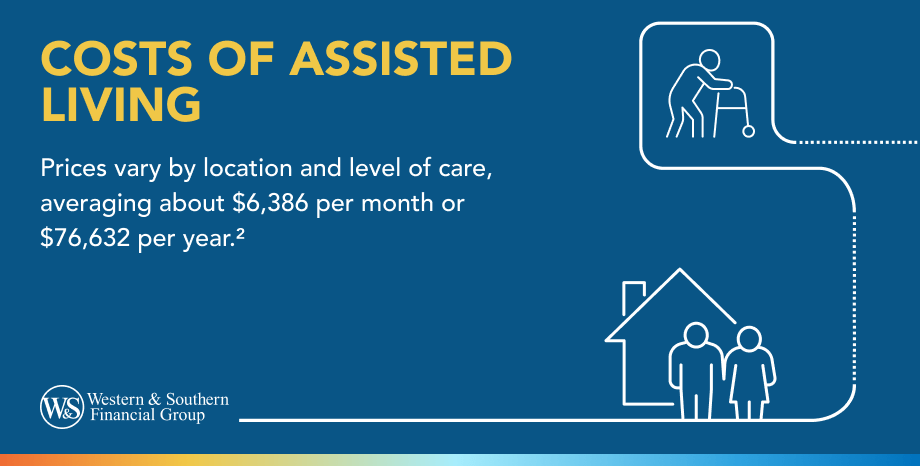
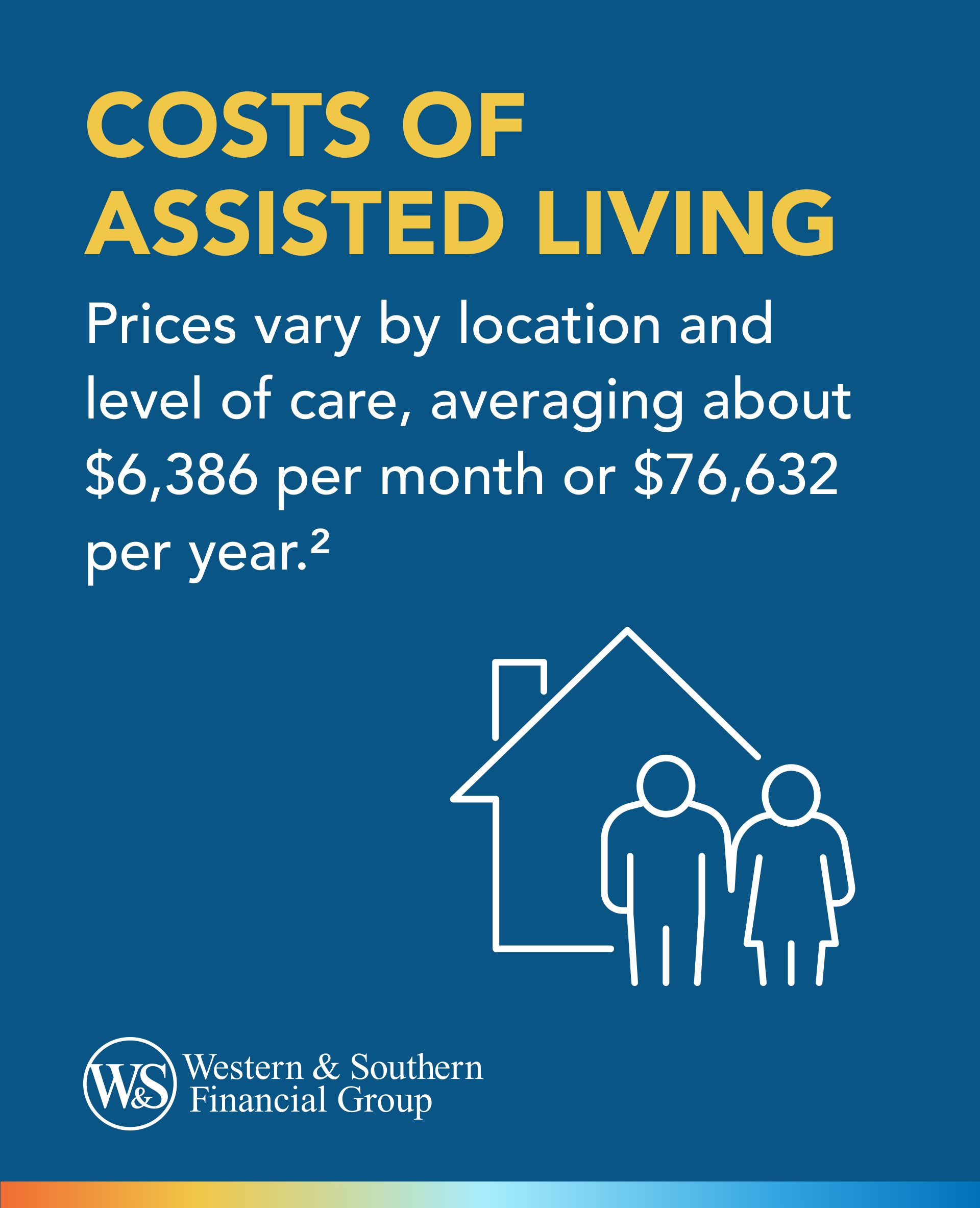
Do you feel your loved one would benefit from assisted living? If so, you might be thinking about costs. Costs of long-term care can vary depending on the provider and type of care your family member needs. The annual average cost for long-term care in the U.S. in 2024 ranged from $107,146 (semiprivate room) to $120,304 (private room in a nursing home).
These costs have risen over time — and will only continue to rise. Depending on your financial situation, assisted living costs can be sizable — especially if you have to pay for care out of pocket. Out-of-pocket nursing home costs are expected to rise 17.8% from 2024 to 2033.3
Paying for Assisted Living
Planning could help put you on the right track, and there are many options available to pay for assisted living costs:
Long-Term Care Insurance
Purchasing a long-term care insurance policy well before it is needed could help you protect the assets and savings you have spent a lifetime building. You can get long-term care insurance as a rider on a life insurance policy. This type of insurance could help cover the costs of nursing home care, assisted living facilities and in-home care. Premiums can vary depending on multiple factors, including your age and the level of coverage you need.
Health Savings Account
A health savings account (HSA) is another way to save money for assisted living costs, and using this method could also provide certain tax advantages. With an HSA, you contribute a portion of your pretax earnings and withdraw the money tax-free as long as it's used to pay for qualified medical expenses.
You must have a high-deductible insurance plan to get an HSA. However, if you also have a tax-qualified long-term care insurance policy — meaning the premiums you pay are tax-deductible — you could withdraw money tax-free from your HSA to pay for some of your premiums.
The amount you can withdraw for this purpose varies by age, but generally the older you are, the more you can withdraw. Also, those who qualify for Medicare (Americans age 65 and older) can't open an HSA. You must open an account during your working years to take advantage of this option.
Medicaid
Medicaid is the federal health insurance program for low-income Americans. As of 2024, 46 states and Washington, D.C. partially pay for assisted living costs or other forms of non-nursing home, residential care through their Medicaid programs, according to PayingforSeniorCare.com.4 Medicaid doesn't ease the total costs of assisted living — so you may still have to pay for part of this care out of pocket. Also, states have varying definitions of assisted living and categorize care facilities in different ways.
Early Planning Can Help You Prepare
We all want to ensure our loved ones get the best possible care — no different than the love and care they gave us as we grew up. According to the latest data from 2020, a typical 65-year-old has a 70% chance of needing some type of long-term care during their life, but preparing as soon as possible could help.5 Assisted living could give your mother the freedom she craves and your grandfather the support he needs. Learning more about the costs of assisted living could help you better prepare for tomorrow — no matter what the future holds.
Sources
- Nursing Home Costs in 2024. https://www.seniorliving.org/nursing-homes/costs/
- Long-Term Care Statistics: A Portrait of Americans in Assisted Living, Nursing Homes, and Skilled Nursing Facilities. https://www.aplaceformom.com/senior-living-data/articles/long-term-care-statistics
- Centers for Medicare & Medicaid Services: Projected. https://www.cms.gov/Research-Statistics-Data-and-Systems/Statistics-Trends-and-Reports/NationalHealthExpendData/NationalHealthAccountsProjected.
- Medicaid & Assisted Living: State by State Benefits & Eligibility. https://www.payingforseniorcare.com/medicaid-waivers/assisted-living.
- When Should You Start Investing in Long-Term Care Insurance? https://www.ncoa.org/article/when-should-you-start-investing-in-long-term-care-insurance/.