What Is a Life Insurance Waiting Period?
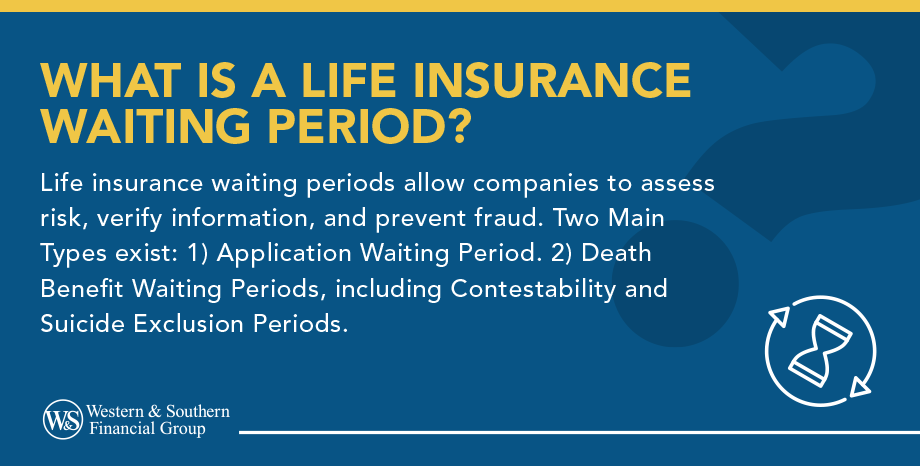
A life insurance waiting period is the time a life insurance company uses to review risk, confirm application details, and help prevent fraudulent claims. There are two main types of waiting periods.
1. Application Waiting Period
This period runs from when an application is submitted until the policy is approved and active. The applicant is not covered during this time. The insurer reviews health, financial, and personal information.
Some companies may offer temporary life insurance coverage if specific conditions are met, such as:
- Paying the first premium
- Receiving preliminary underwriting approval
Temporary coverage is not guaranteed and depends on the insurer’s rules.
2. Death Benefit Waiting Periods
These waiting periods are written into the policy and apply after coverage begins.
| Type of Waiting Period | What It Means |
|---|---|
| Contestability Period | Typically lasts two years. The insurer can review and deny a claim if the application contained incorrect or misleading information. |
| Suicide Exclusion Period | Usually one to two years. The policy generally does not pay a death benefit for suicide during this time. Instead, premiums paid may be refunded. |
After these periods end, the policy typically pays the death benefit according to its terms.
Why Do Life Insurance Waiting Periods Exist?
Life insurance waiting periods are mainly used to manage risk for insurance companies. They help prevent people who are terminally ill from buying a policy and immediately claiming a large payout.
Waiting periods also help keep premiums more affordable by reducing the chance of early claims that could strain the insurance pool.
In addition, these periods give insurers time to assess risk when issuing new policies. Policies that don’t include a waiting period often require more extensive medical exams to evaluate an applicant’s health upfront.
Factors Influencing the Waiting Period
Several factors can affect the waiting period for a life insurance policy:
Type of Insurance Policy
- Simplified issue and guaranteed issue policies often have longer waiting periods (typically 1–3 years). These policies involve limited or no medical underwriting, which increases risk for insurers.
- Fully Underwritten Policies usually have shorter or no waiting periods. They require medical exams and detailed health screening, which lowers insurer risk. Examples include term Life, universal life, and whole life insurance.
Health Condition of the Applicant
Applicants with pre-existing conditions or serious health concerns may face longer waiting periods, especially when choosing guaranteed issue coverage with minimal medical questions.
Insurance Provider
Waiting periods vary by insurer. Some providers offer shorter waiting periods for standard policies, while others apply longer timelines for similar coverage.
Coverage Amount
Policies with higher coverage amounts may include stricter terms and longer waiting or contestability periods due to the increased financial risk to the insurer.
Age of the Applicant
Older applicants, particularly those choosing policies without full underwriting, may encounter longer waiting periods because early claims are more likely.
Policy Riders
Certain riders, such as critical illness or accidental death riders, may have separate waiting periods. These riders are not substitutes for long-term care insurance. Using rider benefits can reduce the death benefit and may have tax implications.
These factors help insurers manage risk while offering coverage options across different health profiles and life stages.
What if I Die During the Waiting Period?
If death occurs during a life insurance waiting period, what beneficiaries receive depends on when it happens and which rule applies.
How Payouts Typically Work
| Situation | What Happens |
|---|---|
| Application waiting period |
If death occurs before the policy is approved and no temporary coverage is in place, there may be no payout. With temporary coverage, some insurers may pay a limited death benefit. |
| Contestability period (first two years) |
The insurer reviews the application for inaccuracies. If none are found, the death benefit is usually paid. A claim may be denied if a material misstatement is discovered. |
| Suicide exclusion period (one to two years) |
If death is due to suicide, insurers typically return the premiums paid instead of paying the full death benefit. |
The Bottom Line
Life insurance waiting periods are essential to the life insurance application process, but they don't have to be confusing. By understanding the different types of waiting periods and the factors that influence them, you can confidently help secure the coverage your family needs.
Don't wait! Speak with an expert to navigate life insurance waiting periods. Request a Free Life Insurance Quote