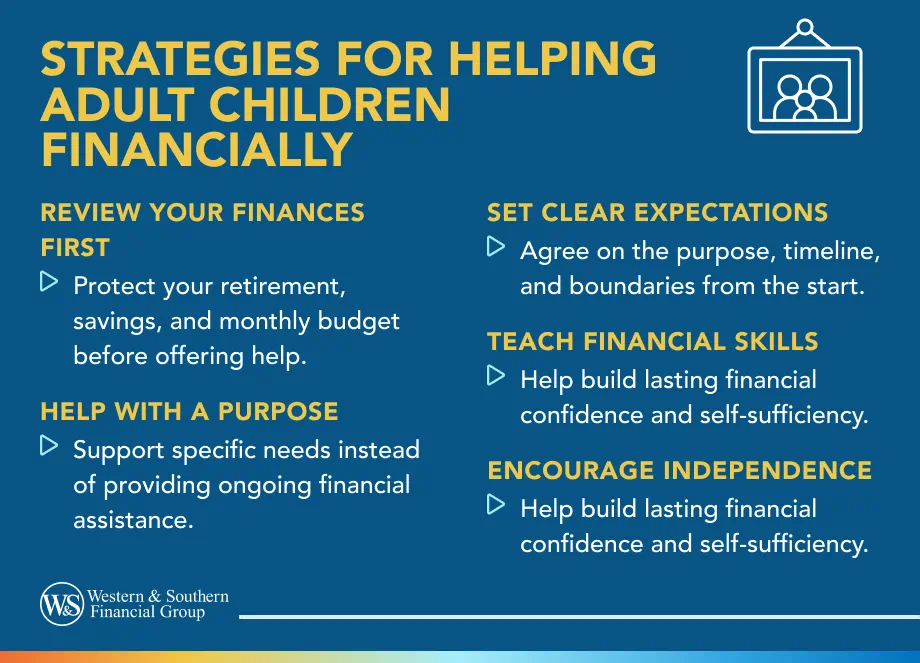
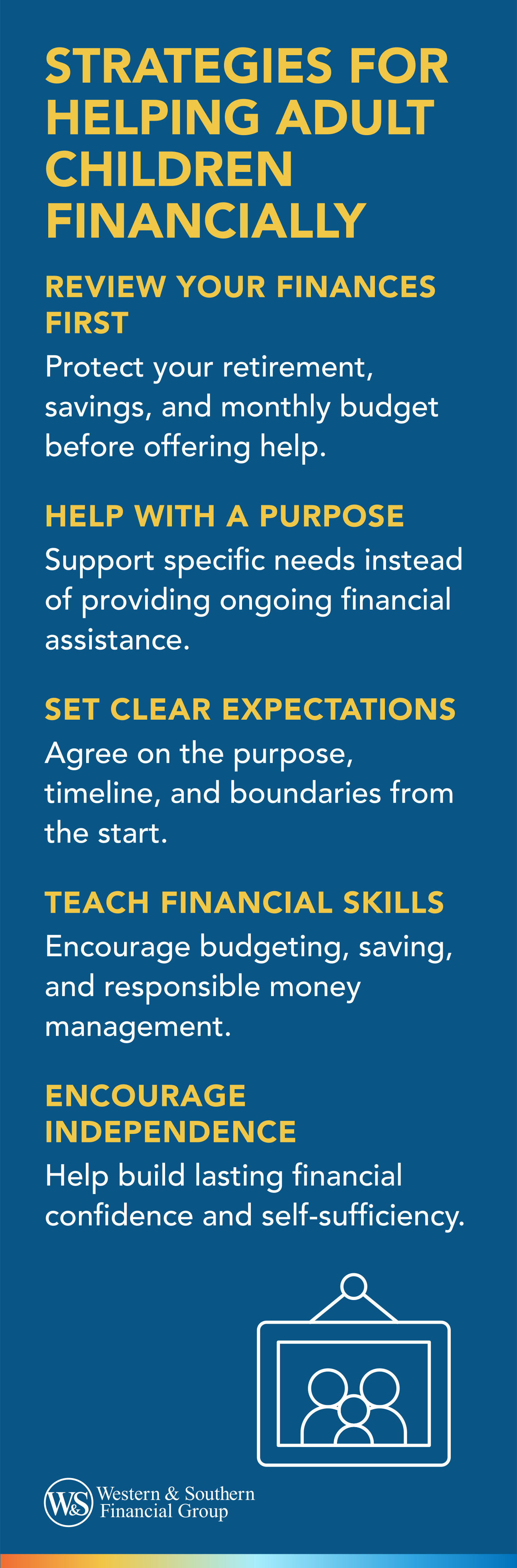
Many parents expect their financial responsibilities to decrease once their children reach adulthood, but today's economic realities often tell a different story. Rising housing expenses, student loan debt, and a higher cost of living have made financial support increasingly common.1 Understanding how to help adult children financially can help you provide meaningful assistance while protecting your retirement savings and encouraging long-term financial independence.
How Common Is It to Help Adult Children Financially?
Supporting adult children financially has become increasingly common as higher housing costs, student loan debt, inflation, and other living expenses make financial independence more difficult for many young adults.2
Parents often help by:
- paying housing expenses
- helping with student loans
- covering medical bills
- assisting with unexpected expenses
Whether the support lasts a few months or several years, parents should balance helping their children with protecting their own long-term financial goals.
Evaluate Your Own Financial Situation Before Giving Money
Wanting to help your children is natural, but your ability to provide financial support starts with an honest look at your own finances. Before giving money, paying monthly expenses, or cosigning a loan, consider how the decision could affect your cash flow, retirement savings, and future obligations.
Small financial commitments often add up faster than expected. Paying for an apartment, helping with a car loan, or covering credit card balances may seem manageable on their own. Over time, however, these ongoing expenses can reduce the money available for retirement, emergency savings, healthcare costs, and other long-term needs.
Questions to Ask Before Providing Financial Help
Review your overall financial situation before making a commitment. Ask yourself:
- Do you have a fully funded emergency fund?
- Are you consistently contributing to your retirement savings?
- Can you comfortably cover your own monthly expenses?
- Would this assistance affect your ability to handle unexpected medical bills?
- Is the support temporary, or could it become an ongoing commitment?
Before committing to ongoing financial support, consider how the decision fits into your long-term retirement goals. Even relatively small contributions can affect future savings if they continue for several years. Helping your children should strengthen your family's financial future, not create financial challenges later in retirement.
Choose the Right Type of Financial Help
Financial support isn't always about giving cash. In many situations, targeted assistance can address immediate needs while encouraging greater financial independence.
While direct cash gifts may be appropriate in some situations, other forms of assistance can have a longer-lasting impact. For example, paying for a professional certification that increases earning potential may provide more long-term value than repeatedly covering monthly living expenses.
Different situations call for different types of support, such as:
- Helping with student loan payments during the first year after graduation
- Paying medical expenses after an unexpected illness
- Contributing toward housing costs during a temporary job transition
- Funding a Roth IRA to help a young adult start saving early
- Matching contributions to encourage building an emergency fund
- Assisting with childcare costs while parents establish their careers
- Contributing to a 529 plan for grandchildren instead of giving cash directly
Each option supports a different financial goal and may lead to different long-term results.
Example
Michael, 27, is managing both student loans and credit card debt after unexpected medical bills. His parents first consider paying off his credit card balance, but they decide on a different approach.
They agree to pay half the balance if Michael pays the rest and completes a budgeting course through his local credit union. Together, they also review his monthly spending and set up automatic payments to help him avoid future late fees.
Within a year, Michael eliminates his remaining credit card debt, improves his spending habits, and begins contributing to his employer's retirement plan. Instead of only addressing an immediate challenge, his parents helped him build stronger money management skills.
Support Goes Beyond Money
Financial guidance can be just as valuable as financial assistance. Helping your child create a budget, compare job offers, or meet with a financial advisor may provide benefits long after the immediate financial need has passed.
Set Clear Expectations & Healthy Financial Boundaries
Financial support is often most effective when parents and adult children agree on expectations from the start. Without clear boundaries, temporary assistance can gradually become an ongoing obligation that creates frustration, misunderstandings, or financial strain for everyone involved.
Although these conversations may feel uncomfortable, discussing expectations before giving money can help prevent larger issues later. Talk about why the assistance is needed, how long it will last, and what the intended outcome is. The goal is not to control your adult child, but to create a shared understanding that the support serves a specific purpose.
For example, imagine your daughter accepts a promising job in another city. She needs help covering a security deposit, moving expenses, and several weeks before receiving her first paycheck. Rather than providing ongoing financial support, you agree to cover these one-time costs while she takes responsibility for her monthly living expenses once she starts working.
Consider setting expectations such as:
- Establish a clear end date for the assistance.
- Use the money only for an agreed-upon purpose.
- Review progress together from time to time.
- Discuss future requests individually instead of assuming continued support.
- Encourage continued progress toward financial independence.
Clear communication can help reduce misunderstandings and keep temporary assistance from becoming an ongoing expectation.
Should You Give Money or Offer a Loan?
One of the biggest decisions parents face is whether financial help should be a gift or a loan. There is no single right answer because every family's finances, relationships, and goals are different. Understanding the advantages and drawbacks of each option can help you decide what works for your situation.
Giving money can provide immediate relief without adding another financial obligation for an adult child who may already be managing student debt, car loans, or medical bills. It can also help during major life events, such as buying a first home, welcoming a child, or recovering from unemployment.
However, regular financial gifts can create expectations. If support becomes routine, an adult child may begin to assume future assistance will always be available, which can make it harder to build long-term financial independence.
A family loan offers a different approach. Even with little or no interest, requiring repayment encourages accountability and responsible borrowing. Putting the terms in writing also helps reduce confusion about repayment expectations.
| Gift | Family Loan |
|---|---|
| No repayment required | Repayment expected |
| Provides immediate financial help | Encourages accountability |
| Simple to provide | May require a written agreement |
| Can create expectations for future support | Helps reinforce responsibility |
| May affect annual gift tax considerations | May involve IRS minimum interest rules for larger loans |
What to Include in a Family Loan Agreement
If you decide to make a loan instead of a gift, document the key terms in writing, including:
- Total loan amount
- Payment schedule
- Interest rate, if applicable
- What happens if payments are missed
- Whether any portion of the loan could later be forgiven
Even among close family members, a written agreement can help prevent misunderstandings and protect relationships.
Teach Financial Skills That Create Long-Term Success
Sometimes the most valuable support isn't financial. Helping adult children build budgeting, saving, investing, and debt management skills can benefit them long after temporary financial assistance ends.
Parents can encourage independence by discussing topics such as:
- monthly budgeting
- emergency savings
- retirement accounts
- responsible credit use
- comparing loans
- insurance basics
During major life events, introducing your child to professionals such as a financial advisor or tax professional can also help them make informed long-term decisions.
Help Build Wealth Instead of Solving Financial Problems
When offering financial support, look for opportunities that encourage long-term financial growth rather than solving only today's problem.
Examples include:
- matching emergency savings
- contributing to a Roth IRA
- helping with career education
- assisting with a home down payment after consistent saving
These approaches reward positive financial habits while encouraging greater financial independence.
When to Say Yes & When to Say No
Deciding whether to help an adult child financially is rarely a simple yes-or-no decision. Every situation is different, and the right choice depends on your child's circumstances as well as your own financial health. Before offering money, consider whether the request is tied to a temporary setback or part of an ongoing pattern.
A one-time emergency is very different from repeated financial struggles. Helping with unexpected medical bills after an accident, for example, may help your child recover without taking on high-interest debt. Repeatedly paying off credit card balances caused by overspending, however, may reinforce habits that make long-term financial independence more difficult.
Questions to Ask Before Providing Financial Support
Before saying yes, consider these questions:
- Is this a temporary need or an ongoing problem?
- Will my assistance address the underlying issue?
- Can I provide this support without affecting my retirement savings?
- Am I helping my child move forward or delaying a difficult financial decision?
- Would another form of support be more helpful?
Supporting Without Providing Money
Saying no can be emotionally difficult, especially when you want to solve your child's problems. However, declining a request does not mean withholding support. You can still help by:
- Reviewing a budget together
- Sharing job leads or networking opportunities
- Pointing them toward community resources
- Encouraging practical steps to improve their financial habits
Guide to Help Adult Children Financially: Step-by-Step
Step 1: Review Your Finances
Before offering financial support, review your own situation. Consider your cash flow, retirement savings, emergency fund, and upcoming financial obligations. Any assistance should fit comfortably within your overall finances.
Step 2: Understand the Need
Take time to understand the situation before offering money. Asking a few questions can help identify the most effective solution. Understanding the full picture can lead to more meaningful support.
Step 3: Choose the Right Support
Financial help does not always have to come in the form of cash. Depending on the circumstances, you may want choose to pay medical expenses directly or help with student loan payments. The right type of assistance can have a greater long-term impact than simply giving money.
Step 4: Set Expectations
Before providing support, discuss what both of you expect. For example, how much support will be provided, for how all long and what goals to work towards. Clear communication can help reduce misunderstandings.
Step 5: Reevaluate Over Time
Financial needs change over time. A child who needs help during graduate school may become financially independent a few years later. At the same time, your own retirement goals or healthcare expenses may change.
Review your approach periodically so your financial decisions continue supporting both generations as circumstances evolve.
Conclusion
Helping adult children financially is about balancing generosity with long-term financial responsibility. By choosing the right type of support, setting clear expectations, and encouraging financial independence, you can strengthen your child's future while protecting your own retirement.
Sources
- America’s Affordability Crisis Is About More Than Rising Costs. https://www.urban.org/urban-wire/americas-affordability-crisis-about-more-rising-costs
- 42% of adults rely on their parents for financial support—there are no ‘bad guys’ here, says financial therapist. https://www.cnbc.com/2026/07/16/42percent-of-adults-rely-on-their-parents-for-financial-supportthere-are-no-bad-guys-here-says-financial-therapist.html